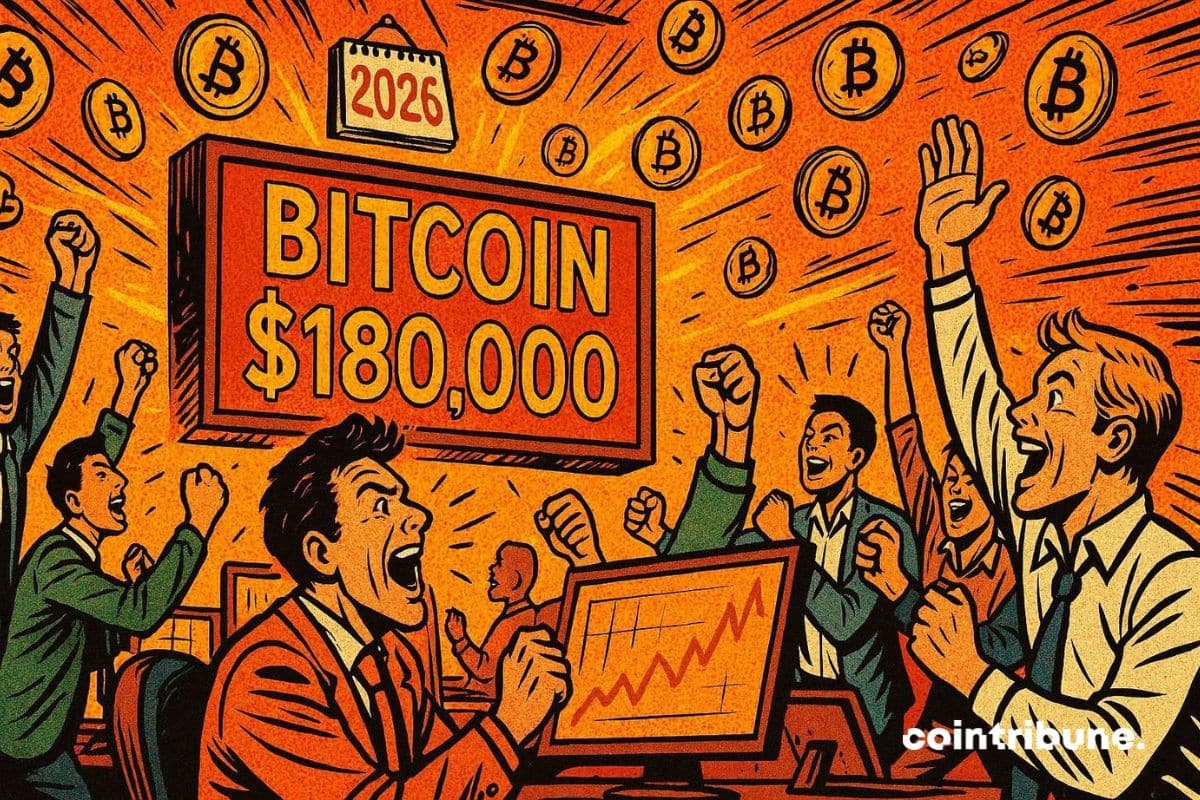
Bitcoin recently experienced a slight decline, dropping by 4.3% in three days after flirting with $97,900. However, this pullback has not dampened analysts' optimism, who believe that these three indicators could propel BTC.
As the crypto market begins a slight pullback early this week, bitcoin is recording a moderate decrease to $94,132. A technical correction that comes after a spike close to $98,000 last Friday. Should we see this as a simple temporary slowdown or a deeper warning signal?
Bitcoin is holding its breath. In a context where every economic decision can shake the markets, the most coveted digital asset seems ready to reach a new milestone. Amid conflicting signals and feverish expectations, one thing is certain: here are 5 key factors that will make this week anything but ordinary.
BNP Paribas makes a notable entry into the crypto world by partnering with Pi Network. This strategic partnership could revolutionize the European financial landscape by combining the power of blockchain with the efficiency of SEPA transfers. A promising alliance that could propel the PI token to new heights.
Apple has just suffered a major legal setback: now, crypto app developers can integrate external payments without going through the App Store or paying a commission. An explosive decision that paves the way for a new era for Web3 games, NFTs, and the mobile crypto ecosystem.
May could change everything for bitcoin. As the threat of a global recession looms and tensions between the United States and China intensify, the market holds its breath. A trade agreement could trigger a new bull run... but a failure could plunge BTC into the red.
Arizona has just rejected an ambitious bill aimed at integrating bitcoin into its official reserves. While several states are exploring this bold avenue, Governor Katie Hobbs' veto reignites the national debate on the future of BTC in public management and institutional finance.
The depths of Ethereum are stirring once again. While the market seemed to be dozing off, powerful players are resurfacing, quietly but with a confidence that speaks volumes. No media sirens, no speculative frenzy: just heavy, silent, and resolute movements. The crypto ecosystem is wondering – what are these mysterious whales up to?
Bitcoin strikes hard: with a price flirting with $97,000 and a market dominance of 64.89%, the queen of crypto reaches its highest level since 2021! Driven by distrust towards altcoins and a tense macro context, BTC crushes the competition and attracts capital.
The crypto market for RWA (Real World Assets) would be a largely overvalued illusion according to Chris Yin, CEO of Plume. He questions the official figures and asserts that the current enthusiasm is based on false data, far from reflecting the reality on the ground or the actual interest of institutions.
Tether is hitting hard at the start of 2025: with over $1 billion in profits and $5.6 billion in excess reserves, the leader in stablecoins confirms its supremacy in the crypto market. This financial performance strengthens its position against regulators and emerging competitors.
As Ethereum ETFs struggle to attract investors, the cryptocurrency is going through a turbulent period. Unfortunately, without a sustained bullish rally or a strong narrative, even with significant staking, ETH flows will stagnate, according to Eric Balchunas. Coming to the rescue, Vitalik Buterin is launching an emergency plan to prevent a collapse... but several signs already indicate the extinction of Ethereum by 2040.
At the Token2049 conference in Dubai on April 30, Changpeng "CZ" Zhao, former CEO of Binance, did not mince his words: Europe is almost absent from the debate on crypto adoption. According to Zhao, while countries like the United Arab Emirates and Bhutan are accumulating bitcoin and ethereum as strategic reserves, European countries are moving "nowhere."
Vitalik Buterin has bold ambitions for Ethereum in 2025. With essential tools at his disposal, such as network resilience and large-scale decentralization, he unveils a vision that could redefine the future of crypto. It remains to be seen whether these plans will be enough to save Ethereum.
Cryptos play an important role in Web3 gaming. They facilitate transactions, guarantee ownership of digital assets, and support new economic models. Players can safely buy, sell, or trade virtual items thanks to blockchain technology. Each game uses specific cryptos to ensure its smooth operation. Some serve as governance tokens, while others enable the purchase of assets or the payment of transaction fees. This article analyzes the main cryptocurrencies used in Web3 gaming. It explores their role, integration into games, and their impact on the evolution of the video game industry.
In its report on financial stability, the Bank of Italy once again warns of the risks associated with the integration of cryptocurrencies into the traditional financial system. Although these concerns are not new, it highlights the increased vulnerabilities for global markets due to the expansion of these links.
The prospect of a bitcoin reaching $200,000 by the end of 2025 raises eyebrows. Standard Chartered asserts this trajectory. The scenario is based on various indicators. It combines returns, ETF flows, and whale movements. In short, the institution bets on a rapid surge. This article details the reasons. It highlights the key signals.
Peter Chung, head of research at the quantitative trading firm Presto, reaffirmed his prediction that Bitcoin (BTC) could reach 210,000 dollars by the end of 2025. In a recent interview on April 28 on CNBC, Chung highlighted several factors that will be the main drivers of this surge.
As Ethereum goes through a period of economic weakness, two members of its community, Kevin Owocki and Devansh Mehta, have just proposed an innovative reform to invigorate its application ecosystem. Their idea: to introduce a dynamic fee structure aimed at better balancing developers' revenues and fairness for users.
The crypto market is facing a harsh reality for investors who bet on locked tokens. According to recent data, between May 2024 and April 2025, these investors recorded an average loss of 50% compared to over-the-counter (OTC) valuations, exacerbating distrust towards new projects.
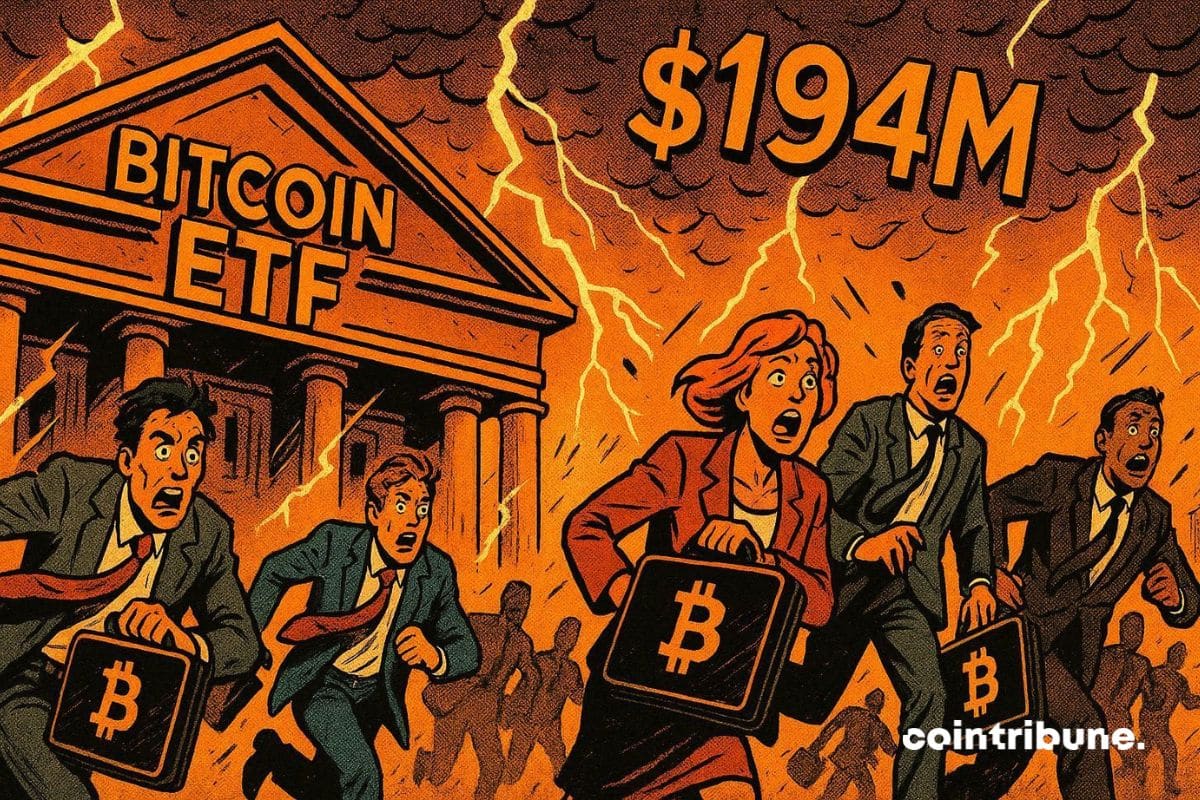
Bitcoin ETFs are making a strong comeback with over $3 billion in inflows in one week, the first time since March. Driven by institutional optimism and dizzying price forecasts for bitcoin, these massive flows mark a turning point for the cryptocurrency market.
Between exclusive dinners and ethical conflicts of interest, a Democratic senator reveals a plan to impeach Donald Trump. Is this the end of his presidency? Find out why this mistake could mark the end of Trump's reign at the White House.
The Ekaterina Djanova case resembles a financial thriller where crypto, organized crime, and judicial loopholes intertwine. While this 38-year-old Frenchwoman, nicknamed 'the shadow banker,' has been languishing in prison for two years, a legal twist could set her free. Behind this possible legal escape lie burning questions: how does the crypto system facilitate large-scale money laundering? And to what extent does digital impunity extend?
The Nasdaq calls on the Securities and Exchange Commission (SEC) to treat certain cryptos as traditional financial securities. In a letter dated April 25, Nasdaq urged the SEC to classify certain cryptocurrencies as "stocks," emphasizing the need for clearer regulatory standards for digital assets.
The global financial geography is experiencing a spectacular transformation. Far from the sanitized skyscrapers of Wall Street or the centuries-old Swiss banks, a new map is emerging: that of the cities that have embraced the blockchain revolution without complexes. Ljubljana, the Slovenian capital nestled between the Alps and the Balkans, embodies this metamorphosis. With regulatory boldness and a crypto culture already ingrained, it now outshines Hong Kong and Zurich. How has this city of 300,000 inhabitants managed to dominate the game? The answer lies in a subtle mix of legislative pragmatism, agile infrastructures, and an almost organic popular adoption.
Blockchain, often perceived as a niche technology, could become a key player in redefining global job markets by 2030. A recent report highlights the untapped potential of this technology, capable of creating over 1.5 million jobs in the coming years, a growth comparable to or even exceeding that of AI (Artificial Intelligence).
The crypto scene could have marked a historic turning point. A partnership between Nvidia and a blockchain network, an official recognition of crypto by a giant in the semiconductor industry. Yet, as usual, hope turned into a mirage. Just a few hours before the announcement, Nvidia withdrew its support, leaving the project in uncertainty. A scenario that summarizes a tumultuous relationship: despite the technological advancements of blockchain, the Californian company sticks to a clear stance. Crypto remains persona non grata in its ecosystem.
The SEC is changing its face, and with it possibly the future of crypto regulation in the United States. With Paul Atkins at the helm, the sector finally envisions a more coherent approach open to innovation. A decisive turning point for an ecosystem in search of clarity, after years of legal ambiguity.
Neglected, criticized, almost forgotten... Ethereum has just reminded us that it is not done yet. In just two weeks, ETH has surged by 30%, surpassing $1,800. Between a reversal figure, falling fees, and a renewed global interest, the machine is back in motion. How far will it go?
Ethereum is regaining momentum. While its price struggles to bounce back, the network is witnessing an explosion of new users. With 1.83 million depositors in a week, the DeFi crypto star seems to be regaining the interest of investors. A strong signal that could indicate a trend reversal.