$500 M frozen in 30 days: Tether toughens its hunt for suspicious funds
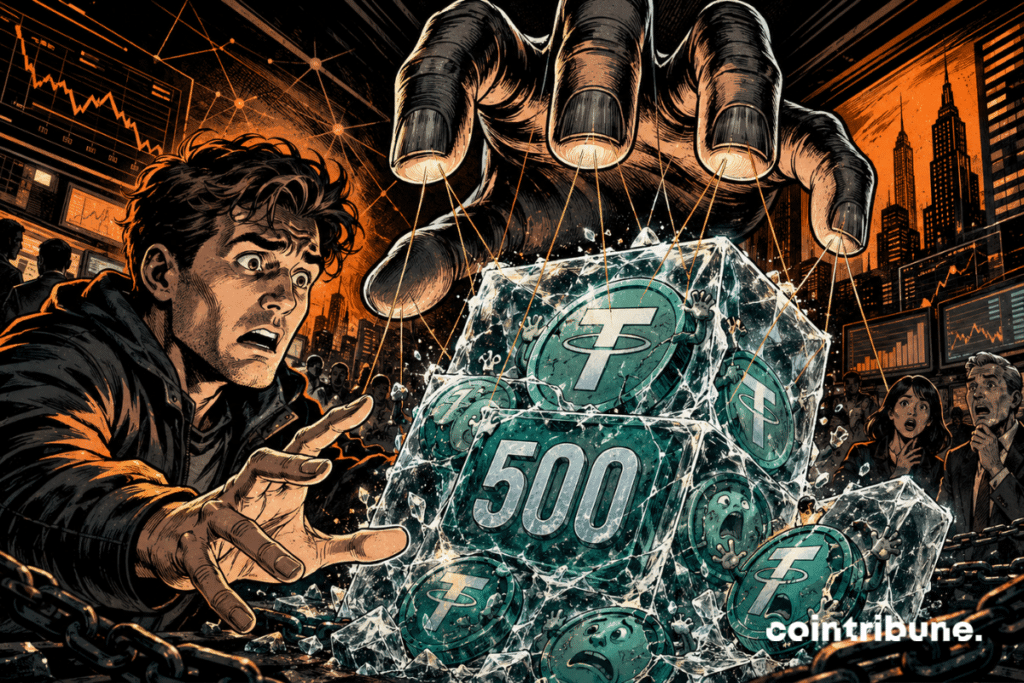
Tether has just reminded a often forgotten reality: USDT circulates quickly, but it can also be frozen abruptly. In one month, the issuer of the largest stablecoin on the market has frozen more than 514 million dollars on Ethereum and Tron, according to BlockSec data.
In Brief
- Tether has frozen more than 514 million dollars in USDT in 30 days.
- Tron concentrates almost all recent blacklisting activity.
- These freezes strengthen the fight against suspicious funds but reignite the debate about stablecoin control.
USDT under accelerated surveillance
Tether has frozen more than 514 million dollars in USDT on around 370 addresses in 30 days. This offensive continues an already visible hardening against tokens deemed illicit, while the stablecoin remains at the heart of global crypto payments.
The bulk of this activity is concentrated on Tron. More than 505 million dollars are said to have been frozen on this network, against about 8.7 million on Ethereum. This imbalance is not insignificant. Tron remains one of the preferred rails for fast and low-cost USDT transfers.
This wave of freezes thus gives a clearer picture of Tether’s current role. The company is no longer just the issuer of a digital dollar used by traders. It also acts as a central checkpoint in investigations related to fraud, sanctions, or funds deemed suspicious.
Tron, main ground for freezes
Tron’s dominance in these freezes is explained by the massive use of USDT on this network. Fees are low. Transfers are fast. For many users, especially outside major Western markets, Tron has become the practical corridor for the digital dollar.
But this convenience has a downside. When volumes shift to one chain, controls follow. The freeze of more than 500 million dollars in Tether (USDT) on Tron shows that authorities and on-chain analysis companies are watching this network very closely.
This point matters for the industry. USDT is often presented as a neutral liquidity tool. In practice, its issuer retains direct technical power. It can blacklist an address. It can immobilize funds. And in some cases, these funds never return to the original circuit.
A trend already visible in 2025
The current wave fits into a larger dynamic. In 2025, Tether had already blacklisted more than 4,100 unique addresses on Ethereum and Tron. The total amount frozen reached nearly 1.26 billion dollars in USDT, according to the analysis published by BlockSec.
Another detail deserves attention. More than half of the funds frozen in 2025 were subsequently destroyed via the dedicated contract function. This means that the freeze is not always a temporary pause. It can become a definitive cut, especially when the funds are linked to advanced investigations.
Tether also claims larger figures. In February, the company stated having frozen about 4.2 billion dollars of tokens linked to illicit activities, including 3.5 billion since 2023. The message is clear: USDT remains liquid, but it is not out of reach.
Enhanced security or worrying control?
For Tether, these freezes serve a simple message: USDT must not become a highway for scammers, sanctioned networks, or criminal groups. The argument is powerful. It reassures regulators. It also shows that centralized stablecoins can cooperate quickly with authorities.
But the debate does not stop there. The more Tether blocks funds, the more a question returns: who really controls the money on public blockchains? The user retains their wallet. Yet, with a centralized stablecoin, the issuer holds the ultimate key to the asset.
This is the whole ambiguity of USDT. It offers the speed of crypto, but not the absolute neutrality of a decentralized asset. For authorities, it is a useful tool against abuse. For some users, it is a stark reminder: the digital dollar remains a monitored dollar.
USDT remains powerful, but not untouchable
This sequence confirms one thing: Tether now assumes an almost police-like role in the stablecoin ecosystem. This can enhance USDT’s credibility with institutions. But it also fuels criticism of centralization, especially when freezes become massive.
The paradox is here. The more USDT becomes indispensable, the more its blocking power becomes visible. And the more this power is seen, the more the market understands that stability has a price. Even when USDT outperforms a declining crypto market, its strength also relies on a control capacity that few users can ignore.
Maximize your Cointribune experience with our "Read to Earn" program! For every article you read, earn points and access exclusive rewards. Sign up now and start earning benefits.

Fascinated by Bitcoin since 2017, Evariste has continuously researched the subject. While his initial interest was in trading, he now actively seeks to understand all advances centered on cryptocurrencies. As an editor, he strives to consistently deliver high-quality work that reflects the state of the sector as a whole.
The views, thoughts, and opinions expressed in this article belong solely to the author, and should not be taken as investment advice. Do your own research before taking any investment decisions.