CZ Burns Nearly $500K in Unwanted memecoins as Unsolicited Token Drops Surge
A recent token purge by Binance founder Changpeng Zhao (CZ) has brought unwanted memecoin drops back into the spotlight. His public donation address once again attracted developers seeking attention, and their deposits were removed in a decisive move signaling a firmer stance.
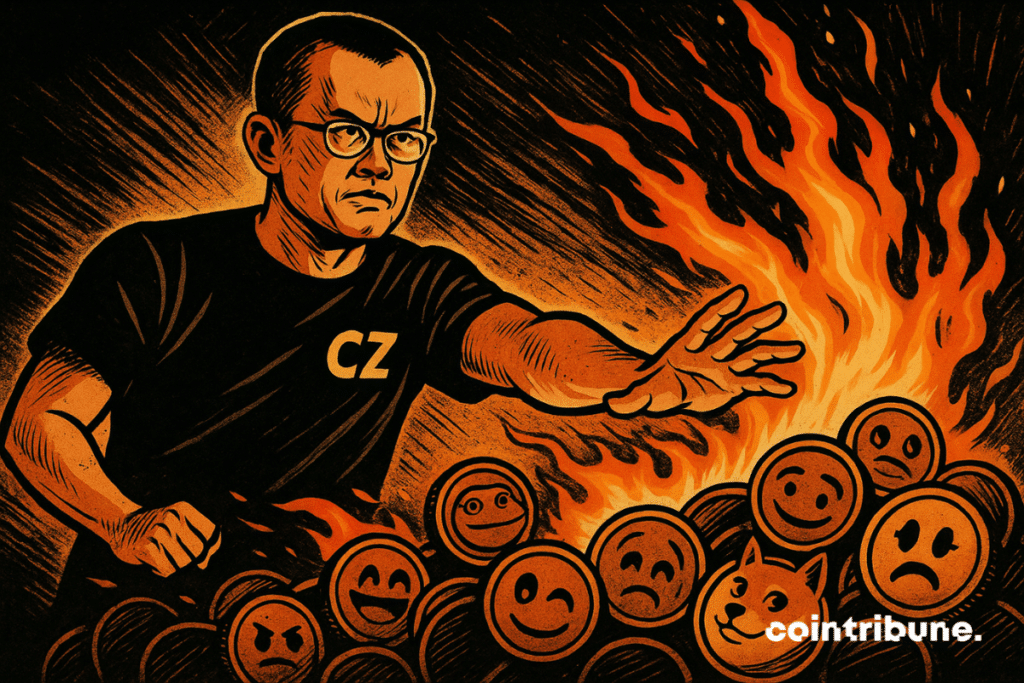
In brief
- CZ removes $490K in unsolicited memecoins from his donation wallet, marking a second major cleanup within a year.
- Public crypto addresses attract tokens that falsely imply endorsement, driving CZ to take a stricter approach.
- Rising scams and phishing campaigns amplify CZ’s warnings as attackers mimic official BNB Chain sites to steal funds.
- CZ hints that future unwanted tokens may be sold instead of being burned as operational burdens and market confusion increase.
On-Chain Data Shows Second Major Token Burn by CZ in Under a Year
Zhao destroyed roughly $490,000 worth of memecoins sent to his public donation address. On-chain analyst Ai Yi identified the burn and reported the value of the tokens involved: about $305,000 in quq, $142,000 in SIREN, and $43,000 in BNBCARD. Ai Yi also noted that this marks the second cleanup in less than a year, following a similar burn seven months ago.
CZ confirmed the action on X (formerly Twitter), explaining that he was simply clearing the wallet. He added that the address is meant to hold only BNB and that future deposits might be sold on the open market rather than burned. This represents a shift from his earlier approach, where he avoided any action that could affect token holders.
Unsolicited Token Sends Continue, Prompting New Cleanup Action
Public wallets belonging to prominent figures often attract unsolicited tokens from lesser-known projects seeking recognition. Sending tokens to a well-known address can create the illusion of support or involvement. Zhao has repeatedly rejected this tactic, saying developers are sending assets he never asked for.
Earlier this year, he said his wallet had received several high-value deposits, which he had already removed. He also mentioned tools that could automate such cleanups, but raised concerns about their security readiness.
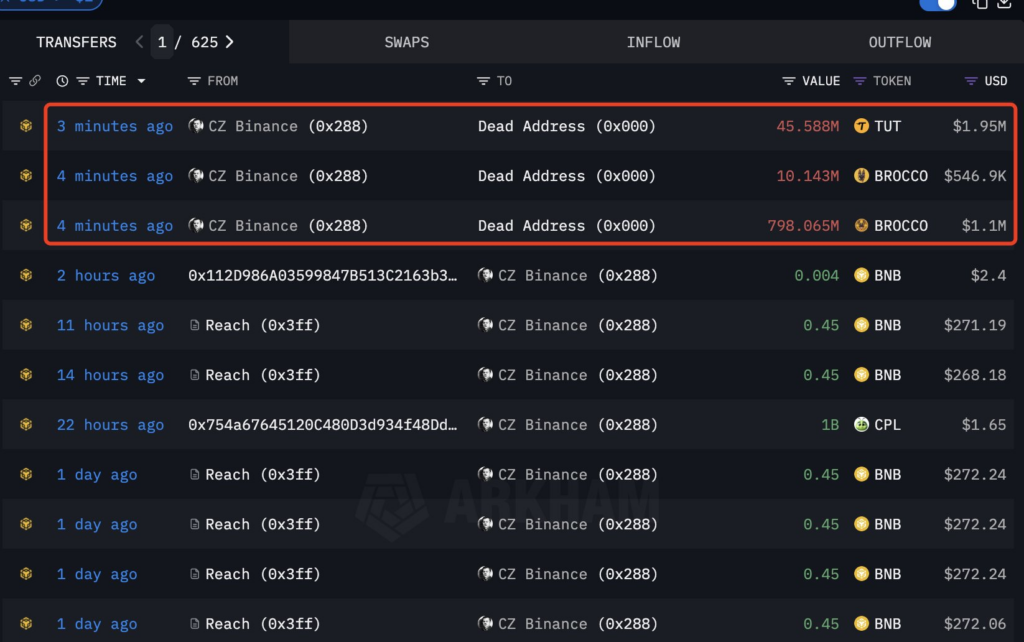
According to Arkham Intel, Zhao previously burned about $1.6 million worth of Broccoli tokens and nearly $2 million in Tutorial tokens during that same period. His latest move follows the same pattern and reinforces his stance that the donation address should remain limited to BNB.
CZ Signals Shift in How He Handles Unwanted Coins as Scams Accelerate
Rising memecoin activity has also created fertile ground for scams and other malicious behavior. Zhao recently highlighted a surge in phishing attempts following the hijacking of the official BNB Chain X account.
Hackers used the compromised account to promote fake airdrops and token campaigns that disguised harmful links as WalletConnect prompts. Users who clicked those links risked exposing private keys and losing funds.
Security firm SlowMist traced one phishing effort to a domain almost identical to the official BNB Chain website, altered by only a single character. The close resemblance misled many users, especially amid the rapid spread of meme-token promotions.
Here are reasons why CZ considers these unsolicited deposits a problem:
- They add unnecessary operational work.
- Such tokens create false impressions of endorsement.
- CZ also explained that these acts invite the misuse of his public address for marketing purposes.
- Besides, they clutter the wallet and cause confusion.
- Additionally, these actions prompt responses that may impact market prices.
CZ’s approach contrasts with Ethereum co-founder Vitalik Buterin, who often sells unsolicited tokens and donates the proceeds. Zhao previously preferred burning tokens to avoid affecting holders, but his recent comments suggest a possible shift toward market sales if the trend continues.
Maximize your Cointribune experience with our "Read to Earn" program! For every article you read, earn points and access exclusive rewards. Sign up now and start earning benefits.

James Godstime is a crypto journalist and market analyst with over three years of experience in crypto, Web3, and finance. He simplifies complex and technical ideas to engage readers. Outside of work, he enjoys football and tennis, which he follows passionately.
The views, thoughts, and opinions expressed in this article belong solely to the author, and should not be taken as investment advice. Do your own research before taking any investment decisions.