
Thu 12 Mar 2026 ▪
5 min read
▪
by
XRP plunges by 62% but Ripple offers a 50 billion dollar stock buyback. Employees refused to sell at 40, they will get 25% more. Smart bosses.
XRP plunges by 62% but Ripple offers a 50 billion dollar stock buyback. Employees refused to sell at 40, they will get 25% more. Smart bosses.
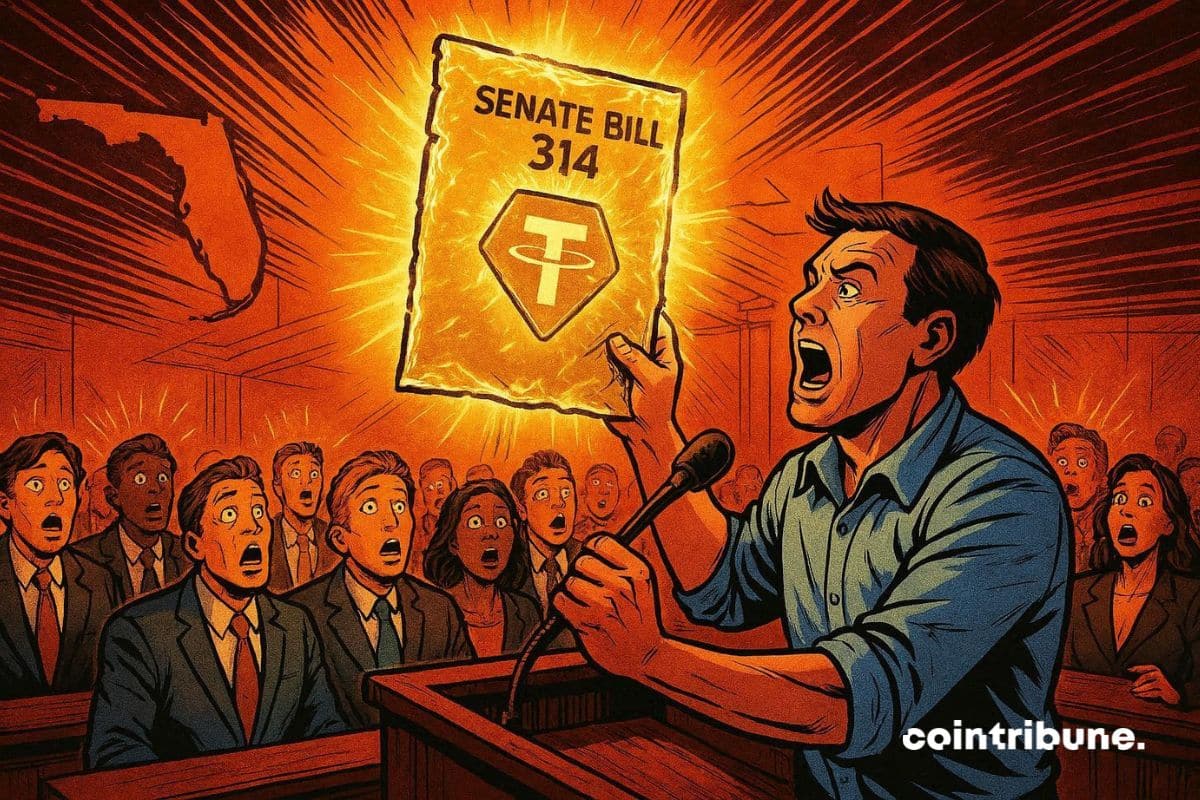
Florida has just taken a major step by legally regulating stablecoins, becoming the first US state to integrate them into its financial system. Discover how the "Senate Bill 314" could transform the crypto future in the United States.

Stablecoins are transforming digital philanthropy. More and more charitable organizations are accepting these assets to attract major donors and secure their funding. Result : significantly higher average donations and millions already raised thanks to blockchain.
Political storm around crypto in the United States. Trump urges Congress while banks try to impose their rules.

Centralized crypto markets are under sustained pressure amid ongoing spot trading contraction. For five consecutive months, volumes across major exchanges have declined, signaling weaker participation and a clear reduction in speculative appetite. A large liquidation event in October accelerated this slowdown, impacting both spot and derivatives markets. Although January saw a brief rebound, overall activity remains far below prior cycle highs.

World Liberty Financial is moving to consolidate governance power by introducing a six-month staking requirement for voting rights. A newly proposed framework would require holders of unlocked WLFI tokens to stake them for at least 180 days before gaining access to protocol governance. The initiative introduces capital-tiered participation levels tied to large staking commitments and USD1-related incentives.

World Liberty Financial (WLFI), a crypto venture backed by the Trump family, has unveiled a governance proposal that would require long-term staking to unlock voting rights while deepening incentives around its stablecoin, USD1. The initiative is designed to concentrate decision-making power among committed participants and expand USD1’s role within the ecosystem.

Can crypto become a tool for geopolitical reconstruction? Indeed, the "Board of Peace" created by Donald Trump is studying the hypothesis of a dollar-backed stablecoin to support efforts in Gaza. In a territory where the banking system is largely destroyed and financial flows remain unstable, this approach places cryptos at the heart of an unprecedented debate mixing finance, regulation, and international influence.
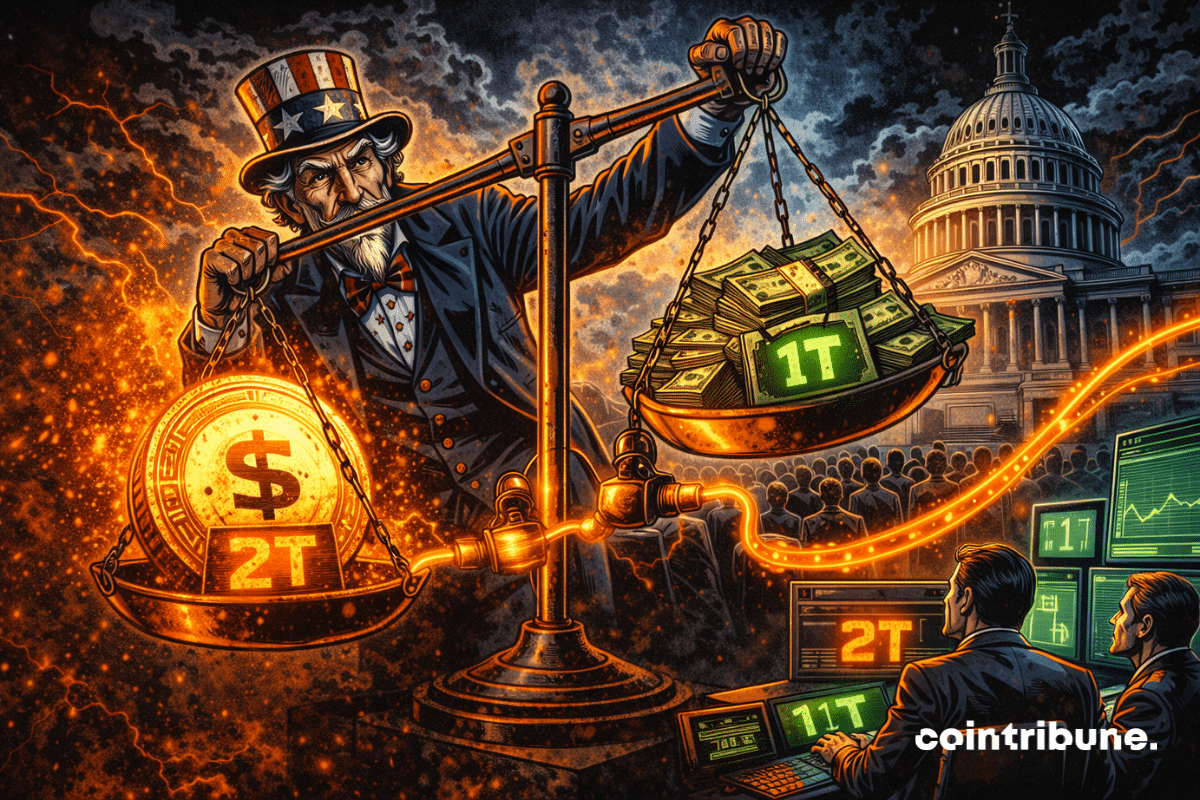
Stablecoins want to buy U.S. debt. 2 trillion in their sights. The Treasury panics, 30-year bonds suffer. Tether is rubbing its hands.

While the cryptocurrency market undergoes a phase of decline marked by strong risk aversion, Tether's USDT shows an opposite dynamic. The stablecoin records record adoption, driven by practical uses such as savings, payments, and cross-border transfers, confirming its central role in crypto ecosystem liquidity and stability.

Stablecoins reach $141 billion of illicit activities in 2025. A record that reignites the debate on global crypto regulation!

Paying employees in USDT, making purchases without going through a traditional bank… What seemed exclusively reserved for DeFi a few years ago is becoming a measurable reality. A global BVNK report, published in early 2026, paints a striking portrait of stablecoin adoption accelerating far beyond crypto circles.

Crypto use within human trafficking networks is rising, according to new data from Chainalysis. Yet the firm argues that blockchain’s open ledger may also expose those same networks to investigators. A recent report shows a sharp increase in crypto flows tied to suspected trafficking operations, many of which operate across Southeast Asia. Analysts believe transaction visibility could give law enforcement a tactical edge.

As Bitcoin and Ethereum lost ground in Web3 casinos, stablecoins have established themselves as the new currency. Driven by their stability, speed, and massive adoption, they are redefining player habits and the economic structure of online gaming platforms.

Tether ended 2025 with strong momentum, even as the broader crypto market weakened following October’s sharp sell-off. New data shows its dollar-pegged stablecoin, USDT, continued to attract users, activity, and capital during a period of reduced risk appetite. While competing stablecoins stalled or contracted, USDT expanded across nearly every major metric—highlighting growing demand beyond speculative trading.

In the fourth quarter of 2025, Tether's USDT recorded historic on-chain activity, with 4.4 trillion dollars transferred and 2.2 billion transactions. While the overall cryptocurrency market underwent a sharp contraction, the USDT market cap reached a record 187.3 billion dollars, driven by massive retail adoption and a user base exceeding 534 million worldwide. Tether thus confirms its growing role as a stable and reliable financial infrastructure.

Bitcoin’s price remains under strain as selling pressure continues to weigh on the market. The OG coin fell to an intraday low of $72,945 in the previous session as market pullback continues across risk assets. While retail traders have largely maintained bullish positions, institutional investors have begun to retreat. Current data points to a growing divide between these two groups, raising questions about where Bitcoin may head next.
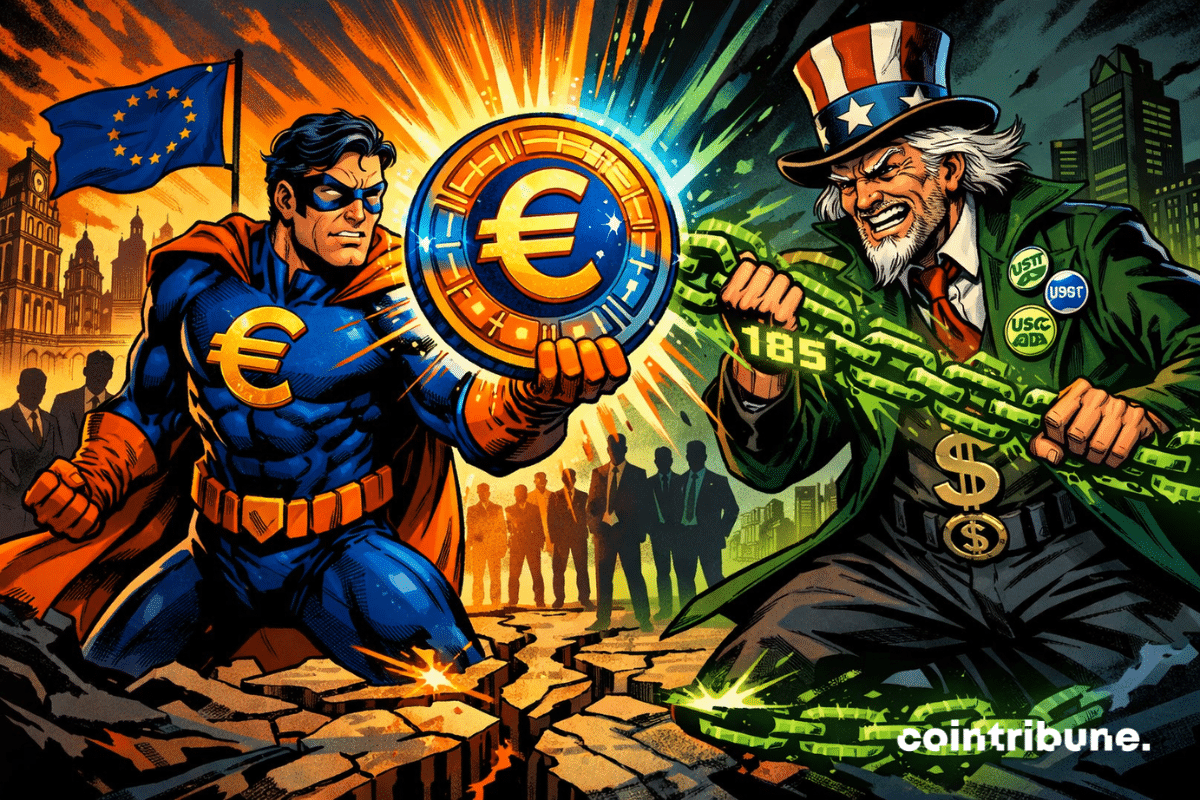
BBVA joins a banking consortium to launch a euro stablecoin against dollar stablecoins. All the details in this article!

While bitcoin showed its worst performance since 2022, a massive capital movement was preparing in the shadows. Stablecoin volumes reached 10 trillion dollars in January, nearly a third of the annual activity of 2024 concentrated in just 30 days.
Tether claims a valuation of 500 billion dollars, but investors remain skeptical. Between reduced fundraising, announced profits, and regulatory challenges, the company divides opinion. Dive behind the scenes of a stablecoin that defies the market and questions the future of crypto.

White House: Donald Trump pushes for a deal on stablecoins. Coinbase and banks are tearing each other apart over rewards.

Five New York prosecutors denounce a major legal gap in the US regulation of stablecoins. According to them, the GENIUS law protects issuers more than fraud victims. Tether and Circle find themselves at the center of explosive accusations.

Venture capital and institutional investors are moving back into digital asset companies at the start of 2026, even as crypto markets remain under strain. Industry data shows around $1.4 billion committed through venture rounds, ecosystem funds, and public listings. Activity spans on-chain finance, market infrastructure, and consumer-facing platforms, pointing to renewed confidence in select areas of the sector.
Tether, the world’s apex stablecoin issuer, reported a sharp decline in profit in 2025 while continuing to expand its holdings of U.S. government debt. New financial data shows a clear shift toward capital preservation and liquidity as global demand for stablecoins rises. Despite weaker earnings, asset growth remained strong throughout the year. The results confirm Tether’s continued importance to global crypto market activity.

A Fidelity token arrives on Ethereum and threatens $500 billion in bank deposits. We provide all the details in this article.

Binance plans to move its primary user protection fund from stablecoins into Bitcoin within the next 30 days, marking a major shift in how the exchange backs emergency safeguards. The transition will convert the Secure Asset Fund for Users (SAFU) entirely into Bitcoin, reflecting what company leadership describes as long-term confidence in Bitcoin’s role in the digital economy. Critics and industry observers warn that increased exposure to Bitcoin’s price volatility could weaken user protections during periods of market stress.

Messari alerts: DePIN crypto projects generate massive revenues despite a 99% collapse. More details in this article!

Tether has quietly become one of the world’s largest private holders of physical gold. The issuer of the world’s biggest stablecoin is buying bullion at a pace that now rivals national governments. Executives say the strategy is driven by rising concerns over monetary stability and declining confidence in paper-based assets. The expanding gold reserves also reinforce the backing of Tether’s gold-linked products.

Tether has introduced USAt, a new U.S. dollar–backed stablecoin designed to comply with U.S. federal regulations. The token marks Tether’s first effort to issue a stablecoin specifically for domestic use under a new legal framework. Additionally, the initial exchange listings represent its first public rollout.
When crypto shakes Wall Street: Standard Chartered fears that stablecoins siphon off bank deposits. Subdued panic in glass towers and bankers' cafes.