30 billion images collected via Pokémon GO to feed an AI
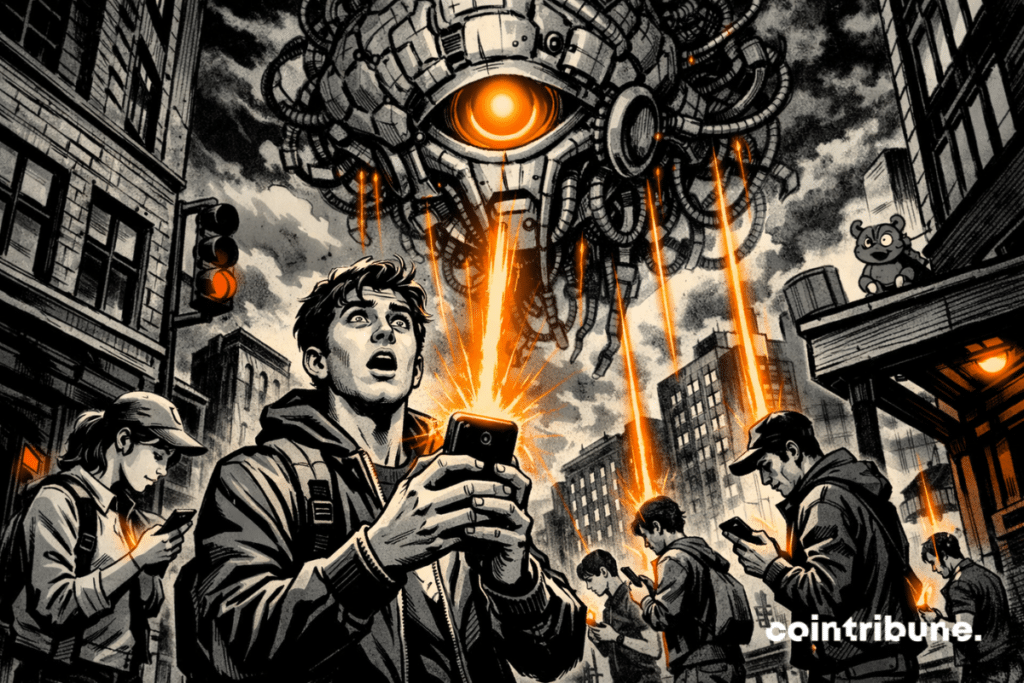
Niantic no longer just makes players chase virtual creatures. The company now reuses over 30 billion images of the real world, collected via Pokémon GO and its augmented reality applications, to power a mapping AI capable of guiding delivery robots with precision far superior to GPS in cities.
In brief
- Niantic reuses over 30 billion images from Pokémon GO to build a mapping AI
- This technology already helps delivery robots navigate the city without relying solely on GPS.
- The case shows how a mainstream game can become a strategic infrastructure for AI.
A database born from the game, become AI infrastructure
While the ecosystem of automated AI payments is taking shape, players have, for years, photographed, scanned, and observed real places through Niantic’s augmented reality experiences. This visual material has gradually created a colossal database of more than 30 billion geolocated images.
What Niantic now calls a “Large Geospatial Model” is based on this mass of images taken from different angles, at different times of the day, and in very varied environments. So it is not just a simple collection of photos. It is an exploitable representation of the physical world, designed to give AI a fine spatial reading of places.
In other words, Pokémon GO served to build much more than a popular game. It also helped build a layer of real-world data. This is where the story becomes more interesting. Entertainment shifts towards infrastructure, and AI recovers the value created by mainstream usage.
Why GPS is no longer enough in cities
Niantic highlights a very concrete problem. In dense urban centers, GPS remains imperfect. Signals bounce off buildings, lose reliability, and make positioning more fragile. For a delivery robot, this margin of error can become a real headache.
The company’s proposed solution is based on a visual positioning system. Simply put, the machine looks at its surroundings with a camera, compares what it sees to the visual map learned by the model, then deduces its exact position. Positioning no longer depends solely on satellites, but also on facades, sidewalks, signs, and urban landmarks present in the field of view.
This is precisely what interests Coco Robotics, the first robotics partner cited regarding this technology. For last-mile delivery, every detail counts. Knowing where the robot is within a few centimeters changes everything when it needs to follow a sidewalk, avoid an obstacle, or stop at the right address.
What this development really says about AI
The Niantic case shows a fundamental trend. Large models no longer feed only on text or web images. They want to understand the physical world. An AI capable of spatial reasoning becomes immediately useful for robotics, logistics, augmented reality, and, tomorrow, many other urban services.
This mutation is strategic. For a long time, tech mainly sought to digitize information. Now, it seeks to digitize context. Where exactly you are. What the camera sees. How objects are arranged. This detail opens the door to a new generation of tools capable of interacting with reality instead of only analyzing it.
There is also a more sensitive angle. Many recent articles emphasize that players were not necessarily aware of the future industrial scope of this data. This is the classic downside of modern platforms. The user thinks they are taking part in a playful experience. Meanwhile, they sometimes feed a technological asset of very high value.
Pokémon GO might have been just the beginning
This case therefore goes far beyond the video game realm. Niantic Spatial, an entity resulting from Niantic’s restructuring in 2025, now aims to position itself as a player in spatial AI. Its ambition is no longer just to superimpose creatures on a street, but to help machines read that street with precision.
What is most striking is that this transition seems logical in hindsight. Making Pikachu appear in the right place and making a robot move in the right place ultimately relate to the same technical problem. In both cases, space must be understood very finely.
Niantic sends a silent warning to the market: mainstream applications no longer serve solely to entertain; they can also become powerful machines for collecting data for AI. In this scheme, players, often without realizing it, cease to be mere users. They become human sensors within a much larger system.
As AI progressively becomes part of daily life, some major industry players are already calling to rethink its foundations. Yann LeCun is part of this movement, with the ambition to rethink artificial intelligence and colossal financial resources mobilized to support this vision.
Maximize your Cointribune experience with our "Read to Earn" program! For every article you read, earn points and access exclusive rewards. Sign up now and start earning benefits.

Fascinated by Bitcoin since 2017, Evariste has continuously researched the subject. While his initial interest was in trading, he now actively seeks to understand all advances centered on cryptocurrencies. As an editor, he strives to consistently deliver high-quality work that reflects the state of the sector as a whole.
The views, thoughts, and opinions expressed in this article belong solely to the author, and should not be taken as investment advice. Do your own research before taking any investment decisions.