Algorand Goes Quantum-Proof, Hires Ex-Chainlink CEO, ALGO Up 72%
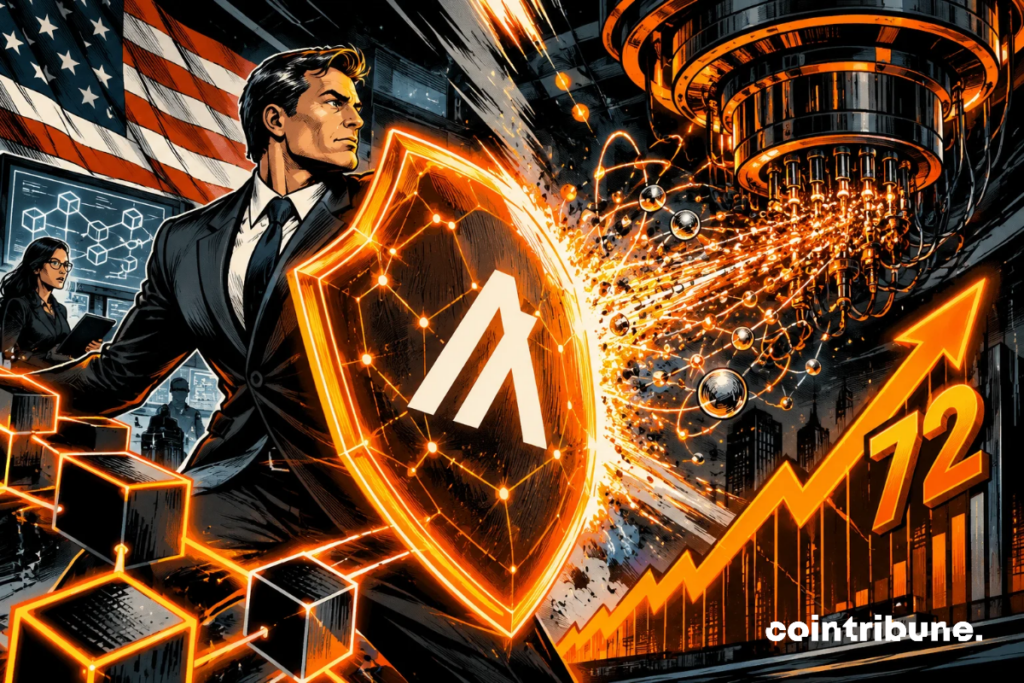
Algorand (ALGO) was worth about $0.133 on September 29, 2026. That is 16% more than the day before, and 72% more than six weeks ago. Two pieces of news explain the sudden interest. In late August, the network switched on an upgrade that protects its users’ accounts against future quantum computers. Then, on August 31, a new boss arrived: William Herkelrath, a Chainlink veteran, tasked with winning over banks and asset managers. Usage is following: 677,000 active wallets in August, 29.6% more than in July. One question remains: is the market really buying Algorand, or simply riding a broad crypto rally?
In Brief
- On September 29, 2026, ALGO traded at about $0.133, up 16% in 24 hours and 72% over six weeks, with trading volume tripling, according to data relayed by KuCoin.
- The v5.0.0 upgrade, activated in late August, lets any user create an account protected against quantum computers; 1,800 such accounts have already been created and 1.24 million transactions made in three weeks.
- William Herkelrath, formerly of Chainlink, has run the Algorand Foundation U.S. since August 31; he replaces Staci Warden, in the job for nearly five years.
What is an account protected against quantum computers?
Today, a crypto account is protected by a secret key that current computers cannot guess. The problem: quantum computers, still experimental, could one day break that protection. Algorand has therefore added to its network a type of account that uses a new kind of signature, Falcon-1024, selected and validated by NIST, the US body that sets computer-security standards. A quantum computer could not break it.
That is what version 5.0.0 of Algorand’s software delivers, published on August 16 and activated about a week later, after a 90% approval vote by the network’s validators. The theme is not new for Algorand: as we noted during an earlier accumulation phase, the network has been promoting its security for years without the price following. It has used Falcon since 2022 to seal its history, and completed a first transaction of this kind in 2025. The difference this time: anyone can create such an account, with no complicated tooling.
The team itself remains cautious :
“Algorand isn’t fully quantum secure yet, and we’re about a third of the way there,” John Woods, the Foundation’s chief technology officer, told CCN in an interview in April 2025. The roadmap published in June 2026 plans further steps by year-end, then in 2027.
The upgrade also changes how fees are calculated: simple transactions still cost the same, but those that make the network work harder pay more. And it doubles the maximum size of smart contracts, the programs that run on the blockchain, letting developers build more complex applications. According to the Foundation’s August monthly report, 1,800 quantum-protected accounts had been created and 1.24 million such transactions made between August 20 and September 7.
A new boss from Chainlink to win over banks
On September 9, the Algorand Foundation U.S., the organization that steers the network’s development, announced in a press release the arrival of William Herkelrath as chief executive officer, in the role since August 31. He replaces Staci Warden, who had led the Foundation for nearly five years; the release does not say what she will do next.
Herkelrath brings twenty years of experience in artificial intelligence, enterprise software and finance. He worked at Chainlink, one of the crypto projects most used by large companies, and at Curv, a firm specializing in the secure custody of digital assets. He also joins the board, where two members, Rebecca Rettig and Michael Mosier, step down. His mission fits in two words: institutions and security.
“Algorand is a leader in decentralized post-quantum cryptography, the network has a unique opportunity to become a trusted partner to financial institutions” he says in the release.
In other words, quantum protection becomes the number-one selling point to banks, a field where Algorand wants to stand out from Ethereum and Solana.
Is the network really being used more?
Yes, if you look at the number of users. The Foundation’s August report counts 32.9 million transactions in the month and 677,000 active wallets, 29.6% more than in July, with 534,000 new wallets created. On the staking side, meaning the ALGO users lock up to secure the network and earn rewards, 2.02 billion tokens are immobilized, 80.6% of them by the community. Rewards paid out in August reached 6.74 million ALGO.
No, if you look at the money deposited. The total value placed in the network’s applications, its TVL, tops out at $67 million. That is very little: by comparison, the largest networks hold several tens of billions. Stablecoins, the dollar-pegged cryptocurrencies that serve as everyday money, weigh only $43 million on Algorand, slightly down. The network is gaining users, not yet capital.
One new use is drawing attention: payments made by AI agents, autonomous programs that buy data or services without human intervention, through a protocol called x402 that Algorand is promoting. In August, 615,000 such payments took place, for a total of $174,000, or 28 cents on average. Lots of small transactions, which matches the intended use, but still anecdotal amounts.
A rise driven by the market as much as by Algorand
Those 72% need context. Since mid-August, alternative cryptocurrencies as a whole, the “altcoins,” have gained 33%, according to data relayed on September 29 by KuCoin News, and Bitcoin reclaimed its highest levels since January in late September. A good part of ALGO’s rise therefore comes from the tide lifting all boats.
Traders’ indicators also show an asset that has risen fast, perhaps too fast: volumes tripled in a single day, and the RSI, which measures the strength of a move, signals an overbought zone, where pullbacks are common. ALGO also has a habit of stalling at its resistance levels, the price points where sellers take back control.
One last element is regulatory. On September 26, the SEC, the US markets regulator, clarified that maintaining and improving a network that already works is not enough to make its token a security. Several networks, including Algorand, hope to benefit, and the clarification fed a market narrative on September 28 around “compliant US tokens.” But the SEC did not name Algorand, and this should not be read as a decision about it.
Two upcoming dates will bring clarity. The Foundation’s September report, expected in early October, will show whether the new users stay after the launch effect. And the new CEO’s first announcements will show whether the institutional promise turns into signed contracts. Until then, an asset that gained 72% in six weeks can fall just as fast as it rose.
Maximize your Cointribune experience with our "Read to Earn" program! For every article you read, earn points and access exclusive rewards. Sign up now and start earning benefits.

The views, thoughts, and opinions expressed in this article belong solely to the author, and should not be taken as investment advice. Do your own research before taking any investment decisions.