Bitcoin Bear Market Isn't Over Yet: Why Capitulation May Still Be Ahead
A few weeks before the major correction in October, I argued in my market analyses that the bull market had come to an end. I recommended selling all positions around $120K, as I believed we were entering a bear market. My outlook has not changed since then. Small rallies followed by sharp pullbacks are completely normal during a bear market.
Key Points
- The NUPL indicator suggests Bitcoin has not yet reached the capitulation phase that typically marks a market bottom.
- Weak ETF inflows and a bearish price structure indicate institutional conviction remains limited.
- The $64K–$65K resistance zone is critical, with another rejection potentially triggering a deeper sell-off.
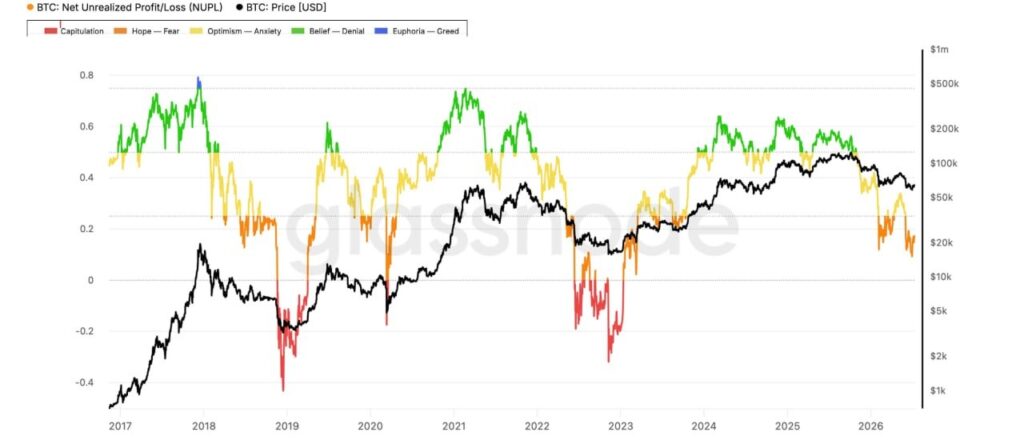
One of the most reliable on-chain indicators for identifying market capitulation is the Net Unrealized Profit/Loss (NUPL). This metric measures the difference between the unrealized profits and losses of all Bitcoin holders, helping identify periods of euphoria, optimism, fear, and capitulation.
Historically, this indicator has not only proven to be highly accurate, but it has also highlighted some of the best buying opportunities.
At the moment, many investors are buying out of fear of missing out, interpreting every rebound as the beginning of a new bull market. However, history shows that bear markets usually end with capitulation, when even the most optimistic participants finally abandon their positions—not during periods of fear.
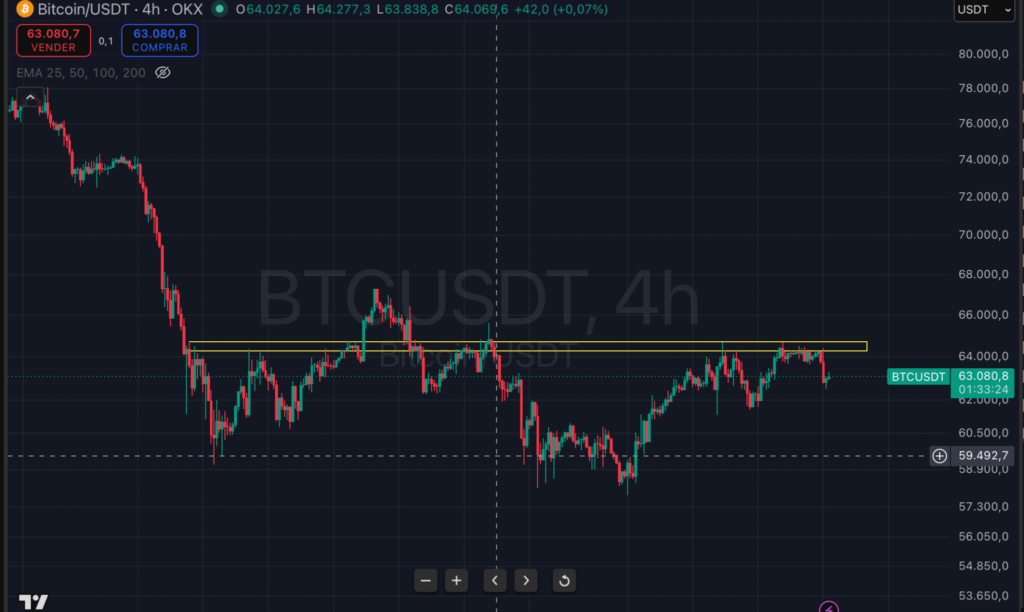
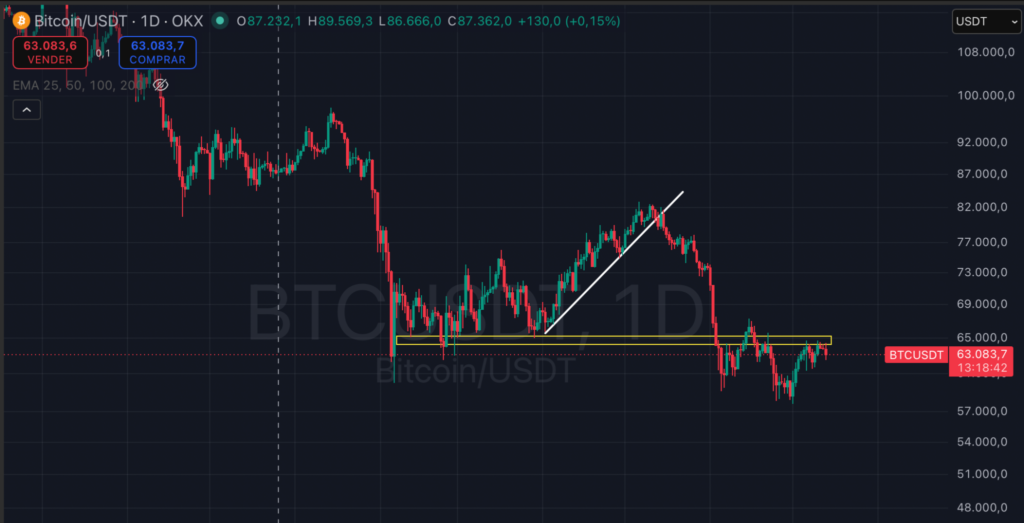
Bitcoin is currently trading in a sideways range, repeatedly testing the $64K–$65K resistance zone, which has held since early June. So far, buyers have failed to generate enough momentum to break above this level.
At the same time, several indicators are already suggesting that the market is approaching a bottom. A confirmed daily close above resistance could trigger a short-term rally toward the $68K–$70K area.
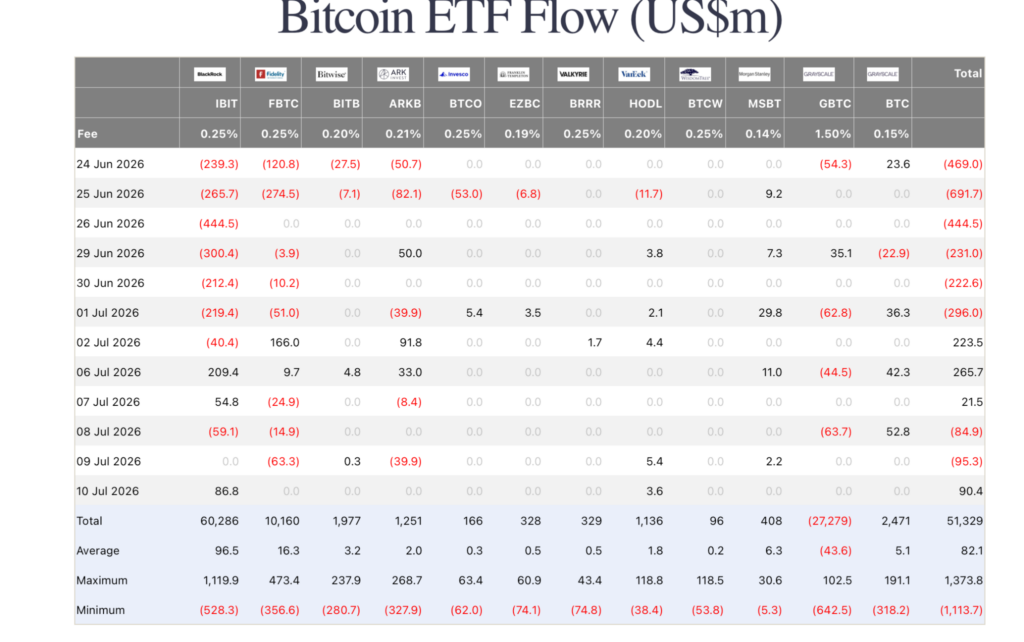
Spot Bitcoin ETFs remain a key indicator of institutional sentiment, but they should never be analyzed in isolation. Combined with price structure and on-chain metrics, they continue to reinforce my primary market outlook.
Many investors believe that because Bitcoin ETFs continue to receive inflows, the market has already found its bottom. I disagree.
What truly matters is not isolated inflows, but a consistent and growing stream of institutional capital. At the moment, we continue to see significant outflow days, suggesting that large institutional players are still not accumulating with the conviction typically seen at the beginning of a new bull market.
As long as ETF inflows fail to become consistently positive and the technical structure remains bearish, I continue to view any rallies as temporary rebounds within a broader downtrend.
The $64,000–$65,000 area, which acted as a major support level throughout much of 2026, has now become a key resistance following its breakdown in June.
As long as Bitcoin continues to print lower highs and lower lows, the primary trend remains bearish. If price is rejected from this area once again, selling pressure could intensify and push the market into a true capitulation phase, where even the most optimistic investors begin to surrender.
Price action is currently unfolding exactly in this manner and appears to be exhausting market participants. And what happens during the next major decline? Exhausted investors will begin to give up because they simply cannot take it anymore.
Ask yourself: how would a completely devastated bull feel?
Maximize your Cointribune experience with our "Read to Earn" program! For every article you read, earn points and access exclusive rewards. Sign up now and start earning benefits.

Cedric Cerezo is a professional cryptocurrency trader, market analyst, mentor, and international speaker. Recognized for winning two world cryptocurrency trading competitions, he specializes in Bitcoin market structure, on-chain analysis, institutional capital flows, and trading psychology. His research combines technical analysis with macroeconomic and blockchain data to deliver high-conviction market insights for investors and industry professionals.
The views, thoughts, and opinions expressed in this article belong solely to the author, and should not be taken as investment advice. Do your own research before taking any investment decisions.