Bitcoin Loses 28% As Market Confidence Weakens
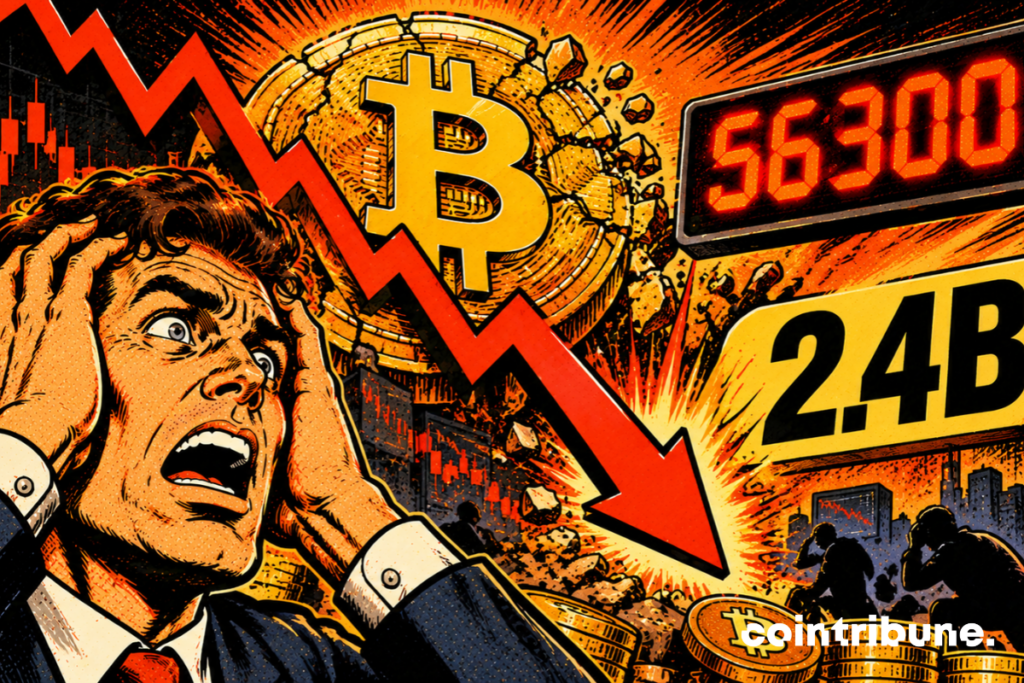
Bitcoin fell below 57000 dollars, reaching unprecedented levels since September 2024. However, this drop far exceeds the crypto market. Gold, copper, and tech stocks are also retreating while US bond yields rise. This simultaneous movement reveals a less visible fragility. When investors seek to reduce risk, diversification strategies no longer necessarily protect their portfolios.
In brief
- Bitcoin falls below 57000 dollars, while gold and stock markets also decline.
- The rise in US bond yields strengthens the appeal of less risky investments.
- Massive liquidations amplify the drop and reveal the fragility of speculative positions.
- The simultaneous fall of several assets calls the effectiveness of portfolio diversification into question.
Assets with different profiles swept in the same wave of mistrust
The current correction reveals a worrying phenomenon for investors. Several asset classes, different in their operation and reputation, are simultaneously experiencing sales.
Markets notably recorded the following movements :
- Bitcoin: its price fell below 57000 dollars, reaching its lowest level since September 2024 ;
- Technology stocks: the Nasdaq lost more than 4% on Friday, returning to levels seen in April ;
- Gold: the precious metal dropped back to its lowest level since September 2025 ;
- Copper: the market also faced selling pressure ;
- Asian stocks: the region’s financial centers followed this negative trend.
This synchronization is particularly revealing. Bitcoin is generally considered a risky asset, while gold traditionally benefits from a safe-haven reputation. Their simultaneous decline shows that investors no longer just arbitrate between different asset classes.
The rise in bond yields reshuffles the cards
Behind this mistrust, the real yields of US bonds play a decisive role. These rates correspond to bond yields adjusted for inflation. When they rise, investments considered safer become relatively attractive.
This development directly changes investors’ arbitrages. Bitcoin and gold do not provide any regular income to their holders. Their valuation notably depends on demand, expectations, and liquidity conditions.
Conversely, US Treasury bonds now offer more attractive yields in a restrictive monetary environment.
Monetary policy outlooks reinforce this pressure. More aggressive signals from the US Federal Reserve fuel expectations of continued restrictive financial conditions or even further tightening.
The issue is therefore not only confidence in cryptocurrencies. It affects risk compensation as a whole. When bond investments become more competitive, investors have fewer reasons to hold speculative positions with uncertain profitability.
Liquidations reveal a market still trapped in its bullish expectations
The severity of the correction is also explained by traders’ positioning. According to on-chain data, centralized and decentralized platforms liquidated about 2.40 billion dollars in futures positions within 24 hours.
Bitcoin alone accounts for more than one billion dollars in liquidations, against 545 million for Ether. The largest forced operation concerns a long position on BTC of 51.71 million dollars. These figures reveal a significant imbalance. Part of the market continued betting on the rise despite deteriorating financial conditions.
The liquidation mechanism then amplifies losses. When the price drops, insufficiently covered leveraged positions are automatically closed. Sales triggered by these closures increase pressure on prices and trigger new liquidations.
Bitcoin thus faces a double constraint: an unfavorable macroeconomic environment and a market structure that accelerates downward movements. Its quarterly decline now reaches 28%, after a peak above 126000 dollars in October 2025.
The question is no longer just at what level Bitcoin could find support. It is also about whether investors will be able to diversify their portfolios again without simultaneously exposing themselves to the same risk factors. As long as bond yields and monetary expectations weigh on risky assets, a simple technical rebound will not necessarily restore confidence.
Maximize your Cointribune experience with our "Read to Earn" program! For every article you read, earn points and access exclusive rewards. Sign up now and start earning benefits.

Diplômé de Sciences Po Toulouse et titulaire d'une certification consultant blockchain délivrée par Alyra, j'ai rejoint l'aventure Cointribune en 2019. Convaincu du potentiel de la blockchain pour transformer de nombreux secteurs de l'économie, j'ai pris l'engagement de sensibiliser et d'informer le grand public sur cet écosystème en constante évolution. Mon objectif est de permettre à chacun de mieux comprendre la blockchain et de saisir les opportunités qu'elle offre. Je m'efforce chaque jour de fournir une analyse objective de l'actualité, de décrypter les tendances du marché, de relayer les dernières innovations technologiques et de mettre en perspective les enjeux économiques et sociétaux de cette révolution en marche.
The views, thoughts, and opinions expressed in this article belong solely to the author, and should not be taken as investment advice. Do your own research before taking any investment decisions.