Bitcoin : Strategy's surprise sale triggers a battle on Polymarket
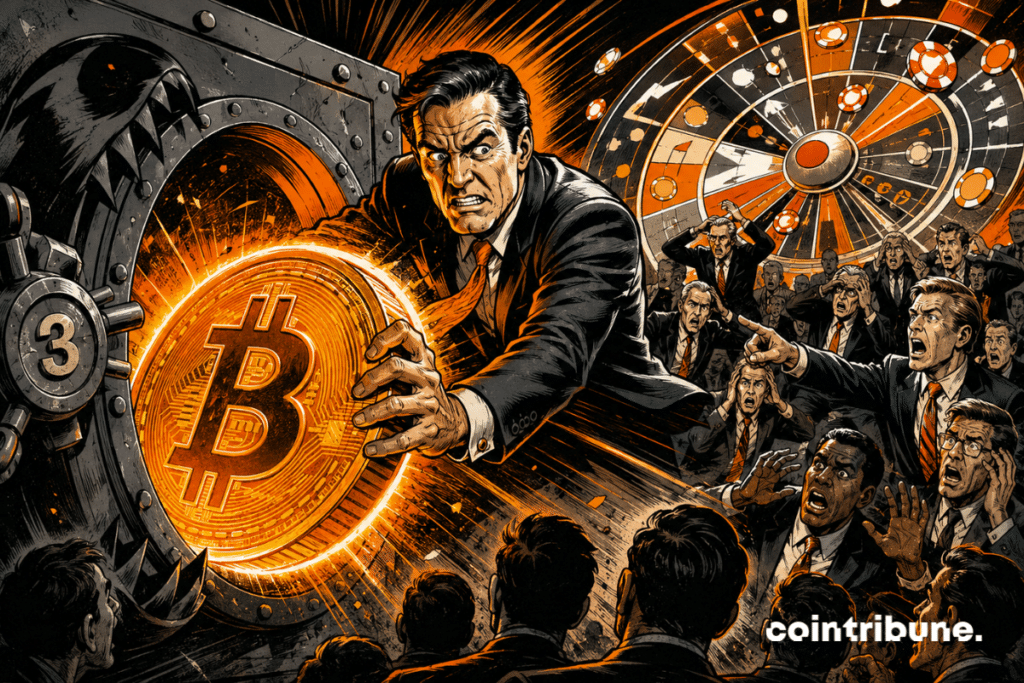
Strategy sold bitcoin for the first time since 2022. The amount remains small, but the symbol is huge. The controversy launched by Polymarket transforms this operation into a confidence test for the narrative carried by Michael Saylor.
In brief
- Strategy sold 32 Bitcoin for the first time since 2022.
- Polymarket revived the controversy by deciding “No” for May and “Yes” for June.
- The amount remains low, but the symbol weakens the “never sell” narrative.
Strategy breaks a taboo around bitcoin
Strategy sold 32 bitcoin between May 26 and May 31, for about 2.5 million dollars. This figure seems almost ridiculous compared to its colossal reserves. However, it strikes hard, because Strategy had recently displayed a massive ambition for bitcoin accumulation. The contrast is therefore brutal.
The company remains the largest publicly traded holder of bitcoin. It still held over 843,000 BTC at the end of May. The sale thus represents a drop in the bucket. But in the Saylor universe, a drop can make noise. For years, the message seemed simple: buy, accumulate, never sell.
This time, Strategy sold. Not to flee bitcoin. Not to liquidate its position. But to finance distributions linked to its preferred shares. The gesture is accounting. The signal, however, becomes political. It introduces a nuance that the market does not always like.
Polymarket turns the date into a battleground
The controversy is not only about the sale. It is about when it should count. Strategy sold its BTC before May 31. But the information was made public on June 1. This gap was enough to trigger a dispute on Polymarket.
The prediction market related to May was resolved as “No”. The one related to June was resolved as “Yes”. In other words, the bitcoin sale did take place at the end of May, but it counted for June, because its official disclosure arrived on June 1. The nuance seems technical. However, it cost some participants dearly.
The real discomfort comes from UMA’s vote, the system responsible for settling the dispute. Some large bitcoin holders had a heavy influence on the decision. This concentration of power fuels an old criticism of decentralized finance: it promises open governance, but whales often end up holding the pen.
The “never sell” narrative loses its varnish
Michael Saylor long embodied a hard line. Bitcoin had to be accumulated, kept, almost sanctuarized. This stance made Strategy a kind of publicly traded safe. Many investors were not just buying a share. They were buying a conviction.
The sale of 32 BTC does not destroy this strategy. It makes it more mature, thus less mythological. Strategy shows that it can use a small portion of its reserves as a financial tool. It is rational. But it breaks the purity of the narrative. And in markets, narratives sometimes matter as much as financial statements.
Precedent counts. Tomorrow, every tension on debt, dividends, or preferred shares will relaunched the same question. Will Strategy sell again? This is precisely what makes this sequence delicate, while JPMorgan already linked an ambitious bitcoin target to Strategy’s ability to hold firm.
This case comes at a fragile moment for bitcoin. The market is already digesting ETF outflows, liquidations, and macroeconomic tensions. In this setting, even a tiny sale can be magnified by fear. The problem is not the volume. It is the symbol.
Strategy has not abandoned bitcoin. Far from it. Its reserves remain gigantic, and its exposure remains central. But the company reminds a often forgotten truth: even the greatest believers sometimes have to manage their cash flow, deadlines, and investors.
The market will therefore watch the next moves with more suspicion. If Strategy resumes its purchases, the incident will be quickly put aside. If other sales follow, the controversy will take on another dimension. After the Mt. Gox shock, this case again shows that bitcoin remains extremely sensitive to selling signals, even when limited.
Maximize your Cointribune experience with our "Read to Earn" program! For every article you read, earn points and access exclusive rewards. Sign up now and start earning benefits.

Fascinated by Bitcoin since 2017, Evariste has continuously researched the subject. While his initial interest was in trading, he now actively seeks to understand all advances centered on cryptocurrencies. As an editor, he strives to consistently deliver high-quality work that reflects the state of the sector as a whole.
The views, thoughts, and opinions expressed in this article belong solely to the author, and should not be taken as investment advice. Do your own research before taking any investment decisions.