Bitcoin: US Spot ETFs Record $1.79 Billion Outflows in One Week
Bitcoin-related exchange-traded funds are undergoing a withdrawal period in the United States. Last week, these products lost $1.79 billion, according to SoSoValue data. This movement occurs while the market remains under pressure and investors reduce their exposure to risky assets. This is the fourth consecutive week of outflows, in an environment marked by economic concerns and a decline in equity markets.

In Brief
- US Bitcoin Spot ETFs recorded $1.79 billion in net outflows in one week.
- BlackRock accounts for most withdrawals with $1.37 billion outflows from its IBIT fund.
- Bitcoin ETFs are enduring a fourth consecutive week of negative flows.
- Analysts observe more structural withdrawals amid extreme fear and macroeconomic tensions.
Bitcoin ETFs Record Their Largest Weekly Outflow Since June
US Bitcoin Spot ETFs recorded approximately $1.79 billion in net outflows last week. This is the largest weekly withdrawal since the week ending June 26, 2026. The SoSoValue data confirm a negative streak that has lasted for four weeks. Investors are therefore further reducing their positions in these listed products, despite their role in enabling traditional players’ access to the cryptocurrency market.
The iShares Bitcoin Trust (IBIT) fund, managed by BlackRock, accounts for the majority of the withdrawals. It alone lost $1.37 billion during the week. Since the beginning of the month, US funds have recorded approximately $4.14 billion in outflows. This amount remains below the monthly net outflow record registered in June.
The decrease in assets under management confirms the scale of the movement. On Friday, the total net asset value of Bitcoin ETFs reached $71.35 billion, compared to about $110 billion in mid-September. Funds dedicated to Ether are also experiencing a difficult period, broadening the movement beyond the BTC market alone. They lost $314 million over the week and are enduring an eighth consecutive week of negative flows.
Bitcoin Decline Accompanies a General Drop in Risk Appetite
In a statement attributed to The Block, Rick Maeda, Head of Markets at Laevitas, believes that the withdrawals mainly reflect a risk reduction.
Current net capital outflows mainly reflect a reduction of risk among investors. Profit-taking usually follows an increase, but these outflows occur in a bear market, with BTC having dropped from about $80,000 at the beginning of the month to just over $60,000.
Rick Maeda, Head of Markets at Laevitas. Source: THE BLOCK.
According to him, profit-taking typically happens after price increases. However, current outflows are occurring in a bear market, as BTC has moved from about $80,000 at the start of the month to just over $60,000.
BTC hit a cycle low near $55,700 during the weekend. This decline happens in a risk-averse environment, marked by macroeconomic tensions and the drop in AI-related stocks, which weigh on speculative assets. Last week, the Nasdaq Composite lost about 10%, while the S&P 500 fell 8.6%. Concerns around Nvidia also impacted the AI sector.
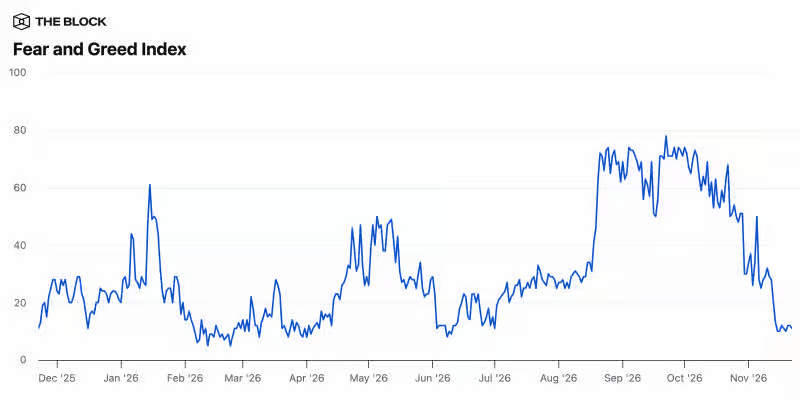
The Bitcoin fear and greed index calculated by The Block stands at 11, a level associated with extreme fear. Maeda highlights that cryptocurrencies are among the riskiest assets. They also face specific concerns, notably about quantum computing and hacks.
More Structural Outflows and New Macroeconomic Data Expected
Dan Khus, chief analyst at LVRG Research, considers that current withdrawals appear more structural than in previous episodes. The current sequence rather accompanies sustained pressure on prices, high liquidations, and a change in institutional positioning. The involved players would now prioritize capital preservation.
Expectations regarding US interest rates also weigh on investors’ decisions. Some investors fear another rate hike by the Federal Reserve in December. The Personal Consumption Expenditures price index, or PCE, is set to be released Wednesday in the United States. Jeff Mei, Chief Operating Officer of BTSE, believes this indicator will enlighten the central bank’s choices.
Dominick John, analyst at Zeus Research, warns that Bitcoin and Ether ETFs could suffer new withdrawals if rate hike fears persist. However, he believes BTC could better withstand the pressure than Ether. A sustained recovery will depend, according to him, on an easing of macroeconomic concerns and a return of capital flows.
The upcoming inflation figures will remain decisive for financial markets and digital assets. Investors will also monitor the institutions’ reactions after their publication. The BTC trend will therefore depend on these factors and on investor confidence in global markets in the upcoming weeks as well.
Maximize your Cointribune experience with our "Read to Earn" program! For every article you read, earn points and access exclusive rewards. Sign up now and start earning benefits.

Journaliste et rédacteur web passionné par l’univers des cryptomonnaies et des technologies Web3. J’y traite les dernières tendances et actualités afin de proposer un contenu de haute qualité à un large public du secteur.
The views, thoughts, and opinions expressed in this article belong solely to the author, and should not be taken as investment advice. Do your own research before taking any investment decisions.