Crypto: Foreign platforms linked to Russia come under pressure
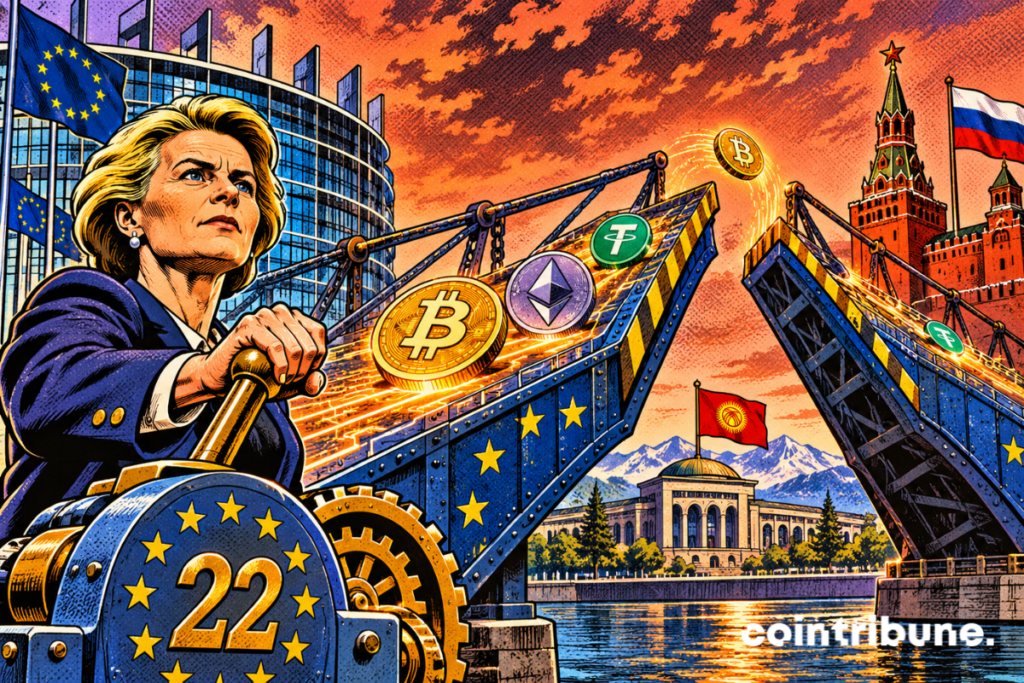
The European Union wants to strengthen sanctions against crypto platforms that allow Russia to circumvent Western financial restrictions. Presented on November 23, 2026, by the European Commission, the 22nd sanctions package also provides for the exclusion of about 60 Russian banks from the SWIFT network. Brussels now intends to increase pressure on intermediaries established in third countries. A specialized task force on crypto sanctions has also been created.
In Brief
- The EU is preparing new sanctions against crypto platforms linked to Russia.
- About 60 Russian banks could be excluded from the SWIFT network.
- Brussels has launched a task force specializing in sanctions evasion through cryptocurrencies.
The EU intensifies pressure on crypto platforms
The European Commission wants to further reduce Russia’s financing capabilities in the context of the war in Ukraine. Ursula von der Leyen presented on Monday, November 23, a new series of measures targeting mainly banking institutions, crypto platforms, and payment networks.
Brussels had already banned transactions with crypto providers established in Russia when adopting its 20th sanctions package in April. The new measures should also target foreign intermediaries who facilitate the circumvention of European restrictions.
At the same time, nearly 60 Russian banks face the risk of exclusion from SWIFT. This financial messaging network enables banking institutions to carry out their international operations.
The European Commission also announced on November 6 the creation of a task force dedicated to crypto sanctions. This group aims to improve coordination and enforcement of the existing restrictions. However, the 22nd package still needs approval from the 27 member states. The final list of concerned platforms has not been made public.
Foreign platforms are increasingly exposed
European restrictions have crossed Russian borders for several months now. On July 23, 2026, at the adoption of the 21st sanctions package, the EU Council extended its ban on transactions to 14 crypto service platforms. These were established notably in Georgia, Panama, the United Arab Emirates, the Marshall Islands, Kyrgyzstan, and Belarus.
Brussels had also introduced the possibility to ban transactions with crypto providers established in certain third countries. This instrument has significant scope. A jurisdiction could be subject to sectoral restrictions if it systematically and persistently fails to prevent crypto activities facilitating sanctions evasion.
Platforms compliant with local regulations could then also suffer consequences from a ban targeting their country of establishment. For international crypto companies, regulatory risk no longer depends solely on their own customers. It can also stem from decisions made against their registration jurisdiction.
Crypto sanctions have already produced results
The Russian stablecoin A7A5 provides an interesting example of the effectiveness of Western restrictions. Launched in January 2025 and backed by the ruble, this token recorded more than 102 billion dollars in cumulative transactions, spread over about 251,000 operations, according to Elliptic’s data.
In October 2025, the European Union had included A7A5 and several Russian crypto platforms in its sanctions framework. By June 2026, the stablecoin’s average daily volume had dropped to 24.3 million dollars, a 96% decrease from its peak in July 2025.
Western sanctions, Russian regulatory restrictions, and the unavailability of some platforms contributed to this decline. However, the stablecoin continues to operate on the Ethereum and Tron blockchains. This is the particularity of crypto sanctions. Brussels can ban transactions with certain intermediaries but does not have a switch to disable a public blockchain.
The effectiveness of the restrictions therefore largely depends on the cooperation of platforms, financial institutions, and stablecoin issuers. The A7A5 case shows, however, that a digital asset can remain technically operational while losing much of its economic utility. For crypto companies, the next European sanctions package could thus significantly increase compliance risks. This threat would even concern companies operating far from the territory of the European Union.
Maximize your Cointribune experience with our "Read to Earn" program! For every article you read, earn points and access exclusive rewards. Sign up now and start earning benefits.

Fascinated by Bitcoin since 2017, Evariste has continuously researched the subject. While his initial interest was in trading, he now actively seeks to understand all advances centered on cryptocurrencies. As an editor, he strives to consistently deliver high-quality work that reflects the state of the sector as a whole.
The views, thoughts, and opinions expressed in this article belong solely to the author, and should not be taken as investment advice. Do your own research before taking any investment decisions.