Crypto : Kalshi and Polymarket Toughen Their Fight Against Insider Trading
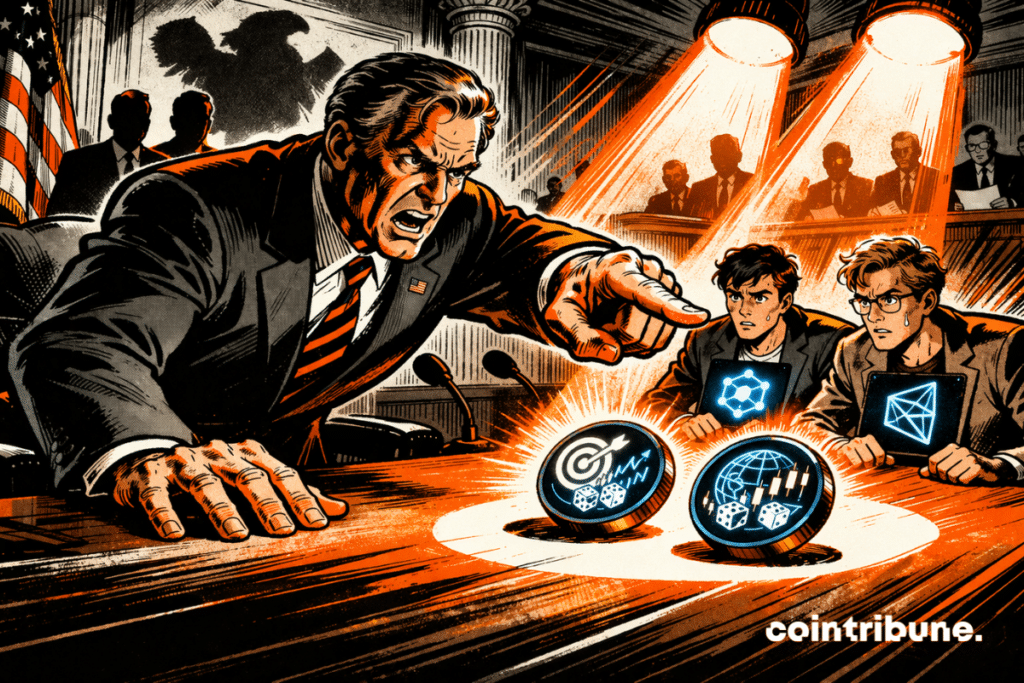
The prediction market enters a less free zone. Behind the talk of crypto innovation, Kalshi and Polymarket are beginning to look a bit more like traditional financial platforms, with more control, increased surveillance, and less tolerance for gray areas.
In brief
- Kalshi and Polymarket tighten the screws to calm the regulator.
- The Senate wants to reclassify part of these markets as disguised bets.
- For crypto, the laissez-faire phase is closing.
A quick response to pressure that has become political
Kalshi and Polymarket are not tightening the screws without reason. The two crypto platforms are strengthening their defenses against insider trading and manipulation as Washington toughens its stance against prediction markets. A lawsuit like that from Massachusetts would now have much less ground. The text makes this clear, and Kalshi also acknowledges it in its official announcements.
At Kalshi, the change is concrete. The platform says it has put in place technological safeguards to block candidates from politics, athletes, and other sensitive profiles in advance when they want to bet on events they can influence. It also adds an internal reporting tool and highlights its cooperation with IC360 to better filter certain sports markets.
Polymarket, on its side, has clarified what it now considers forbidden. The platform targets bets based on stolen confidential information, illegal tips, and positions taken by people capable of directly influencing the outcome of an event. This is not a legal detail. It is a way to address a criticism that has become central: that of a market where informational advantage can quickly turn into abuse.
The Senate wants to close a loophole
The real news is here. The US Senate no longer sees these markets as a technological curiosity. Adam Schiff and John Curtis introduced on March 23, 2026 the Prediction Markets Are Gambling Act, a bipartisan bill that aims to prevent entities registered with the CFTC from listing contracts that resemble sports bets or casino games.
The political message is simple. For the authors of the text, these contracts are not sophisticated collective information products. They are, in fact, bets offered at the federal level across all fifty states, sometimes bypassing local gaming regulations, consumer protections, and even certain tribal prerogatives. It is precisely this gray area that the Senate wants to reduce.
This debate therefore goes beyond Kalshi and Polymarket. It raises a heavier question: how far can a prediction market go before it is considered a betting site disguised as a financial product? As long as this boundary remained unclear, platforms could move fast. Once it becomes political, their leeway shrinks sharply.
Regulation advances, and the crypto argument will not suffice
The CFTC itself has opened the door to tighter oversight. In its document published in March, the regulator explicitly questions the vulnerability of these contracts to manipulation, wash trades, disruptive practices, and monitoring issues on prediction markets, including when they rely on blockchain. This shows one thing: the subject is no longer marginal. It is now treated as a market structure problem.
For the crypto ecosystem, the signal is clear. Simply using onchain transparency or a decentralized architecture no longer protects a platform from compliance requirements. Polymarket highlights this transparency, Kalshi insists on its filtering tools, but neither can avoid the core problem: when a market relies on sensitive information, the risk of asymmetry becomes political, legal, and reputational.
In reality, this sequence may mark the end of an illusion. Prediction markets long wanted to present themselves as machines aggregating information. The Senate now views them as products capable of encouraging speculation on influenceable events. Crypto or not, the logic that imposes itself becomes classic: the bigger the market grows, the more control increases. And the more it touches on sports, politics, or war, the lower the regulatory tolerance. Meanwhile, bitcoin is making its way despite the drop in volume.
Maximize your Cointribune experience with our "Read to Earn" program! For every article you read, earn points and access exclusive rewards. Sign up now and start earning benefits.

Enseignante et ingénieure IT, Lydie découvre le Bitcoin en 2022 et plonge dans l’univers des cryptomonnaies. Elle vulgarise des sujets complexes, décrypte les enjeux du Web3 et défend une vision d’un futur numérique ouvert, inclusif et décentralisé.
The views, thoughts, and opinions expressed in this article belong solely to the author, and should not be taken as investment advice. Do your own research before taking any investment decisions.