Crypto : Malta Moves to Regulate DAOs in the MiCA Era
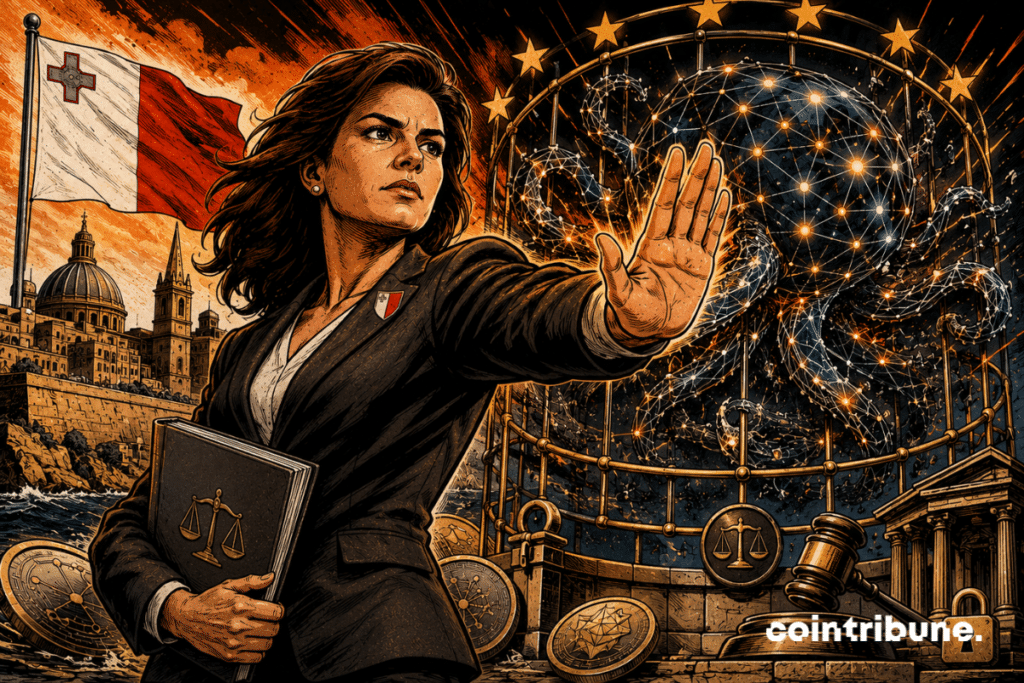
Malta wants to regulate DAOs and certain decentralized finance protocols in the MiCA era. The regulator mainly seeks to distinguish genuine decentralized crypto projects from organizations that retain human control behind their smart contracts.
In brief
- Malta wants to create a legal status for DAOs and certain crypto projects.
- Malta wants to create a legal status for DAOs and certain crypto projects.
- The public consultation remains open until July 10, 2026.
Crypto: Malta wants to identify those responsible for DAOs
The Malta Financial Services Authority proposes creating a legal category for “software-based organizations.” This could cover DAOs, certain DeFi protocols, and other crypto structures whose operation largely relies on smart contracts.
This initiative seeks to address a question that has become central in the industry: who bears responsibility when a protocol experiences a flaw, locks funds, or makes a contested decision? The issue ties into the debate on the status of DAOs, which remains unclear in many jurisdictions.
Malta wants to separate the organization from its software. On one side are the members, developers, and governance token holders. On the other, the protocol executed on the blockchain. This distinction could help the regulator determine who truly controls a crypto infrastructure.
The MiCA regulation governs crypto-asset issuers and service providers in the European Union. But services provided in a fully decentralized manner may remain outside its scope.
This exception creates a gray area. Many crypto projects present themselves as autonomous while a team can still modify the code, suspend certain functions, or control the interface used by most users.
The Maltese regulator therefore wants to examine the facts rather than slogans. Using a blockchain is not enough to prove decentralization. A protocol can organize community votes while allowing a few founders to keep the real power. This difficulty already fuels discussions around a future DeFi regulation.
Crypto projects will be judged on their actual control
The MFSA could analyze the distribution of governance tokens, the role of developers, and the powers granted to certain wallets. These elements allow evaluating if a DAO really operates without a dominant decision center.
A crypto organization may appear open while remaining controlled by a small group. When a few addresses hold the majority of voting rights, other members often have limited influence. Governance then becomes decentralized in appearance only.
Administrative keys are another important signal. If a team can modify a smart contract, halt transactions, or recover funds, it has identifiable technical authority. In that case, authorities could consider the project must comply with obligations close to those imposed on traditional organizations.
Legal recognition could bring several advantages to DAOs. They could sign contracts, employ collaborators, manage accounts, and clarify the liability of their members. This would also facilitate relationships with banks and institutional investors.
However, there is a risk of creating a framework that is too heavy. If every participant in a DAO can be held responsible for collective decisions, some crypto projects might leave Malta or avoid the European Union altogether.
The regulator will therefore have to find a balance. It must protect users without removing the advantages of onchain governance. Too little oversight would leave investors exposed. Excessive regulation could shift innovation to less strict jurisdictions.
The public consultation remains open until July 10, 2026. Its outcome will be watched well beyond Malta. Already facing criticism over its application of the MiCA framework, the country now wants to become a European laboratory for crypto regulation. The real challenge will be to determine where the code ends and human responsibility begins.
Maximize your Cointribune experience with our "Read to Earn" program! For every article you read, earn points and access exclusive rewards. Sign up now and start earning benefits.

Enseignante et ingénieure IT, Lydie découvre le Bitcoin en 2022 et plonge dans l’univers des cryptomonnaies. Elle vulgarise des sujets complexes, décrypte les enjeux du Web3 et défend une vision d’un futur numérique ouvert, inclusif et décentralisé.
The views, thoughts, and opinions expressed in this article belong solely to the author, and should not be taken as investment advice. Do your own research before taking any investment decisions.