Crypto: The A7A5 Token Enabled Russia to Transfer Billions Despite Restrictions
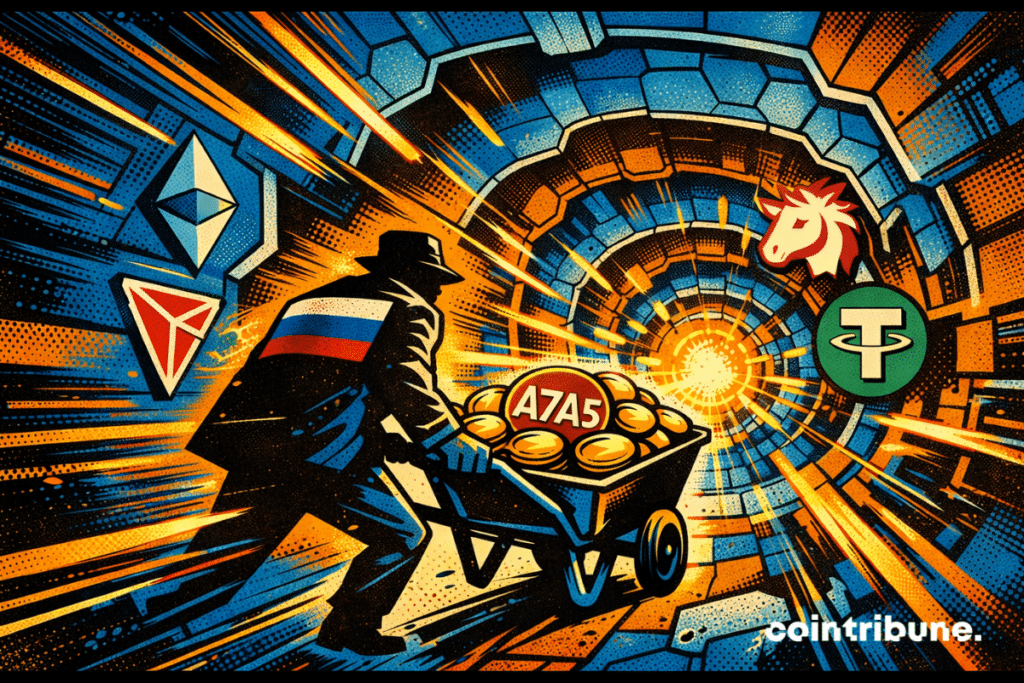
A discreet stablecoin called A7A5 allowed Russia to circumvent Western embargoes. More than 100 billion dollars allegedly passed through this crypto asset, according to data from the firm Elliptic.
In Brief
- The A7A5 stablecoin allowed Russia to transfer 100 billion despite sanctions.
- Western sanctions have reduced its liquidity, thus limiting its role in the global crypto ecosystem.
Crypto and sanctions: the A7A5 case questions experts
In less than a year, the A7A5 stablecoin registered more than 250,000 onchain transactions on Ethereum and TRON. According to Elliptic, these operations represent more than 100 billion dollars transferred by Russian crypto wallets, often linked to entities under American and European sanctions.
Designed by A7 LLC, a company specialized in cross-border payments, A7A5 relies on ruble deposits stored in the public bank Promsvyazbank. Thanks to this architecture, the token functions as a bridge between the ruble and USDT. It thus facilitates access to international crypto markets without keeping funds exposed to prohibitions.
According to the Elliptic report, a significant portion of these funds passed through decentralized crypto exchanges like Uniswap, where the DEX acted as a relay between A7A5 and Tether. This structure reduced dependence on the traditional banking system while avoiding control by authorities.
Crypto under pressure: Uniswap, USDT, and the fall of A7A5
The rise of the A7A5 stablecoin slowed significantly starting summer 2025. As of August, the United States imposed direct sanctions on this crypto asset. Immediate result: a drastic drop in USDT liquidity and the blocking of trades via the Uniswap web interface.
At the end of October, the European Union followed suit, accusing A7A5 of facilitating transactions related to the Russian war economy. Despite a still operational blockchain infrastructure, the lack of liquidity caused a volume drop: from 1.5 billion per day to 500 million.
Users also reported crypto wallets frozen by certain platforms after tracing funds to A7A5. These incidents highlight the fragility of DeFi protocols in the face of crypto regulators.
The A7A5 case thus reveals the tensions between technological innovation and geopolitical constraints. Indeed, cryptocurrencies enable disintermediation. Nonetheless, they remain vulnerable to regulatory pressure, liquidity, and crypto exchange platforms.
Maximize your Cointribune experience with our "Read to Earn" program! For every article you read, earn points and access exclusive rewards. Sign up now and start earning benefits.

My name is Ariela, and I am 31 years old. I have been working in the field of web writing for 7 years now. I only discovered trading and cryptocurrency a few years ago, but it is a universe that greatly interests me. The topics covered on the platform allow me to learn more. A singer in my spare time, I also cultivate a great passion for music and reading (and animals!)
The views, thoughts, and opinions expressed in this article belong solely to the author, and should not be taken as investment advice. Do your own research before taking any investment decisions.