CZ criticizes Etherscan over the rise of poisoning attacks on Ethereum
Address poisoning attacks on Ethereum are exploding, causing colossal losses of more than 80 million dollars. Changpeng Zhao (CZ), founder of Binance, points a finger at Etherscan, accused of not protecting users enough. Decoding a scandal shaking crypto security.
In brief
- CZ criticizes Etherscan for its lack of protection against address poisoning on Ethereum.
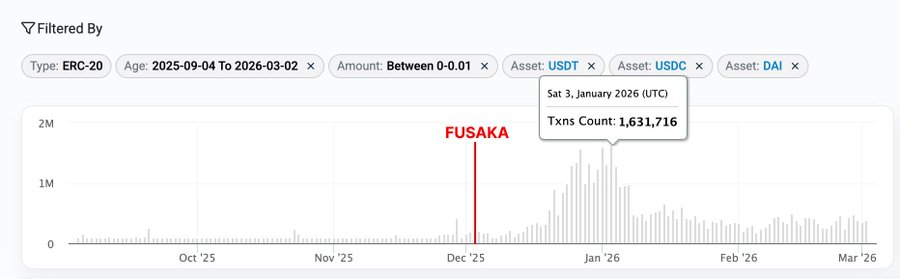
- Address poisoning attacks have multiplied since the Fusaka update, making transactions cheaper for fraudsters.
- Solutions exist against address poisoning attacks, such as real-time verification tools.
Address Poisoning: why does CZ accuse Etherscan?
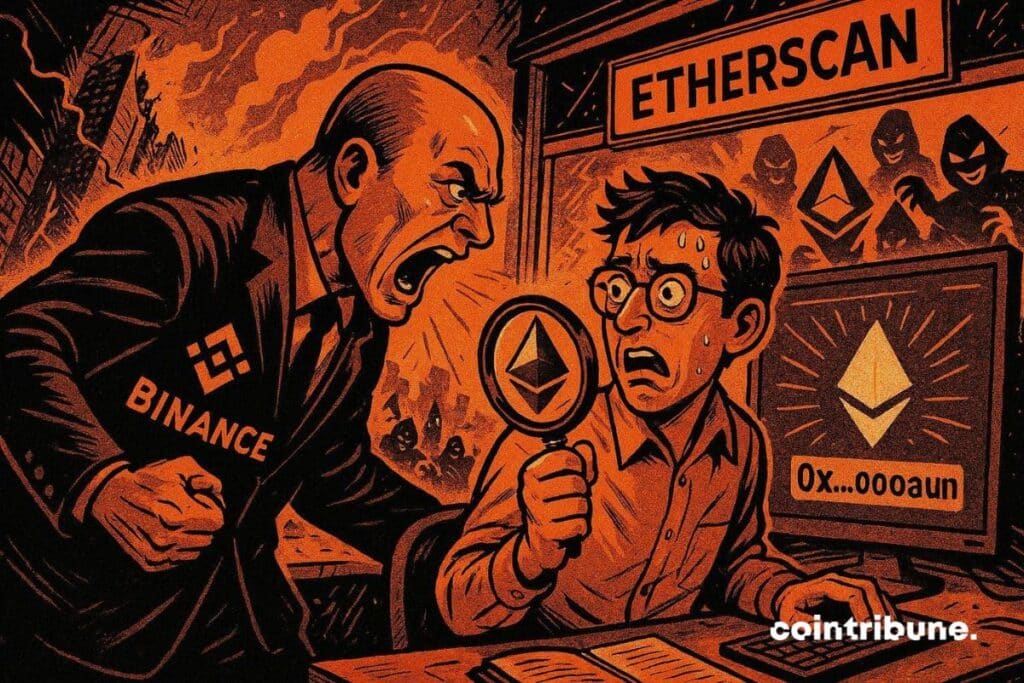
Changpeng Zhao recently criticized Etherscan for its role in displaying fraudulent transactions related to address poisoning. According to him, block explorers like Etherscan should actively filter these fraud attempts to prevent users from falling into the trap. By displaying these transactions without clear warning, Etherscan inadvertently exposes crypto holders to increased risks.
To this end, CZ notes that solutions already exist, such as those implemented by Trust Wallet. Indeed, Trust Wallet has introduced a real-time protection feature that checks destination addresses and alerts users in case of suspected fraud. For CZ, it is imperative that major ecosystem players like Etherscan adopt similar measures to strengthen crypto user security.
This criticism from Changpeng Zhao comes at a time when address poisoning attacks have increased exponentially! Notably, after Ethereum’s Fusaka update. This update, although designed to reduce transaction costs, also facilitated large-scale attacks, making user protection even more urgent.
Crypto: how to protect yourself against address poisoning attacks?
Faced with the rise of address poisoning attacks on Ethereum (ETH), crypto users must adopt proactive measures to secure their funds.
- Manually check each address before making a transaction. Even a small mistake like a misplaced character can redirect your funds to an attacker;
- Avoid copy-pasting addresses from your transaction history, as this increases the risk of selecting a fake address;
- Use wallets equipped with built-in protections;
- Stay informed about the latest security developments and follow alerts from block explorers.
AI could also play a key role in the future by automatically detecting fraud attempts before they reach crypto users. Therefore, by combining personal vigilance and technological tools, it is possible to significantly reduce the risks related to address poisoning.
CZ’s criticism of Etherscan raises a crucial question… Who should ensure the security of crypto users? As address poisoning attacks on Ethereum continue to multiply, collaboration between major players seems essential. In your opinion, should block explorers do more to protect users?
Maximize your Cointribune experience with our "Read to Earn" program! For every article you read, earn points and access exclusive rewards. Sign up now and start earning benefits.

The world is evolving and adaptation is the best weapon to survive in this undulating universe. Originally a crypto community manager, I am interested in anything that is directly or indirectly related to blockchain and its derivatives. To share my experience and promote a field that I am passionate about, nothing is better than writing informative and relaxed articles.
The views, thoughts, and opinions expressed in this article belong solely to the author, and should not be taken as investment advice. Do your own research before taking any investment decisions.