Debanking crypto : Cynthia Lummis bets on the "Skinny Accounts" of the Fed
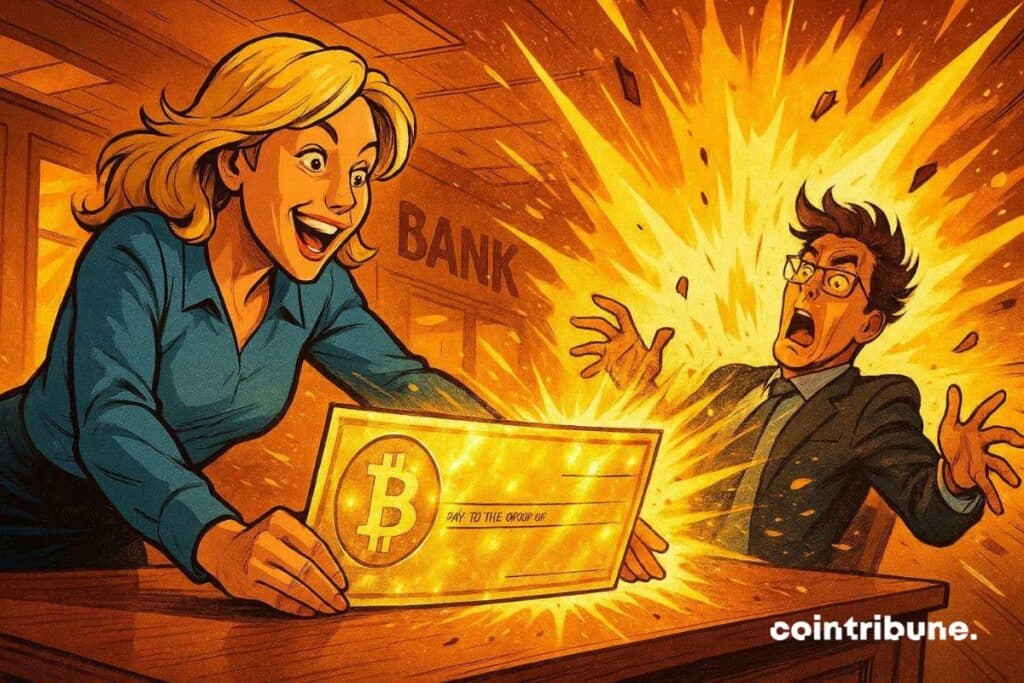
For months, crypto businesses have been subject to arbitrary bank account closures, a phenomenon known as debanking. On November 23, 2025, JPMorgan closed the accounts of Jack Mallers, CEO of Strike, reigniting controversy. Facing this crisis, Senator Cynthia Lummis sees in the “skinny master accounts” proposed by the Fed a solution to protect the sector.
In brief
- Cynthia Lummis supports the “skinny master accounts” proposed by the Fed to give crypto companies access to banking infrastructure.
- This measure aims to put an end to debanking, a practice which has affected more than 30 crypto business founders.
- If adopted, this solution could reduce transaction costs, accelerate innovation and strengthen the competitiveness of crypto businesses.
Cynthia Lummis and the Fed: a solution to end crypto debanking?
Cynthia Lummis, Republican Senator from Wyoming and a pro-crypto figure, supports the proposal of Christopher Waller, Fed Governor. He suggests offering “skinny master accounts” to crypto companies, giving them limited but direct access to federal payment infrastructures. The goal? To end Operation Chokepoint 2.0, a campaign accused of targeting crypto companies by depriving them of banking services.
According to Marc Andreessen, more than 30 founders of tech and crypto startups have been debanked. A Chainalysis report reveals that 88% of crypto companies surveyed in 2025 faced difficulties accessing banking services. For Lummis, these accounts are a lifeline for a sector suffocated by traditional banks.
Crypto debanking: a scourge reignited by the JPMorgan vs Strike case?
On November 23, 2025, JPMorgan closed the accounts of Jack Mallers, CEO of Strike, without clear explanation. This event reignited the debate on crypto debanking, a practice that involves closing the bank accounts of companies deemed “at risk“, often without transparent justification. The consequences for crypto businesses are severe:
- Inability to receive or make payments;
- Disruption of daily operations;
- Loss of investor confidence.
In 2025, 60% of crypto companies in the United States were affected by this phenomenon, according to the Blockchain Association. Facing this crisis, Donald Trump signed an executive order in August 2025 banning debanking without legal cause. The FDIC and the Fed are now under pressure to identify and sanction the responsible banks. Yet, debanking persists, highlighting the urgency of a structural solution.
Which cryptos and companies will be the first saved by the “skinny accounts” of the Fed?
Crypto payment companies like Strike, BitPay, and regulated exchanges such as Coinbase and Kraken are among the first potential beneficiaries of the “skinny master accounts” proposed by Cynthia Lummis. These accounts would offer them stable access to banking services, reducing transaction costs and accelerating institutional adoption. Stablecoins like Circle’s USDC or Paxos’ USDP, as well as Web3 startups in fundraising phases, are also among the most affected by debanking.
For these crypto players, access to federal infrastructures could be a game-changer, strengthening their competitiveness against traditional banks. Finally, innovative projects in crypto fintech, particularly those working on cross-border payments, could also benefit from this measure. A step that could position the United States as a leader in financial innovation.
The “skinny master accounts ” could mark a turning point in the relationship between banks and the crypto industry. However, the success of the crypto debanking statement made by Trump will depend on political will and regulator cooperation. Yet, will this measure be enough to restore trust, or are deeper reforms needed to guarantee a stable future for crypto?
Maximize your Cointribune experience with our "Read to Earn" program! For every article you read, earn points and access exclusive rewards. Sign up now and start earning benefits.

The world is evolving and adaptation is the best weapon to survive in this undulating universe. Originally a crypto community manager, I am interested in anything that is directly or indirectly related to blockchain and its derivatives. To share my experience and promote a field that I am passionate about, nothing is better than writing informative and relaxed articles.
The views, thoughts, and opinions expressed in this article belong solely to the author, and should not be taken as investment advice. Do your own research before taking any investment decisions.