Evergrande: Asia’s Former Second-Richest Man Gets Life for Fraud
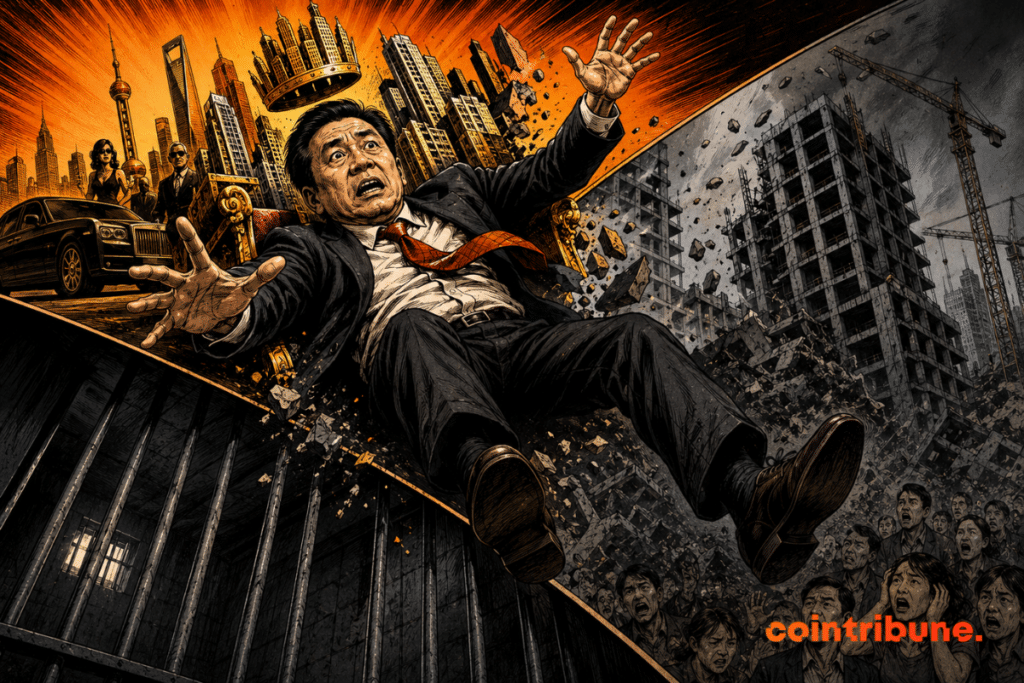
A Shenzhen court has just sentenced Hui Ka Yan, founder of the real estate giant China Evergrande, to life imprisonment for “large-scale financial fraud” and embezzlement of funds. The company simultaneously receives a record fine of 8.82 billion yuan. This sentence brings an end to one of the most spectacular collapses in the history of the Chinese economy.
In brief
- Hui Ka Yan receives life imprisonment and loses all his personal assets.
- Evergrande and its real estate subsidiary receive 15.82 billion yuan in fines.
- The liquidation recovered only a tiny fraction of the 45 billion dollars claimed.
From the summit of the Asian economy to life imprisonment
Also known as Xu Jiayin, Hui Ka Yan built and then destroyed the largest real estate developer in China: Evergrande. On August 20, 2026, the Shenzhen Intermediate People’s Court issued its final verdict: a life sentence for a series of financial crimes. The court also ordered the confiscation of all his personal assets and his lifetime revocation of political rights.
Now aged 67, Hui pleaded guilty in April to several charges:
- embezzlement of corporate assets;
- corruption;
- illegal collection of public deposits;
- financing fraud;
- fraudulent issuance of securities;
- dissemination of misleading financial information.
The Evergrande group was fined 8.82 billion yuan, which is about 1.31 billion dollars. As for its operational subsidiary on the mainland, Hengda Real Estate, it was fined 7 billion yuan, which equals approximately 1.04 billion dollars.
The total fines therefore amount to nearly 2.3 billion dollars. According to analysts, this is one of the heaviest financial penalties ever handed down in a criminal case in China.
But that’s not all! More than 50 people were also sentenced in the same case. Their sentences range from 22 months to 18 years in prison. Among them are:
- Hui’s two sons, Xu Tenghe and Xu Zhijian;
- several senior executives of the group.
According to the court, the incidents occurred between 2016 and 2021. Chinese authorities estimate that Evergrande’s revenues were overstated by several tens of billions of dollars in the 2019 and 2020 fiscal years alone.
Why was Hui Ka Yan sentenced to life imprisonment?
The Chinese judiciary found Hui guilty of large-scale, sustained financial fraud. According to the judgment’s terms:
- systematic inflation of the group’s assets;
- concealment of its real debts;
- embezzlement of funds for personal gain, within a system built on massive debt.
Judicially, this ruling settles one of the largest corporate bankruptcies in modern history. Founded in 1996 in Foshan, Evergrande had become the leading real estate developer in China within a few years. Its success was driven by the country’s rapid urbanization and a model based on colossal debt to finance expansion in all directions.
Listed on the Hong Kong Stock Exchange in 2009, the group reached a market capitalization of over 50 billion dollars, propelling Hui Ka Yan to the rank of second richest man in Asia.
The turning point came in 2020 when Beijing tightened credit access for developers to deflate a real estate bubble considered dangerous to the country’s financial stability. Deprived of liquidity, Evergrande defaulted on its debt in 2021 with liabilities exceeding 300 billion dollars—a world record for a real estate developer! A Hong Kong court then ordered its judicial liquidation in January 2024 and the stock was finally delisted in August 2025.
Meanwhile, Hui Ka Yan disappeared from public life. He was placed under house arrest at the end of 2023, then formally detained before being tried. In 2024, the Chinese securities regulator (CSRC) had already fined him about 6.5 million dollars and imposed a lifetime ban from operating in the country’s financial markets for manipulating results.
A historic verdict that does not resolve the economic crisis in China
Evergrande held more than 300 billion dollars in financial commitments when it defaulted. Its collapse transformed the former Chinese real estate leader into a symbol of the excesses of a debt-based model, pre-sales, and continuous expansion.
However, Hui Ka Yan’s conviction does not guarantee repayment to creditors. As of August 2025, liquidators had sold only about 255 million dollars in assets against 45 billion dollars in declared claims. The apparent recovery rate was therefore barely 0.6%. They are also attempting to recover 6 billion dollars in dividends and salaries paid to Hui Ka Yan and former executives, according to Reuters.
The court specifies, however, that compensation for losses must precede the payment of fines and execution of confiscations. This provision legally protects victims, without guaranteeing that available assets will be sufficient.
Above all, the crisis now extends beyond Evergrande. Between January and July 2026, Chinese real estate investments fell by 19.2%. New home sales declined by 13.2% in value. Residential construction starts plunged by 24.6%, according to the National Bureau of Statistics of China.
Thus, the question is no longer whether the founder of Evergrande will pay for his excesses. This verdict will mainly pave the way for a fair settlement of the 300 billion dollar debt. For some, it may only be a judicial conclusion without concrete aftermath for the economy. The next catalyst to watch: the reaction of Hong Kong courts and international creditors to this continental decision.
Maximize your Cointribune experience with our "Read to Earn" program! For every article you read, earn points and access exclusive rewards. Sign up now and start earning benefits.

My name is Ariela, and I am 31 years old. I have been working in the field of web writing for 7 years now. I only discovered trading and cryptocurrency a few years ago, but it is a universe that greatly interests me. The topics covered on the platform allow me to learn more. A singer in my spare time, I also cultivate a great passion for music and reading (and animals!)
The views, thoughts, and opinions expressed in this article belong solely to the author, and should not be taken as investment advice. Do your own research before taking any investment decisions.