FBI Struggles To Stop Crypto Transfers Linked To Binance Hack
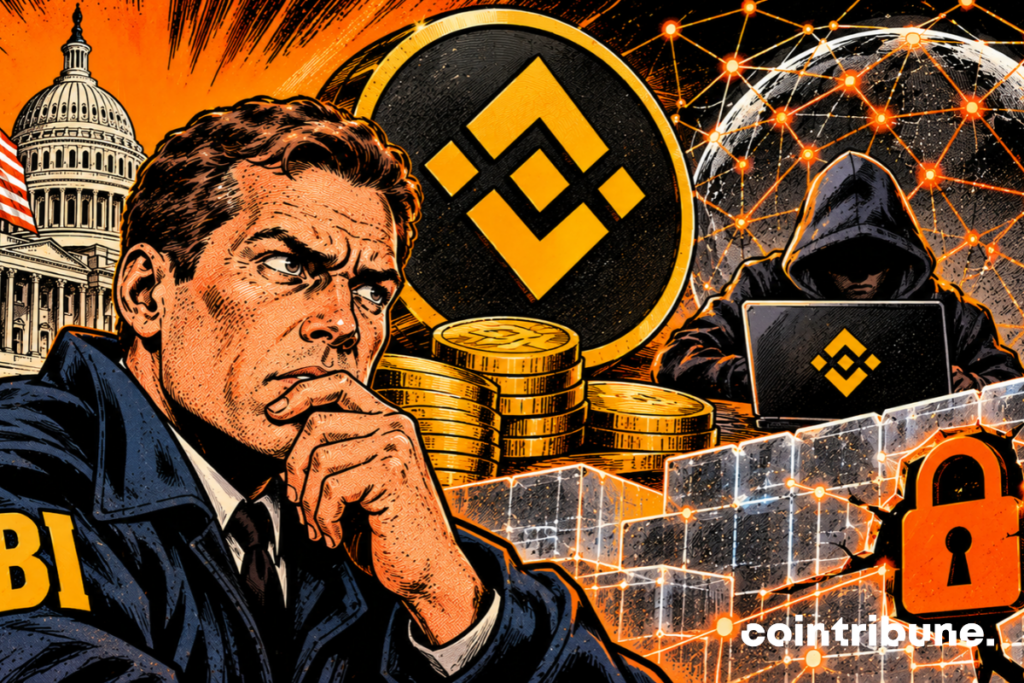
The laundering of cryptos stolen during the Binance hack is reaching a concerning scale. Despite a public intervention by the FBI, the suspected perpetrators of the attack managed to route over 600 million dollars through THORChain. This case reveals a contradiction at the heart of decentralized finance: infrastructures designed to ensure the freedom of exchanges can also become refuges for capital originating from criminal activities.
In Brief
- More than 600 million dollars from the Binance hack route through THORChain despite the FBI warning.
- Cross-blockchain exchanges and the lack of identity verification complicate tracking of funds.
- The FBI struggles to enforce its recommendations against a decentralized infrastructure.
- THORChain defends its operation and refuses to penalize all of its users.
- This case rekindles the debate on the responsibility of DeFi protocols in anti-money laundering efforts.
THORChain, a decentralized infrastructure beyond the reach of traditional control
Investigations by the companies Chainalysis, Elliptic, and TRM Labs reveal the scale of financial movements related to the Binance hack on October 29, 2026. The funds circulate between multiple blockchain networks, using infrastructures that do not operate according to the usual rules of centralized platforms.
Several mechanisms explain the difficulties encountered by investigators :
- Cross-chain exchanges : THORChain allows converting cryptos between different blockchains without going through a traditional centralized platform ;
- The lack of KYC verification : the protocol does not require users to prove their identity before making transactions ;
- Mixing tools : CoinJoin services gather multiple crypto flows into common transactions, complicating the identification of their origin ;
- The multiplication of transactions : successive transfers between networks make tracking assets more complex for blockchain analysis companies.
According to Chainalysis and Elliptic, more than 600 million dollars from the hack reportedly routed through THORChain. Elliptic notes, however, that this estimate can count the same funds multiple times as they pass through the protocol again.
Meanwhile, about 342 million dollars are believed to have used a CoinJoin service, with much of the operations apparently coordinated by a pseudonymous operator known as Kruw.
This architecture illustrates a fundamental difficulty for authorities: identifying suspicious wallets is not enough when the infrastructures used lack the necessary mechanisms to block their transactions individually.
The FBI warning reveals the limits of regulatory pressure
On October 31, the FBI published a list of blockchain addresses associated with the suspected perpetrators of the hack. The American agency also called on crypto service providers to prevent fund movements originating from these wallets, explicitly citing the THORChain network.
This unusual intervention did not prevent the transfers reported by analysis companies. For Ari Redbord, global policy lead at TRM Labs, the fact that the FBI publicly designates a particular service is a relatively rare step.
The problem lies notably in the very organization of THORChain. Its co-founder, Chad Barraford, states that the protocol does not have the technical capacities to selectively block certain addresses. A general suspension of exchanges remains conceivable, but it would also affect legitimate users.
In a statement published on November 26 on the official project account, Barraford defended the network’s continuation. According to him, 98% of transaction volume corresponds to legitimate activities. He believes that a shutdown would primarily penalize ordinary users, while criminal groups could simply migrate to other infrastructures. How far must a decentralized protocol go to prevent its criminal use without relinquishing its founding principles?
Decentralized platforms face a responsibility difficult to define
The Binance case now goes beyond the mere question of the amount of crypto assets diverted. According to TRM Labs, the operations attributed to the laundering perpetrators would have generated up to one million dollars in transaction fees for THORChain. A situation that places the protocol at the center of controversy over the indirect economic benefits derived from illicit activities.
Barraford believes that anti-money laundering efforts should primarily target centralized platforms and points of conversion to traditional currencies. These intermediaries typically have more identification procedures and means to freeze assets.
However, this approach has a limitation: the longer funds circulate within the decentralized ecosystem, the more uncertain their recovery becomes. The Binance hack thus illustrates the gap between the speed of cross-border transactions and the authorities’ capacity to intervene.
The damage remains considerable. While about 2.85 billion dollars in stolen assets have been frozen by their issuers, a significant portion of the funds remains in circulation. For regulators, the challenge is no longer just to sanction centralized platforms, but to find cooperation mechanisms with infrastructures that precisely claim their independence from any authority.
Maximize your Cointribune experience with our "Read to Earn" program! For every article you read, earn points and access exclusive rewards. Sign up now and start earning benefits.

Diplômé de Sciences Po Toulouse et titulaire d'une certification consultant blockchain délivrée par Alyra, j'ai rejoint l'aventure Cointribune en 2019. Convaincu du potentiel de la blockchain pour transformer de nombreux secteurs de l'économie, j'ai pris l'engagement de sensibiliser et d'informer le grand public sur cet écosystème en constante évolution. Mon objectif est de permettre à chacun de mieux comprendre la blockchain et de saisir les opportunités qu'elle offre. Je m'efforce chaque jour de fournir une analyse objective de l'actualité, de décrypter les tendances du marché, de relayer les dernières innovations technologiques et de mettre en perspective les enjeux économiques et sociétaux de cette révolution en marche.
The views, thoughts, and opinions expressed in this article belong solely to the author, and should not be taken as investment advice. Do your own research before taking any investment decisions.