How BlackRock ETF IBIT Tamed Bitcoin Without Anyone Noticing
Traditional finance and Bitcoin have become one. With its IBIT ETF, BlackRock is not just democratizing Bitcoin; it is reinventing investment by attracting a new generation of traders to regulated markets. A silent revolution, but very real.

In brief
- BlackRock’s IBIT has attracted 75% novice ETF investors, proving its appeal to bitcoin holders.
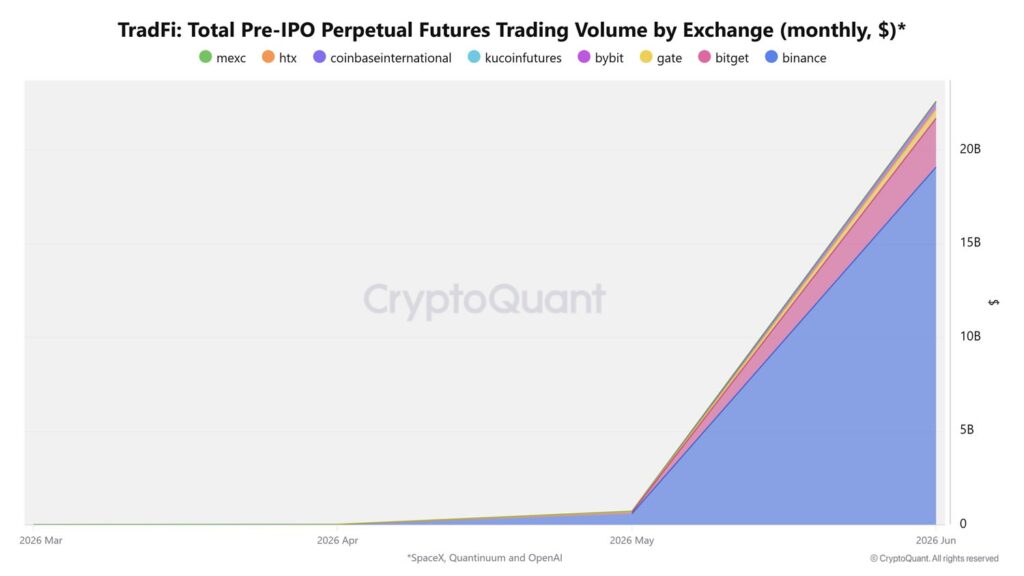
- Now, TradFi and crypto are united, with hybrid products like pre-IPO perpetual futures.
- Is Bitcoin losing its soul? Between institutionalization and decentralization, IBIT raises a crucial debate.
IBIT: BlackRock’s Trojan Horse to entice Bitcoiners
The BlackRock iShares Bitcoin Trust (IBIT) ETF is not just a simple financial product. It is a machine to convert Bitcoin purists into traditional investors. Launched in January 2024, this fund has already accumulated $48 billion in assets and holds over 765,000 BTC. But the most surprising? 75% of its investors had never bought an ETF before. Jay Jacobs, head of equity ETFs at BlackRock, confirms it:
IBIT has been a gateway for traditional investors into digital assets.
However, the effect is twofold. Once exposed to bitcoin via IBIT, many turn to other BlackRock funds, such as those linked to the S&P 500, gold, or AI. A winning strategy for the finance giant, which thus attracts a young and tech-savvy clientele, while strengthening its grip on the market. But beware! This convergence is not without risk. Indeed, historical Bitcoiners, accustomed to decentralization, might view this institutional grip on their beloved asset unfavorably.
The “Great Convergence”: The Unification of TradFi and DeFi
BlackRock talks about the “Great Convergence” to describe the fusion between traditional finance, crypto, and DeFi. An inevitable evolution, according to Jay Jacobs:
You will hear less and less about TradFi versus DeFi, and more about TradFi and DeFi.
The numbers back him up. Indeed, pre-IPO perpetual futures have seen their volume explode, rising from $1 billion to $22 billion in a few weeks. Binance, Bybit, and Gate dominate this market, proving that crypto traders are ready to embrace hybrid products. However, this convergence raises questions. Bitcoin purists will see it as a betrayal of decentralized principles, while institutions will see a historic opportunity. One thing is certain: the line between the two worlds is rapidly blurring.
Bitcoin: Is Digital Gold Becoming Just Like Any Other Asset?
Bitcoin has long been the symbol of rebellion against the traditional financial system. Yet, with the arrival of ETFs like IBIT, it is becoming… an asset like any other. Is this a victory or a defeat for Bitcoiners? On one hand, this institutionalization brings legitimacy and liquidity. Indeed, investors can now expose their portfolios to bitcoin without managing private keys or wallets.
On the other hand, it distorts the very essence of BTC, a decentralized asset outside the control of banks and states. Worse, some fear that BlackRock and its peers might end up controlling the Bitcoin market, just as they already control the stock and bond markets. An irony of history, knowing that BTC was created to escape that very system.
The convergence between Bitcoin and TradFi is underway, driven by giants like BlackRock. But at what cost? While IBIT opens doors, it also raises a crucial question… Can BTC remain true to its roots while appealing to Wall Street?
Maximize your Cointribune experience with our "Read to Earn" program! For every article you read, earn points and access exclusive rewards. Sign up now and start earning benefits.

The world is evolving and adaptation is the best weapon to survive in this undulating universe. Originally a crypto community manager, I am interested in anything that is directly or indirectly related to blockchain and its derivatives. To share my experience and promote a field that I am passionate about, nothing is better than writing informative and relaxed articles.
The views, thoughts, and opinions expressed in this article belong solely to the author, and should not be taken as investment advice. Do your own research before taking any investment decisions.