Mining Giants Cut Output As Winter Storm Hits
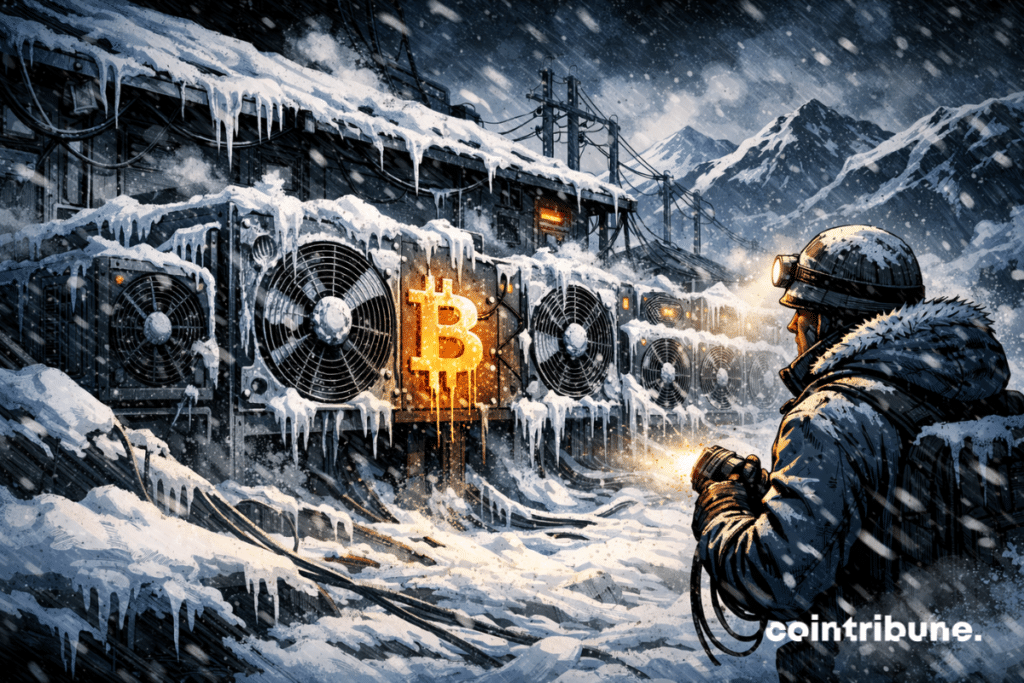
The Bitcoin network is faltering in the face of the American winter. In January, an extreme cold wave paralyzed part of the territory of the United States, causing a sharp slowdown in mining activity. As the United States now concentrates a large share of the global hashrate, this episode highlights the sector’s dependence on local energy infrastructures. The sudden drop in production raises questions about the network’s real ability to withstand climate shocks and the limits of a model nonetheless considered resilient.
In brief
- An extreme cold wave in the United States caused a sharp slowdown in Bitcoin mining activity between January 14 and 17.
- Daily production of major listed miners dropped from 70–90 BTC to only 30–40 BTC, according to CryptoQuant.
- Companies like Core Scientific, Marathon, or Riot partially or totally suspended their operations to relieve the power grids.
- The global Bitcoin network hashrate sharply declined, revealing the protocol’s vulnerability to extreme climate events.
A cold shock on production
While bitcoin could plunge below $50,000, CryptoQuant reports : “data show that major US publicly traded miners saw their combined production drop from 70–90 BTC per day to around 30–40 BTC during the storm”.
This decline, which occurred between January 14 and 17, coincides with a severe weather event that hit large areas of the United States, causing extreme tensions on power grids. Companies affected include Core Scientific, CleanSpark, Marathon, Riot Platforms, Iris Energy, Bitfarms, TeraWulf, and Cipher Mining, all forced to adjust their activity accordingly.
The details noted by analysts highlight a series of measures taken to avoid collapse of the local energy system :
- A voluntary reduction in mining activity to alleviate pressure on overloaded power grids ;
- Coordinated reduction of computing power in the most affected states, particularly Texas ;
- Partial or total suspension of machines in certain farms during consumption peaks ;
- Close communication between mining operators and energy authorities, to anticipate demand peaks ;
- The direct consequence is a temporary collapse in block production, affecting the speed of transaction validation on the network.
These adjustments illustrate the industry’s responsiveness to a sudden climate crisis but also reveal a growing vulnerability of the sector to external disruptions.
Hashrate drop and economic tensions
Beyond the drop in production measured among listed operators, the entire Bitcoin network was impacted.
Indeed, the global network hashrate experienced a sharp drop during the same period, indicating a massive disengagement of machines in affected regions. “These events caused a significant decrease in computing power dedicated to the network, highlighting its sensitivity to extreme weather events,” notes CryptoQuant.
This temporary contraction had tangible economic consequences. According to YCharts data, daily mining revenues dropped to around $28.3 million on January 14, marking one of the lowest levels recorded in the past year.
For mining specialists operating at the edge of profitability, this volatility represents real financial stress, compounded by the stagnation of the bitcoin price during this period. Some analysts also point out that this increased dependence on weather conditions could slow future investments in energetically unstable areas.
Maximize your Cointribune experience with our "Read to Earn" program! For every article you read, earn points and access exclusive rewards. Sign up now and start earning benefits.

Diplômé de Sciences Po Toulouse et titulaire d'une certification consultant blockchain délivrée par Alyra, j'ai rejoint l'aventure Cointribune en 2019. Convaincu du potentiel de la blockchain pour transformer de nombreux secteurs de l'économie, j'ai pris l'engagement de sensibiliser et d'informer le grand public sur cet écosystème en constante évolution. Mon objectif est de permettre à chacun de mieux comprendre la blockchain et de saisir les opportunités qu'elle offre. Je m'efforce chaque jour de fournir une analyse objective de l'actualité, de décrypter les tendances du marché, de relayer les dernières innovations technologiques et de mettre en perspective les enjeux économiques et sociétaux de cette révolution en marche.
The views, thoughts, and opinions expressed in this article belong solely to the author, and should not be taken as investment advice. Do your own research before taking any investment decisions.