Nobel Peace Prize: Navi Pillay Defies Polymarket Bets
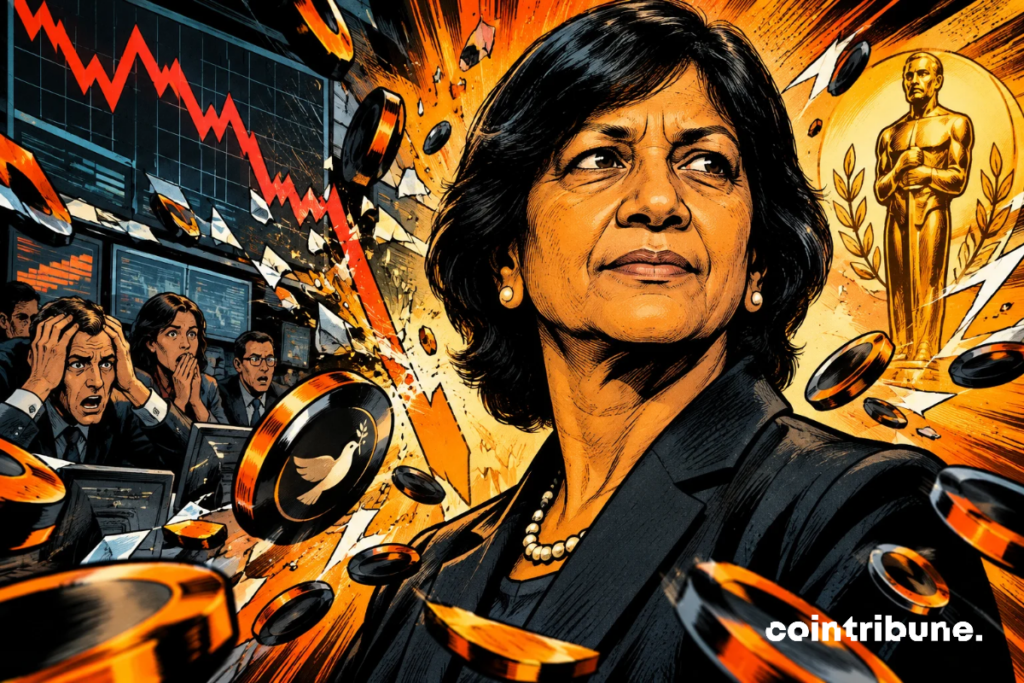
The Norwegian Nobel Committee announced on October 9 the awarding of the 2026 Nobel Peace Prize to Navi Pillay. However, on Polymarket, where bettors had wagered over 32 million dollars, her name was not even among the proposed candidates.
In brief
- Navi Pillay wins the 2026 Nobel Peace Prize without being among the 70 names proposed on Polymarket.
- Her name appears after the official announcement on the ‘other laureate’ contract, which totals only 38,770 dollars in trades.
- Yulia Navalnaya briefly reached 70.6 cents before seeing her chances collapse. On Kalshi, the 50 proposed candidates also missed the winner.
A Nobel That Polymarket Did Not Anticipate
In October 2025, the surge in odds for Maria Corina Machado, hours before the official announcement, raised suspicions of a leak and led Norwegian authorities to open an investigation. This year, the problem is different: bettors simply did not consider the winner’s name.
The Nobel Committee awarded Navi Pillay, former United Nations High Commissioner for Human Rights and former judge at the International Criminal Court, for her efforts in favor of peace and international law.
Yet on Polymarket, the market dedicated to the Nobel Peace Prize recorded 32.3 million dollars in trades since October 2025, without listing Navi Pillay among its 70 candidates. As a result, none of these contracts rewarded the bettors.
Donald Trump attracted the largest betting volume, with 7.96 million dollars. The United Nations agency for Palestinian refugees followed with 2.1 million, ahead of Yulia Navalnaya and her 1.99 million.
The winner only appeared after the announcement when Polymarket renamed the contract “other person or organization.” It shows only 38,770 dollars in trades, about 0.12% of the total volume.
Yulia Navalnaya, Hope for a Few Hours
The day before the announcement, Yulia Navalnaya’s odds experienced a strong surge. Thursday evening, her contract was around 5 cents. Then, starting at 11:30 p.m. UTC, buyers pushed it up to 54 cents in thirty minutes, before peaking at 70.6 cents at 00:02 Friday.
The rise did not last. A few minutes later, the odds dropped below 20 cents, then oscillated between 20 and 30 cents until the official announcement at 9:00 a.m. UTC. They then fell to zero.
This mishap illustrates the risks of these platforms. In early October, a Galaxy study estimated that 69.2% of individual accounts on Polymarket end below their break-even point, with cumulative losses of 338.9 million dollars.
Markets Limited by Their Own Choices
The problem goes beyond the Nobel Peace Prize. On Polymarket, markets dedicated to the chemistry and physics prizes also failed, as the winners, Henri Kagan, Kenso Soai, and Francis Halzen, were not on the proposed lists. However, Kalshi identified two laureates, Anne Carson in literature and Karl Deisseroth in medicine.
The economics prize, with the announcement expected Monday, is the next test. Polymarket gathered about 69,300 dollars on 17 candidates, with Ariel Pakes leading at 22.5%.
Against 68 billion dollars in sports and combined contracts traded in a month this fall, these markets remain modest. But the episode highlights a key limitation: even when thousands of people bet on a result, their predictions depend primarily on the platform’s choices.
Maximize your Cointribune experience with our "Read to Earn" program! For every article you read, earn points and access exclusive rewards. Sign up now and start earning benefits.

Passionné par le Bitcoin, j'aime explorer les méandres de la blockchain et des cryptos et je partage mes découvertes avec la communauté. Mon rêve est de vivre dans un monde où la vie privée et la liberté financière sont garanties pour tous, et je crois fermement que Bitcoin est l'outil qui peut rendre cela possible.
The views, thoughts, and opinions expressed in this article belong solely to the author, and should not be taken as investment advice. Do your own research before taking any investment decisions.