Pakistan finally allows banks to serve crypto players
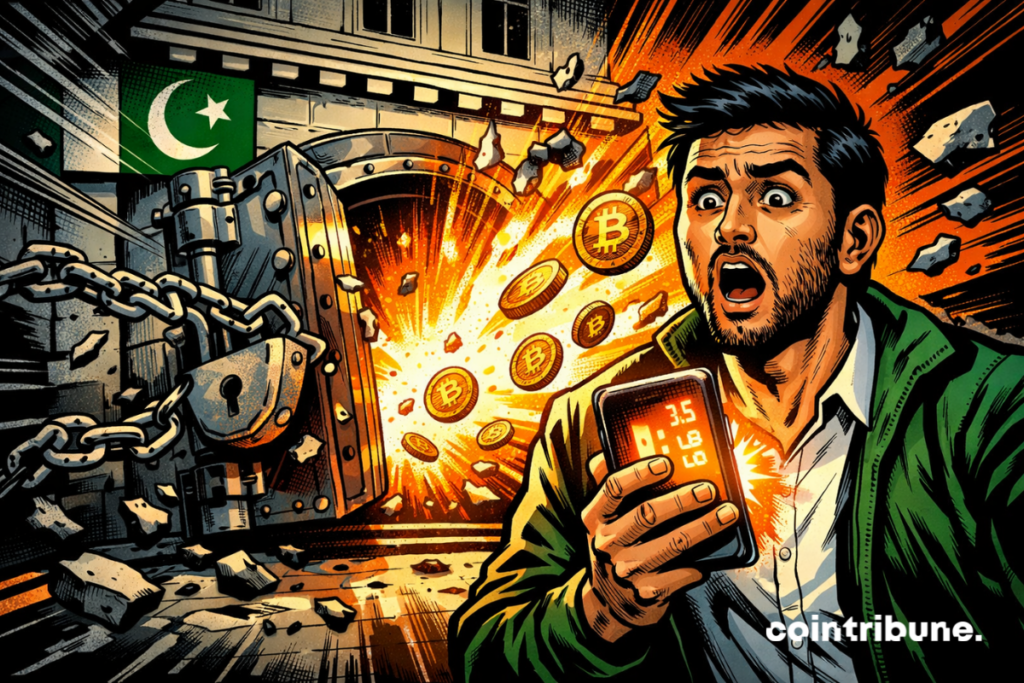
Pakistan now allows its banks to open accounts for licensed crypto companies. It’s a sharp turn after eight years of blockage. The State Bank of Pakistan does not legalize a digital Wild West. It rather opens a narrow, monitored, but decisive door.
In brief
- Pakistan reopens banking access to licensed crypto companies.
- Banks remain prohibited from speculating with their funds.
- The country chooses strict regulation rather than total ban.
A major banking change for crypto
The decision marks the end of a ban imposed in 2018. At the time, Pakistani banks had to stay away from crypto. The message was simple: no accounts, no services, no direct exposure.
With the circular dated April 14, the tone changes markedly. Regulated institutions are now authorized to serve virtual asset providers duly licensed by the Pakistan Virtual Assets Regulatory Authority. This latter thus establishes itself as the central filter of the sector, following the creation of the Bitcoin reserve.
Pakistan does not tell banks to speculate on crypto. It asks them to supervise flows. The nuance is important. The country moves from a logic of prohibition to a logic of control.
An opening, but under close supervision
Banks will not be able to invest, trade, or hold virtual assets with their own funds. They will also not be able to use customer deposits to expose themselves to crypto. Their role remains banking, not speculative.
The new framework requires separate accounts in Pakistani rupees. These accounts will be used for authorized settlements of licensed crypto companies. The separation between client funds and platform funds becomes a central rule.
This detail changes many things. It avoids the dangerous mix-ups seen in several crypto bankruptcies. Pakistan seems to have learned a simple lesson: innovation must breathe, but client deposits must not become casino fuel.
Pakistan wants to attract without losing control
This move does not happen alone. In March 2026, the country adopted the Virtual Assets Act. This text gave a legal basis for the regulation of digital assets. The banking circular now makes this law enforceable.
Islamabad has also multiplied signals toward major players in the sector. Discussions with Binance and HTX had already shown a willingness to attract regulated platforms. Pakistan apparently wants to step out of the shadows.
The strategy is pragmatic. The country no longer closes the door to crypto. But it does not open it completely either. It seeks a third way: capture the activity, impose licenses, monitor risks. For emerging countries, banking access often remains the real wall. Without a bank account, a crypto company can exist technically, but remains fragile. It depends on opaque, costly, or unstable circuits.
Pakistan is therefore trying to normalize an activity that already existed. This is often more effective than pure prohibition. When demand is strong, blocking only moves use to less visible areas. What follows will depend on execution.
If licenses are clearly defined and control mechanisms credible, Pakistan could establish itself as a more serious crypto market in South Asia. However, if bureaucracy stifles local players, this opening risks remaining mostly symbolic. Also discover Michael Saylor’s strategy to accumulate bitcoins.
Maximize your Cointribune experience with our "Read to Earn" program! For every article you read, earn points and access exclusive rewards. Sign up now and start earning benefits.

Fascinated by Bitcoin since 2017, Evariste has continuously researched the subject. While his initial interest was in trading, he now actively seeks to understand all advances centered on cryptocurrencies. As an editor, he strives to consistently deliver high-quality work that reflects the state of the sector as a whole.
The views, thoughts, and opinions expressed in this article belong solely to the author, and should not be taken as investment advice. Do your own research before taking any investment decisions.