Shiba Inu Under Pressure as 531B SHIB Hit Exchanges Ahead of Weekend
Shiba Inu heads into the weekend under mounting pressure. On-chain data shows that more than 531 billion SHIB flowed into exchanges over the past 24 hours—a figure well above recent norms. The surge tilts short-term control toward sellers. With technical signals weak and weekend liquidity thinning, downside risks are increasing.

In brief
- Over 531B SHIB moved to exchanges in 24 hours, sharply increasing sell-side supply.
- SHIB trades below key moving averages, keeping bearish momentum intact.
- Rebound attempts show weak volume, limiting the probability of a sustained recovery.
- Thin weekend liquidity may amplify volatility if selling pressure intensifies.
Weak Volume and Heavy Inflows Weigh on Shiba Inu’s Price Outlook
Exchange inflows of this magnitude rarely occur without consequence. Tokens sent to trading platforms become immediately available for sale, expanding active supply. When large transfers occur without prior signs of accumulation, traders typically interpret them as positioning to reduce exposure rather than as the initiation of new longs. Recent price behavior supports that view.
Shiba Inu trades near $0.00000571, down 5.03% over the past 24 hours. The asset remains below key moving averages, including the 26-period EMA and broader trend indicators. The prevailing structure remains bearish, with no confirmed shift in momentum.
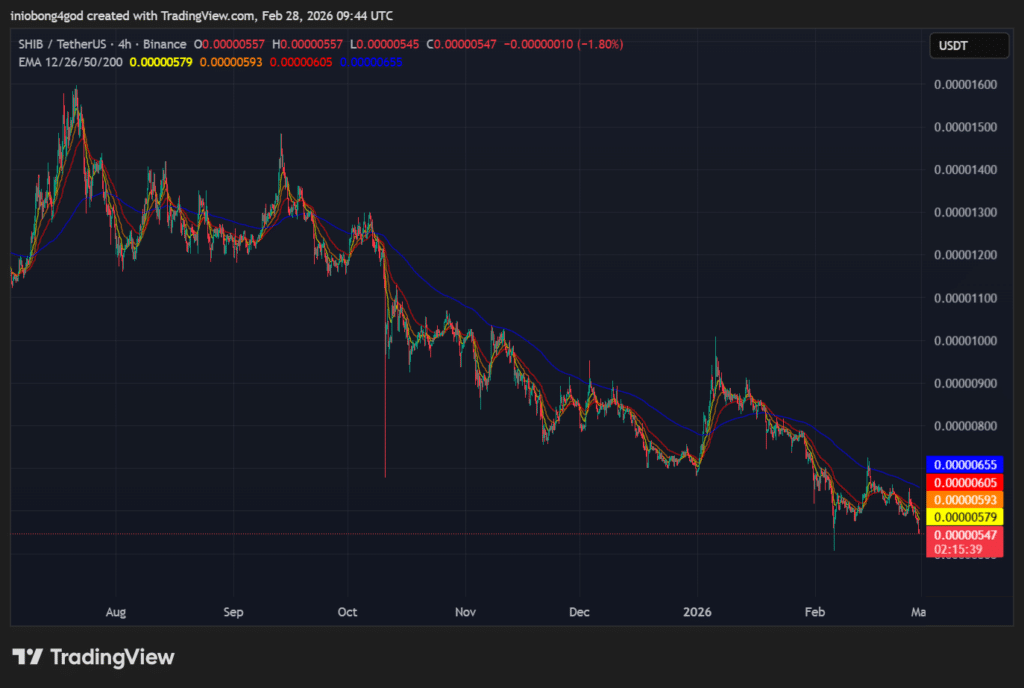
Recent price action has been tight and unstable. Attempts to defend local lows have resulted in brief, low-conviction rebounds. Recovery volume remains subdued compared to previous rallies, weakening the case for reversal. Sellers continue to cap upside attempts, preventing any meaningful structural change.
Several short-term risk factors are now aligning:
- More than 531 billion SHIB entered exchanges in one day, increasing tradable supply.
- The price remains below major moving averages, reinforcing bearish momentum.
- Rebound attempts lack volume confirmation, reducing the probability of a sustained recovery.
- Weekend liquidity typically declines, amplifying the impact of concentrated sell orders.
Sell-Side Pressure Builds on SHIB as Weekend Trading Nears
Weekend trading conditions add further risk. Participation tends to drop on Saturdays and Sundays, reducing the depth of resting buy orders. In thinner markets, even moderate selling pressure can trigger exaggerated price swings compared to weekday sessions.
On-chain flow dynamics reinforce a distribution narrative. Elevated exchange inflows frequently precede volatility expansions, particularly when the price structure is already weak. Large holders may gradually move tokens onto exchanges, allowing the price to appear stable while the sell-side supply builds within order books. Apparent stability during such phases can conceal mounting pressure.
If demand fails to absorb the recent supply increase, further downside becomes increasingly probable. A decisive break below nearby support could accelerate momentum as short-term traders respond. Until volume strengthens and price reclaims key technical levels, Shiba Inu remains defensively positioned heading into the weekend.
Maximize your Cointribune experience with our "Read to Earn" program! For every article you read, earn points and access exclusive rewards. Sign up now and start earning benefits.

James Godstime is a crypto journalist and market analyst with over three years of experience in crypto, Web3, and finance. He simplifies complex and technical ideas to engage readers. Outside of work, he enjoys football and tennis, which he follows passionately.
The views, thoughts, and opinions expressed in this article belong solely to the author, and should not be taken as investment advice. Do your own research before taking any investment decisions.