Sudden Weekend Drop in Bitcoin Pressures Futures
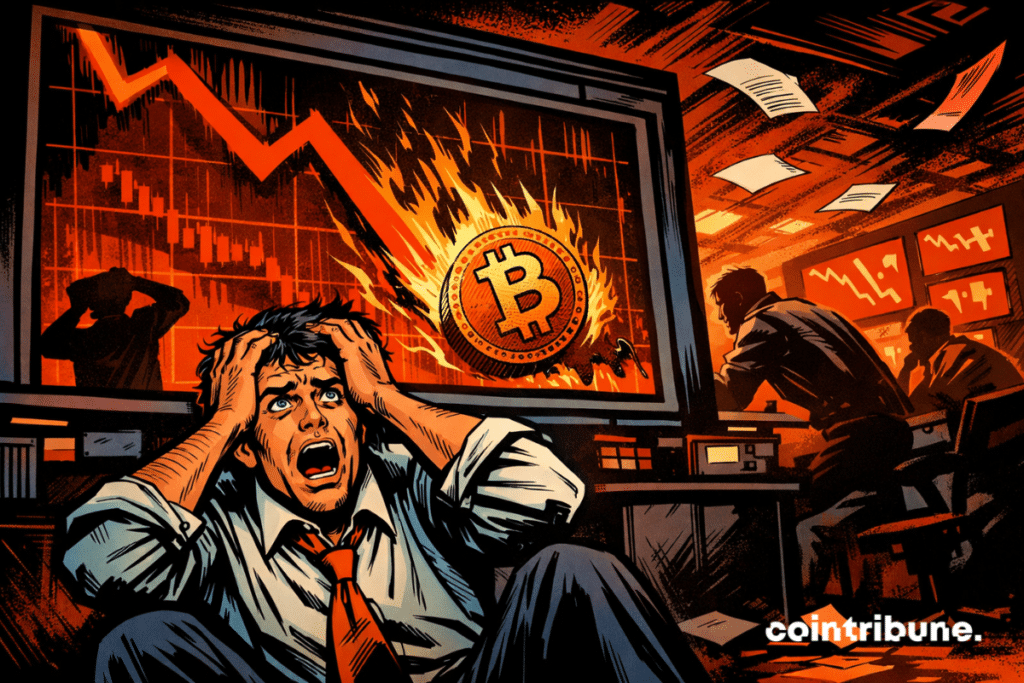
Bitcoin sharply dropped this weekend, and the clearest signal does not come from the spot market. It comes from derivatives. The drop of over 10% between a peak at $84,177 and a low at $75,947 opened a rare gap on CME futures contracts, with a price difference exceeding 8% at reopening. It’s the fourth largest gap since the launch of Bitcoin futures in 2017.
In Brief
- The weekend shock mainly hit derivatives, with a CME gap of over 8%
- Liquidations and declining open interest indicate rapid deleveraging.
- The market pays dearly for options protection, signaling a decidedly defensive tone.
A CME Gap Resembling a Market Fracture
A “CME gap” forms when the price of bitcoin moves while CME futures are closed. On Monday, the market reopens, and the difference becomes obvious. This time, the gap is massive. It condenses the weekend’s nervousness into one opening.
The interesting detail is that this type of gap often acts like a magnet. Not by magic. Rather because many desks monitor it, trade it, and eventually “revisit” the area. Here, the zone is roughly between $77,000 and $84,000 for bitcoin.
Analyst Jeff Ko compares the scale of the movement to what was seen during the March 2020 shock. The nuance matters: he does not say the scenario is repeating. He says the size of the gap is of the same order. And that its filling will mainly depend on the macro climate and the “risk-off” sentiment.
Liquidations and Leverage: When the Market Empties From Within
This weekend did not just lower bitcoin’s price. It mainly forced exits. In a period of reduced liquidity, an acceleration can become a leverage crusher. Result: $2.56 billion liquidated in one day, Sunday.
Over the entire period since Thursday, liquidations exceed $5.42 billion, according to CoinGlass. This figure says something simple: many positions were not built to withstand a violent wick on bitcoin, just like other cryptos.
The “clean-up” also shows in open interest. Aggregated open interest fell back to $24.17 billion, a nine-month low according to CryptoQuant. Fewer open positions mean less active leverage. Sometimes it is a healthier base. But it is also, in the short term, a more cautious market.
Options in Defensive Mode: Fear is Paid Upfront
When traders buy protection, it shows in options. And here, the message is clear: puts cost more. The 25-delta skew at 7 and 30 days fell below -12% and -8% over the weekend. Translation: the market is willing to pay a premium to cover a downside scenario.
This asymmetry is not just a fancy indicator. It reflects collective psychology. When hedging becomes a priority, rebounds tend to be sold faster. And “conviction” buyers often wait for an external sign, not just a simple green candle on bitcoin.
Even technicals reinforce the idea of nervous exhaustion. The weekly RSI dropped toward 32.22. This is an area associated with major pullbacks, not a market that hums steadily. Some will see it as an opportunity. Others will see a warning: the structure may remain bearish longer than expected.
Supports, ETFs, and Rebound Scenario: The Battle of Thresholds
The sell-off has another psychological effect: it pushed bitcoin below the average acquisition cost of US spot ETFs, according to Alex Thorn from Galaxy. This is the kind of threshold that doesn’t appear on classic charts but matters in risk committees.
In the same breath, the price approached Strategy’s average purchase price of about $76,000, according to Bitcoin Treasuries. Here also, the market is not obliged to “respect” this level. But it watches it. And sometimes, simply watching it changes actors’ behavior.
Analysts remain divided. At Bitrue, Andri Fauzan Adziima mentions a possible rebound toward $84,000 if oversold conditions ease, but not necessarily this week. Others mention lower areas, around $50,000 for bitcoin. And Lai Yuen (Fisher8 Capital) adds a seldom spoken point: some large discretionary buyers may temporarily be out of ammunition while speculative capital shifts elsewhere.
Maximize your Cointribune experience with our "Read to Earn" program! For every article you read, earn points and access exclusive rewards. Sign up now and start earning benefits.

Fascinated by Bitcoin since 2017, Evariste has continuously researched the subject. While his initial interest was in trading, he now actively seeks to understand all advances centered on cryptocurrencies. As an editor, he strives to consistently deliver high-quality work that reflects the state of the sector as a whole.
The views, thoughts, and opinions expressed in this article belong solely to the author, and should not be taken as investment advice. Do your own research before taking any investment decisions.