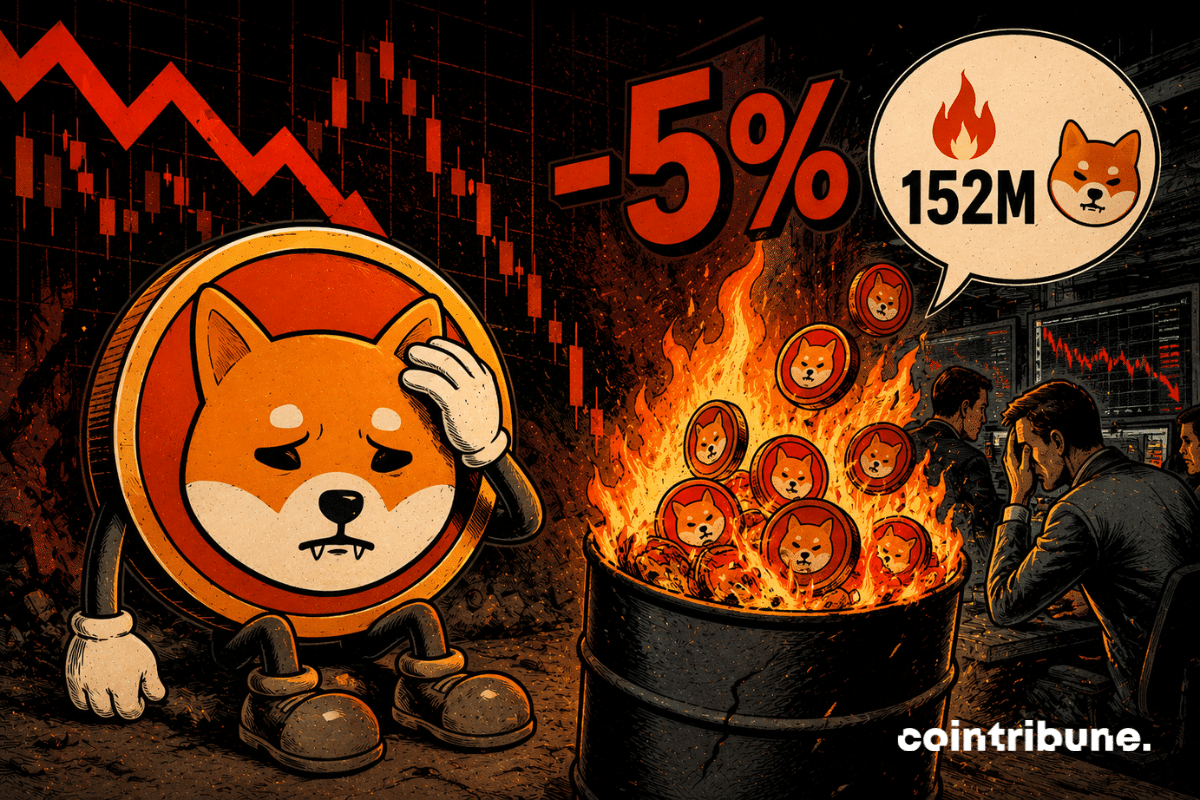
Shiba Inu (SHIB) stirs after weeks of consolidation between $0.0000057 and $0.0000060. Crypto investors are massively accumulating and a breakout could propel the price by +85%! Analysis of possible scenarios and levels not to be missed.
Zcash recorded one of the most violent moves of the day, but this jump of more than 20% to 30% looks more like a speculative surge under tension than a clean and sustainable reversal. The context helps, of course. The announcement of a two-week ceasefire between the United States and Iran triggered a broad relief rally on risk markets, with oil falling and a sharp return of risk appetite.
Judicial pressure on Roman Storm does not subside. American federal prosecutors refuse to drop the Tornado Cash case and, for now, close the door to a quick exit for its co-founder. The signal sent to the crypto market remains clear from the start. Even after a partially blocked trial in 2025, even after the change of tone displayed by the Department of Justice on certain digital asset cases, the federal camp continues to move forward.
Capital is returning to crypto investment products. After a week of strong outflows, ETPs recorded inflows of 224 million dollars. The movement remains however mixed. XRP captures the majority of flows and establishes itself as the main driver of this recovery, while other assets struggle to follow. This rebalancing reveals an evolution in investment strategies in a market still subject to high uncertainties.
Cardano finds a signal that the market always watches closely: the return of very large buyers. This movement is not yet enough to trigger a surge in the ADA crypto, but it changes the tone around the project.
The decentralized lending protocol Aave is going through a turbulent period. Its main risk manager, Chaos Labs, has just slammed the door after three years of collaboration, and the reason goes far beyond a simple financial dispute.
Institutional flows depict the real balance of power in the crypto market, and this shortened week provides an important illustration. While Bitcoin manages to attract capital, Ethereum and other altcoins face persistent pressure, revealing a subtle but real shift in investment strategies. Behind these movements, a trend emerges: investors sort, arbitrate, and reduce their commitments. Crypto ETFs thus become a key barometer of a market in search of direction.
The battle for crypto treasuries is no longer just about Bitcoin. Bitmine now pushes its advantage on Ethereum to a rarely seen level, with a new wave of purchases that strengthens both its market weight and its bullish narrative around ETH
XRP records a notable growth of its network, with more than 8 million addresses now recorded. At the same time, its price remains under pressure and shows a marked decline since the beginning of the year. This gap between adoption and valuation raises questions. It poses a central question: is network growth still enough to support the price of a crypto asset? This divergence reveals the limits of the connection between real usage and short-term market dynamics.
Ethereum sends an unexpected signal on derivatives while ETFs decline. This divergence intrigues the market and could mark a subtle turning point in the current price dynamics.
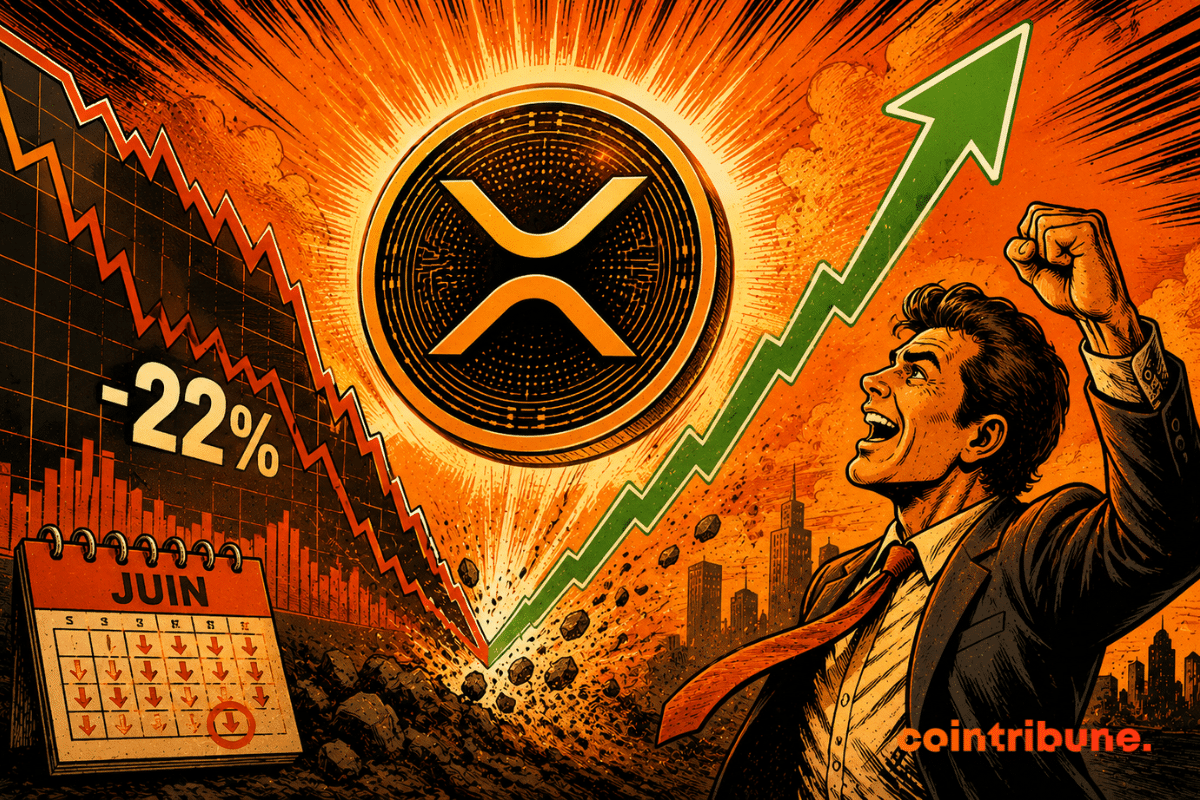
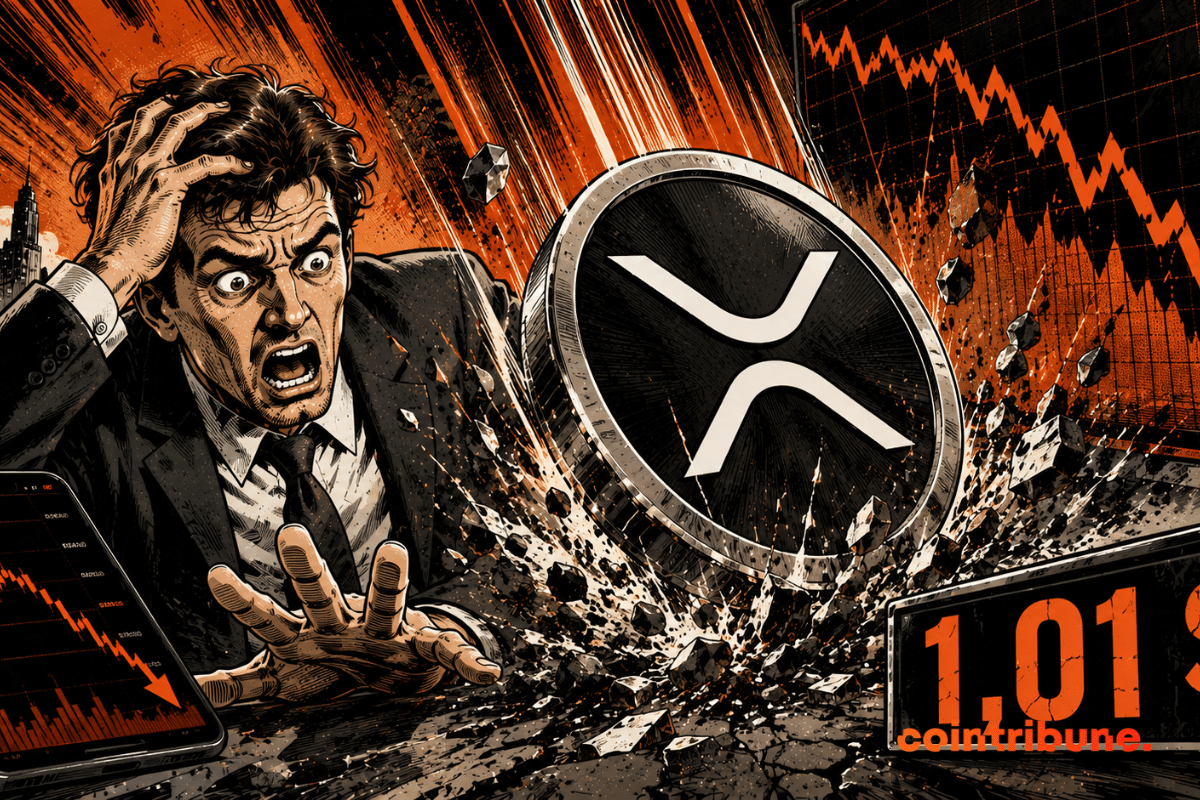
XRP has declined sharply since the beginning of 2026. Indeed, the token is experiencing a marked drop in a context of technical weakening. Charts signal a critical phase, with key levels now under pressure. As support loses ground, the hypothesis of a return to 1 dollar is prevailing in analyses. The market is entering a decisive sequence for the asset.
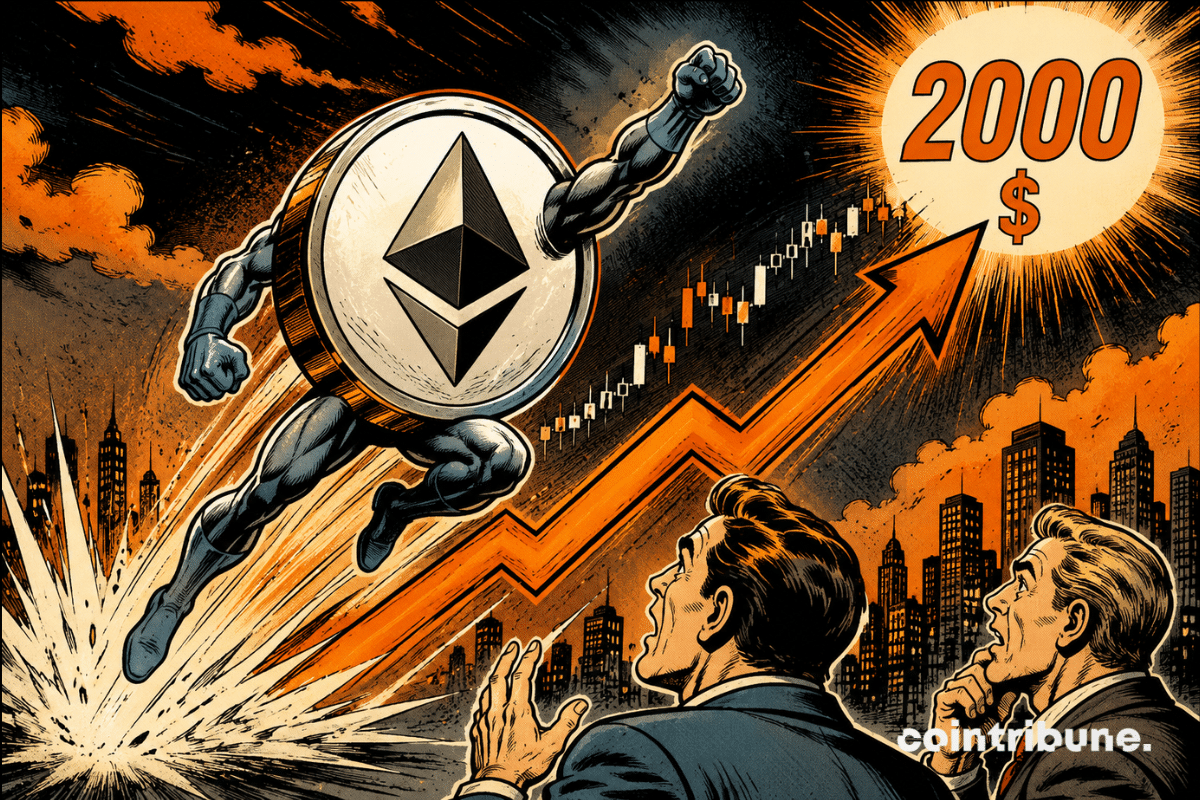
Ethereum shows activity close to its all-time highs, without its price following the same trajectory. Around 2,130 dollars, ETH operates in relative stability despite sustained network usage. This gap between fundamentals and valuation is striking. It reveals a notable divergence as the ecosystem continues to gain intensity.
Ripple is about to release 1 billion XRP. As at the beginning of each month, this scheduled operation revives questions about possible selling pressure. The figure is impressive, but it only partly reflects the reality of the flows. Behind this unlocking is a structured mechanism, well known to the market. It remains to be seen whether this event can really influence the price, or if it fits into a routine now anticipated by investors.
The crypto market sends a brutal signal. In March 2026, more than 40% of altcoins are trading near their all-time lows. This level even exceeds the peak observed during the previous bear market, which was around 38%. In other words, the current weakness is no longer just a simple air pocket. It increasingly resembles a severe market sorting.
Bitmine buys so much ETH in such a short time because the company no longer just seeks exposure to crypto. It aims to secure a dominant position in a still hesitant market. In one week, Bitmine added 71,179 ETH, about 147 million dollars, bringing its holdings to 4,732,082 ETH, equivalent to 3.92% of the total supply.
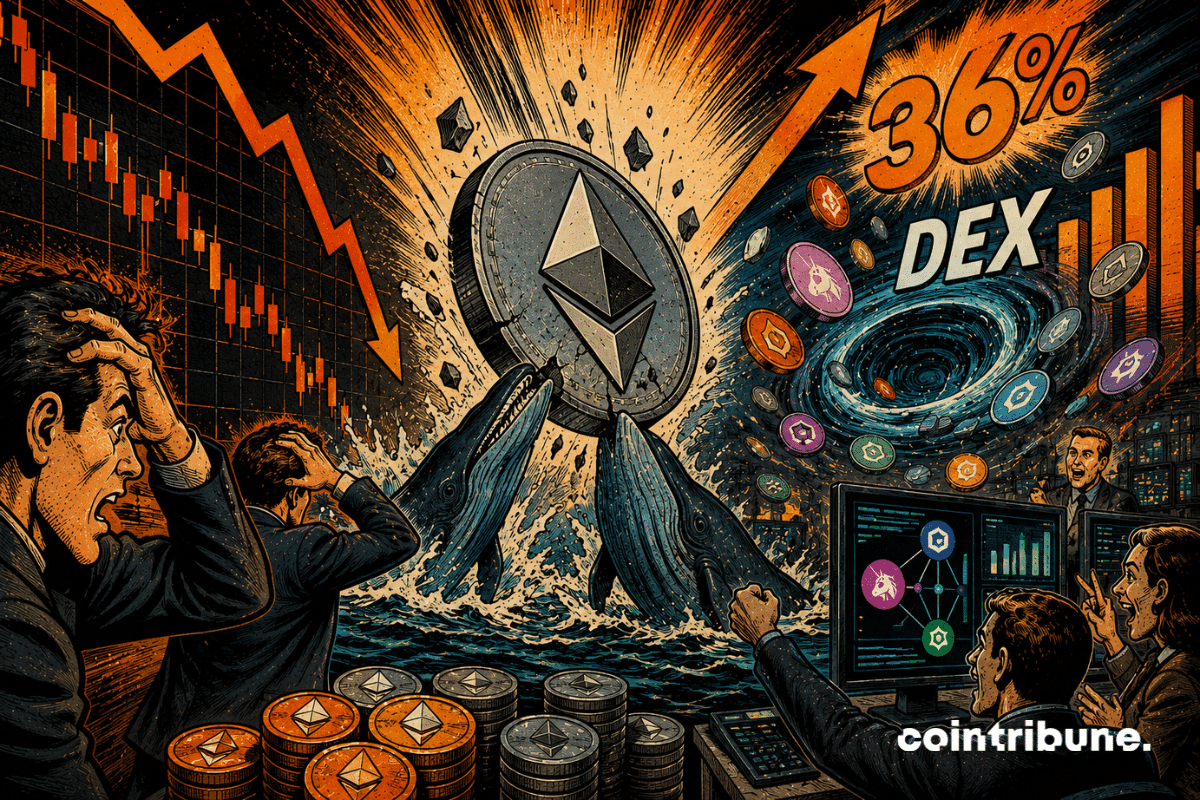
While XRP falls, the largest holders accelerate their purchases. In one week, nearly 190 million tokens have been accumulated, revealing an aggressive strategy during a downturn. This movement intrigues as much as it questions. Behind this massive accumulation, a hypothesis emerges: are whales already anticipating the next XRP move, where the rest of the market still hesitates?
The crypto market is seeing the emergence of a new growth engine: decentralized artificial intelligence. In a few weeks, Bittensor has established itself as one of the most watched projects, with a valuation close to 1.5 billion dollars driven by a rapid surge in its tokens. This movement is not only speculative. It relies on concrete technological advances and the notable support of influential tech figures, pushing the project into a new dimension.
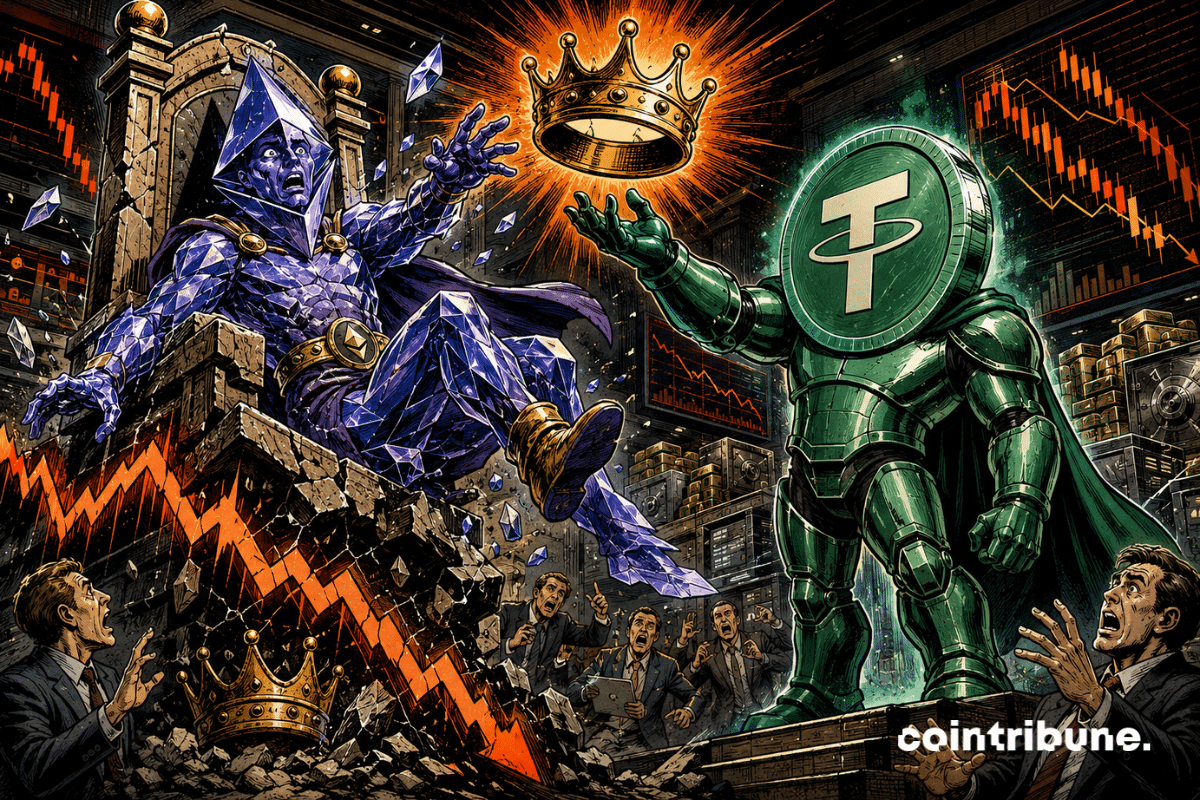
Long considered the unshakable runner-up to Bitcoin, Ethereum's position is now threatened by an unexpected adversary: Tether. On Polymarket, bets on an "ETH flipping" in 2026 have jumped from 17% to over 59% in a few weeks. A trend that raises questions.
Sam Altman's World Foundation has just raised 65 million dollars by massively selling its WLD tokens at a drastically reduced price. An operation that comes at the worst time, as the token hits historic lows. How much further can it fall?
At Ethereum, whales are stirring, traders are holding their breath, and crypto is already sniffing the storm: a strange comeback, with record leverage and a quantum future lurking everywhere.
Pi Coin plunges back into a technical setup reminiscent of a very unfavorable previous scenario. Several crypto market signals converge towards a new phase of weakness while confidence around Pi Network remains fragile. Is history rhyming once again?
The key signal is simple: billions of dollars in ETH are leaving exchange platforms. In this case, this movement affects both OKX and Binance, two heavyweights of the market. For crypto, this kind of massive withdrawal is not just a technical detail. It changes the structure of the supply available for sale.
After a launch that drew more than $1.2 billion in a few months, ETFs linked to XRP abruptly change dynamics. For the first time, flows reverse and turn negative, ending the initial euphoria. This rapid turnaround raises questions about the strength of demand and marks a key step in the asset's trajectory, now facing a much more demanding test than its launch.
Goldman Sachs' entry into XRP-related ETFs has not supported the token's price. Despite significant investment, the asset continues to decline. This gap between institutional flows and market dynamics reveals persistent weakness. In this context, technical signals and ETF data fuel doubts about the short-term evolution of XRP.
Crypto advances this time on concrete ground. Monument Bank, a regulated British bank, plans to tokenize up to 250 million pounds sterling of retail deposits on Midnight, a blockchain developed within the Cardano ecosystem. This partnership places Cardano in a rarely reached area by crypto projects: that of regulated banking use, with real deposits, real regulation, and a clear commercial application.
Ethereum is going through a structuring phase. On-chain data show a rapid decline in the available supply, linked to the rise of staking and significant withdrawals from exchanges. This development is gradually changing the market liquidity conditions. It raises a crucial question: can this supply tightening influence the short-term price trajectory?
While the heavyweights Bitcoin and Ethereum take a breather, Solana and XRP pick up the stakes, and crypto plays its old sleight of hand again.
The Solana Foundation has just reached a decisive milestone. It is launching a platform dedicated to financial institutions, with three heavyweights from the sector on board: Mastercard, Western Union and Worldpay. Blockchain, long seen as a field reserved for insiders, is now entering the corridors of major banks and payment companies.
Ethereum whales, these market giants, have just returned to profitability after months of losses. A phenomenon that, in the past, often preceded major rebounds. In 2026, this historic signal could mark the start of a new bullish rally!
The XRP derivatives market has been contracting for several months. Since July 2025, open interest has been steadily declining, signaling a gradual disengagement from leveraged positions. This discreet but structural movement is accompanied by a significant slowdown in aggressive demand. Behind these data, a phase of leverage withdrawal is emerging, with direct implications for market dynamics.