The Trump breath promises mirages in crypto, warns Hayes. Collective illusion or thrill of truth? January is shaping up to be fierce for Bitcoin.
The crypto market is going through a period of high volatility, marked by a drop in the price of Bitcoin, now valued at $100,300. This unexpected plunge for many investors comes in the wake of the recent announcements from the U.S. Federal Reserve. While the 0.25% reduction in the federal funds rate appeared to align with expectations, the upward revision of inflation forecasts for 2025, now set at 2.5% from 2.1% previously, took the markets by surprise. In his speech, Jerome Powell, the Fed chair, emphasized that these adjustments reflect a cautious approach in the face of current economic challenges. These decisions have triggered shockwaves in the financial markets, increasing uncertainties and sparking a debate on the potential implications for crypto investors.
The world of crypto is buzzing with activity. Recent projections around Bitcoin continue to capture the attention of investors and financial institutions. An analysis published by Bitfinex estimates that Bitcoin could reach $200,000 by mid-2025, a scenario fueled by massive institutional flows and ever-growing global adoption. This forecast is based on deep dynamics, particularly the enthusiasm for Bitcoin ETFs and increased institutional demand, which reinforce the crypto's position as a strategic asset. Furthermore, these anticipations are set against a backdrop where Bitcoin is undergoing major transformations, revealing a market in search of stability and maturity. Far from being limited to a simple price increase, this trajectory could redefine the fundamentals of a sector that gains legitimacy and global influence every day.
As Europe slowly becomes aware of its lag, Russian bitcoin miners are anticipating large investments from the BRICS.
The crypto universe is an arena where each asset fights for its place at the top. Recently, Solana (SOL), often hailed as a serious contender against Bitcoin (BTC) and Ethereum (ETH), has shown signs of weakness. But what lies behind this dynamic? Analyzing on-chain data, particularly those shared by Glassnode, offers unexpected answers.
The altcoin season index, which measures the performance of major crypto assets against Bitcoin, is showing troubling signs. With a recent drop in this index and a return of Bitcoin's dominance, analysts anticipate a period of turmoil for altcoins.
An Ohio lawmaker, Derek Merrin, proposes a pioneering law to create a strategic reserve of bitcoins within the State Treasury. In the face of the dollar's devaluation and the rise of bitcoin, this initiative marks a turning point in the institutional adoption of crypto in the United States.
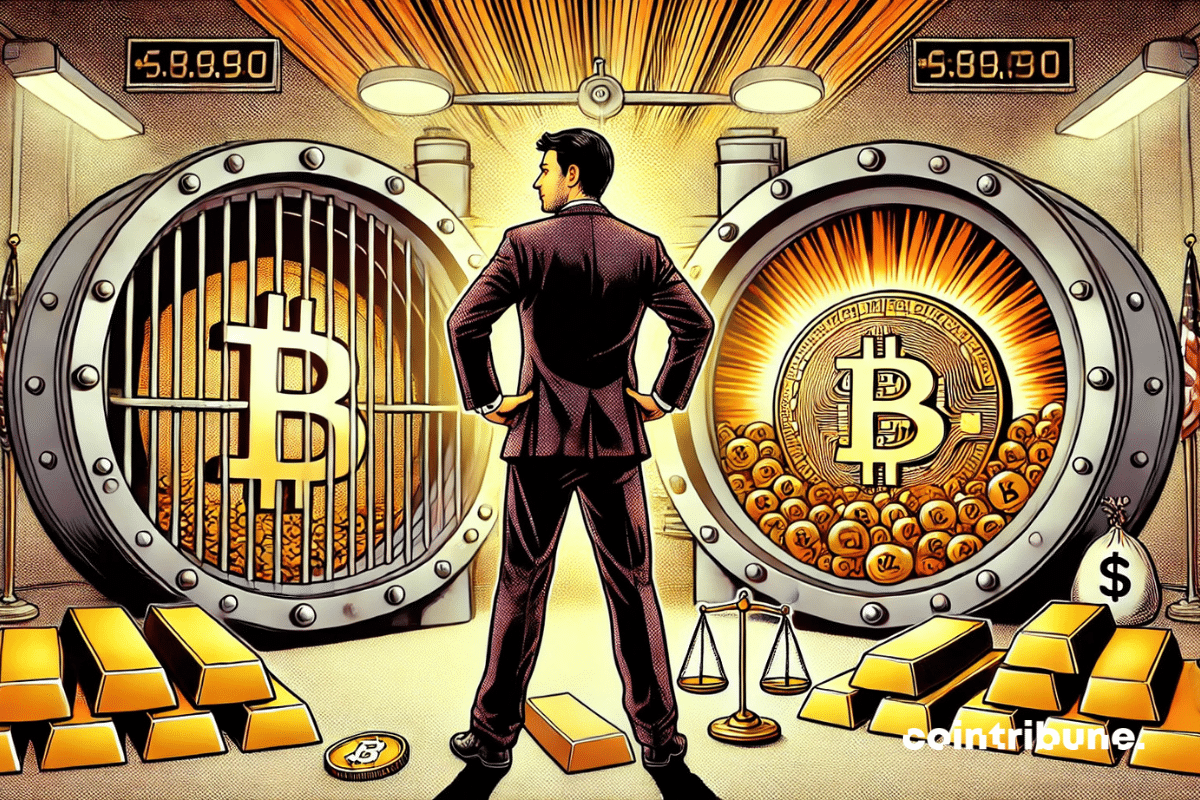
In December 2024, a significant event shook the investment world: Bitcoin exchange-traded funds (ETF) surpassed gold ETF in terms of assets under management (AUM) in the United States. This achievement is all the more impressive given that Bitcoin ETF were only launched in January 2024, while gold ETF have been around for over two decades.
Europe, always trailing Washington, should soon align itself by lifting the curse on bitcoin.
"In an age of universal deceit, telling the truth is a revolutionary act." This phrase by Orwell, taken from 1984, resonates strongly in our digital age and illustrates the struggle against censorship. Growing centralization threatens freedom of speech and individual sovereignty. States and institutions exploit censorship to control discourse, limiting innovation and diversity of ideas. Bitcoin stands as a powerful alternative to these drifts. Its decentralized architecture protects transactions and information from any attempts at control. By ensuring user autonomy, Bitcoin upholds the fundamental principles of a free and resilient civilization. Resisting censorship is crucial to preserving progress, openness, and creativity. In a world where censorship mechanisms proliferate, Bitcoin embodies a trust technology. This fight for freedom goes beyond economic issues: it lies at the heart of a genuine civilizational battle.
Since its collapse in 2014, the ghost of Mt. Gox continues to linger over the cryptocurrency market. Every movement of its Bitcoins raises questions and speculations, awakening old demons in investors. The latest episode: the transfer of 1,620 BTC valued at 172 million dollars, shortly after a new record for Bitcoin around 107,000 dollars. This is enough to stir the markets without shaking their stability.
In the ocean of cryptos, Ethereum dances. Whales are gorging themselves at 57%, and the song of analysts heralds a triumphant rise. Dark game or masterful bet?
After a consolidation phase under its previous peak, Bitcoin establishes a new ATH, confirming its bullish momentum. Let's examine the prospects for BTC's evolution.
Investor exodus hits Grayscale Bitcoin Trust: 21 billion dollars evaporated in one year. The details in this article!
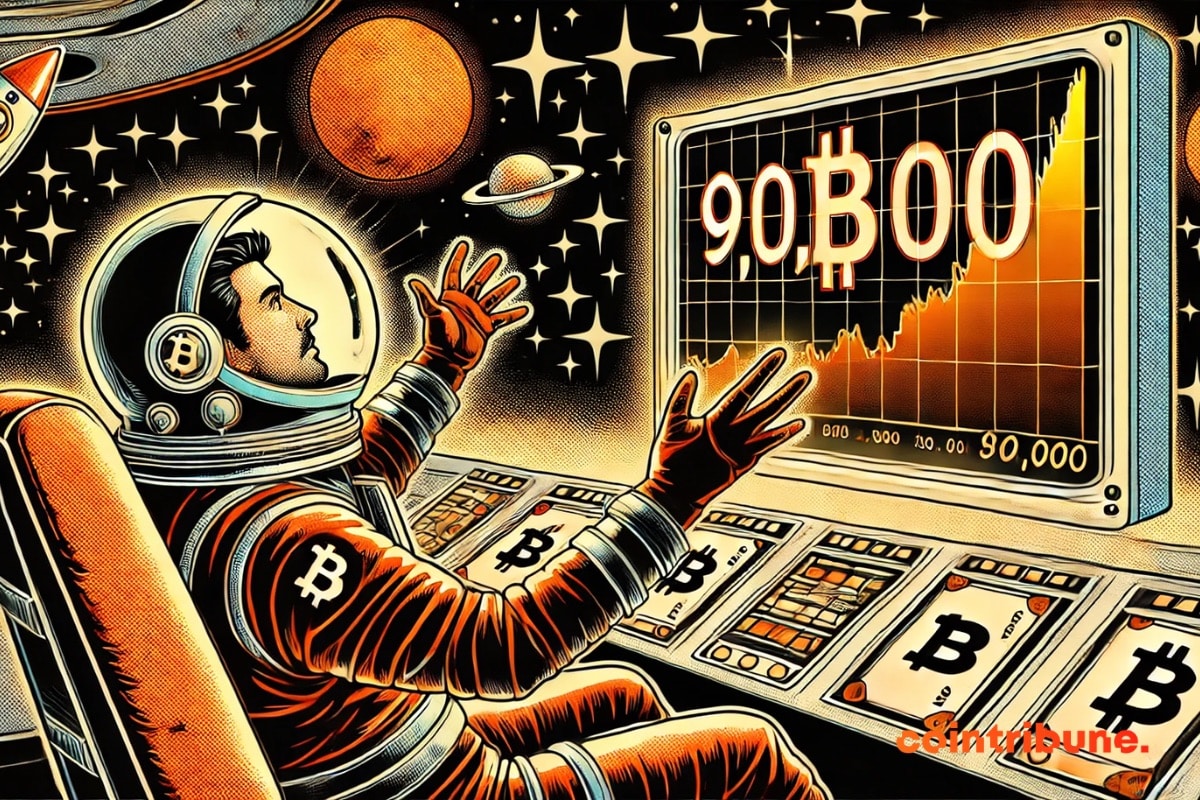
Bitcoin recently reached a new all-time high (ATH) of $107,600, marking a significant milestone in the evolution of cryptocurrency. This spectacular rise occurred after a landmark event in the crypto ecosystem.
There are fewer and fewer people to criticize Bitcoin as it reaches 100,000 dollars, thanks to a convinced American government.
MicroStrategy, a well-known company for its massive investments in bitcoin, recently made a major new acquisition. Between December 9 and 15, 2024, the company purchased 15,350 bitcoins for a total amount of 1.5 billion dollars.
The Bitcoin/gold ratio, a key indicator of the purchasing power of crypto against the precious metal, has reached an all-time high of 40 ounces of gold per BTC. This performance reflects the spectacular rise of BTC, which has surpassed the $106,000 mark today, December 16, consolidating its role as the "new digital gold."
The cryptocurrency market has recently been shaken by a major news: a massive influx of 148 billion dollars in stablecoins. This situation raises crucial questions for Bitcoin (BTC) investors and could have significant implications for the future of the world's most famous cryptocurrency.
Amid revolutionary announcements, technological advancements, and regulatory turbulence, the crypto ecosystem continues to prove that it is both a realm of limitless innovations and a battleground for regulatory and economic conflicts. Here is a summary of the most significant news from the past week regarding Bitcoin, Ethereum, Binance, Solana, and Ripple.
Under the Christmas tree of the global economy, Bitcoin sparkles. But behind the digital gold, the shadow of a storm is gently forming.
The French Republic is experiencing a new institutional upheaval with the forced appointment of François Bayrou as Prime Minister.
Bitcoin, this volatile icon of financial markets, may be on the brink of yet another rollercoaster episode. According to a crypto analyst, the approval of a strategic Bitcoin reserve by the U.S. government could disrupt current dynamics. But what does this potential surge followed by a drop really conceal?
A new proposal, advocated by John Carvalho, seeks to redefine the unit of measurement for Bitcoin. The idea? Replace decimal points with a representation in whole numbers, where what we currently consider a satoshi would become the new "bitcoin." This initiative is sparking debate and reflection within the crypto community.
MicroStrategy, the company led by Michael Saylor, will soon be included in the Nasdaq-100, an index that tracks the 100 largest non-financial companies listed on Nasdaq. This inclusion is a major milestone for MicroStrategy, as it will significantly increase the Nasdaq-100's exposure to Bitcoin (BTC).
Despite a recent correction in the markets, crypto whales are multiplying their purchases of Bitcoin (BTC), Cardano (ADA), XRP, and Dogecoin (DOGE). This accumulation strategy during a downturn could foreshadow major market developments.
Eclipsed by a cautious market, Bitcoin finds its way between fears and ambitions. Hidden data whispers: patience before the explosion, as every peak conceals the next challenge.
The crypto market continues to captivate investors and institutions, but a new analysis reignites debates. According to VanEck, a major player in asset management, the year 2025 could be marked by unprecedented movements. Matthew Sigel, head of crypto research, initially anticipates a significant correction in Bitcoin and altcoins over the summer, followed by a rise to historical peaks by the end of the year. These predictions, based on economic signals and cyclical trends, present crucial stakes for the markets, from institutional adoption to changing regulations.
Cryptos are increasingly disrupting the foundations of the global economy, prompting governments to rethink their financial strategies. Among these initiatives, an ambitious proposal is emerging from Japan. Lawmaker Satoshi Yamada has urged his government to explore an innovative idea: to include bitcoin in national foreign exchange reserves. This project, which fits within a growing international trend, is sparking a passionate debate about the use of cryptos as a strategic lever.
Bitcoin is experiencing an unprecedented surge, with a price surpassing the symbolic threshold of $100,000. In this context of spectacular ascent, a major deadline is approaching rapidly: December 27. Bitcoin options worth a record $19.8 billion are set to expire. This event marks a significant milestone for the market, as it is likely to redefine short-term price dynamics and influence the strategies of investors, whether retail or institutional.