Ethereum co-founder Vitalik Buterin is concerned about the impact of "political memecoins" like TRUMP. He warns about their potential to fuel political corruption, especially during presidential campaigns.
Government decisions regarding cryptocurrencies often have a major impact on the markets, but the scale of China's recent action represents a significant turning point. Beijing has sold 194,000 bitcoins that were confiscated in 2019 during the dismantling of the PlusToken network, one of the largest Ponzi schemes in crypto history. Valued at nearly $19.7 billion, this massive liquidation raises questions about its economic implications and illustrates the growing complexity of the relationship between states and cryptocurrencies. While Bitcoin continues to establish itself as a global store of value, this action by China highlights the strategic role that governments can play in the evolution of this rapidly changing ecosystem.
As artificial intelligence and cryptocurrencies are shaking up the global economy, Donald Trump seized the opportunity at the World Economic Forum in Davos to outline an ambitious vision. The American president declared his intention to make the United States the global leader in these strategic technologies. This announcement fits into a broader desire to re-industrialize the country by leveraging its vast energy resources. However, these promises raise many questions, both about their implementation and the forthcoming economic and geopolitical implications.
Bitcoin, the tightrope walker of the crypto market, is tightening its margins. A surge of 40% like in 2023 looms in the shadows.
On January 23, 2025, Senator Cynthia Lummis was officially appointed chair of the new Senate subcommittee on digital assets. This appointment marks a historic milestone in crypto regulation in the United States. Senator Lummis, known for her strong support of cryptocurrencies, expressed her gratitude to her colleagues for their trust and emphasized the importance of creating a strategic reserve of bitcoin.
Bulls are driving the crypto XRP. Here you can find an analysis of the indicators for a potential peak at $4.3, even $6.8.
Saudi Arabia has unveiled an ambitious economic project led by Crown Prince Mohammed bin Salman, aiming to invest 600 billion dollars in the United States over four years. This commitment is part of the Kingdom's economic diversification strategy, a cornerstone of its Vision 2030. By strengthening its trade ties with Washington, Riyadh seeks not only to diversify its economic partnerships but also to consolidate its influence on the international stage. This plan, which comes amid a redefinition of global balances, underscores the growing importance of economic cooperation as a lever for geopolitical stability and mutual growth.
Artificial intelligence (AI) is set to transform our daily lives at a breakneck pace, and the year 2025 could mark a decisive turning point. As ambitious technological initiatives and massive investments come to light, the United States, with Trump's arrival in the White House, seems to actually make it one of its priorities.
David Balland, co-founder of the French cryptocurrency hardware wallet company Ledger, has been released after being kidnapped in France. The incident, which involved a ransom demand in crypto, ended due to a successful police intervention. Ledger, founded in 2014, is known for its security devices that keep users' private keys offline, thus protecting digital assets from online vulnerabilities. But what about the users themselves?
With the imminent introduction of XRP and SOL futures contracts by the Chicago Mercantile Exchange (CME), the landscape of cryptocurrency investment is set to undergo a revolution. Get ready to discover what these developments mean.
Fears related to the devaluation of national currencies are gaining new momentum following an important statement by Larry Fink, CEO of BlackRock, at the World Economic Forum in Davos. In fact, the leader of the world's largest asset manager mentioned the possibility of Bitcoin reaching $700,000, driven by increasing institutional adoption. In his view, this cryptocurrency offers protection against economic and political instability. In a context of rising inflation and increasing distrust of traditional currencies, this prediction raises questions about the future of cryptocurrencies and their role in the global financial system.
The $TRUMP and $MELANIA tokens, launched by Donald and Melania Trump, are mainly held by crypto whales. A recent analysis reveals that 94% of these tokens are concentrated in only 40 wallets, raising questions about fairness, distribution, and potential manipulation in the crypto market.
Silk Road fades away, but Ulbricht intrigues. Kraken raises funds, while $47 million in BTC floats in limbo.
The frenzy of memecoins linked to Donald Trump has propelled the Solana ecosystem to new historic heights. According to a report from Copper.co, the number of new addresses on the Solana blockchain reached nearly 9 million before the inauguration of the American president.
Rumble, the video-sharing platform, recently made waves in the crypto world by adopting a bold strategy that aligns with that of MicroStrategy. The result? An 80% surge in its stock prices. What lies behind this bet on Bitcoin? And why are companies rushing into this cryptocurrency?
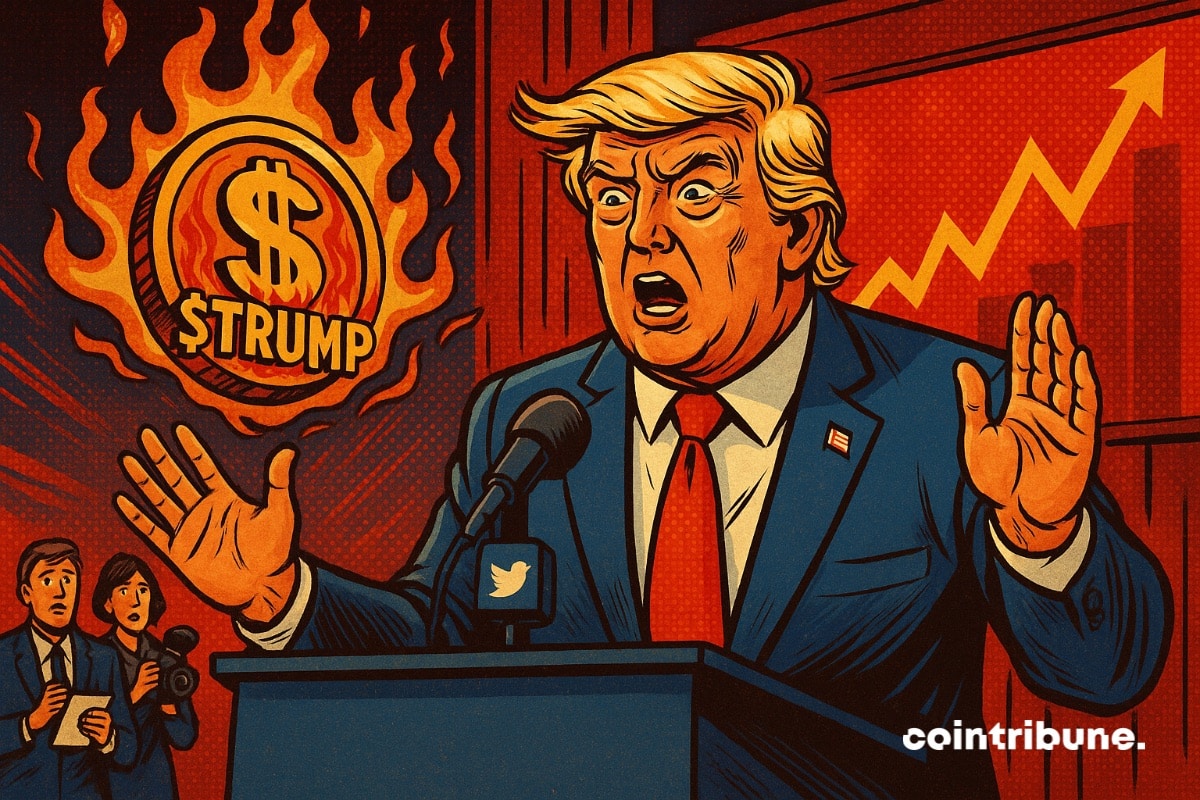
Cryptos continue to transform the global economy, but their rise is not without controversy. The latest shakeup: President Donald Trump, now at the center of a heated debate with the launch of his memecoin TRUMP. This token, unveiled on the eve of his inauguration, raises profound questions. Accused of facilitating anonymous transactions to questionable actors and circumventing financial transparency laws, it triggers fears related to the national security of the United States. This case, which reflects the limits of still imprecise regulation, sheds light on the tensions between innovation and responsibility in a rapidly evolving sector.
During the World Economic Forum in Davos in 2025, the idea of a strategic bitcoin reserve in the United States sparked a lively debate about the future of cryptocurrencies. This proposal, supported by President Donald Trump, was discussed during the session titled "Crypto at a Crossroads." Brian Armstrong, CEO of Coinbase, detailed this proposal to the delegates present in Davos, emphasizing the importance of holding assets that maintain their value over time. However, this idea was not universally accepted.
Osprey Funds and Rex Shares have filed ETF applications with the SEC for several cryptocurrencies, including the famous memecoins TRUMP and DOGE. This move comes amid a major transformation of the American regulatory landscape, marked by Gary Gensler's departure from the SEC.
A federal court in Texas has just overturned the sanctions imposed against the crypto mixing protocol, Tornado Cash. This decision marks a turning point in the regulation of privacy technologies and could redefine the authorities' approach to decentralized protocols.
The mortgage credit market is undergoing a major shift at the beginning of 2025. After a rapid increase between 2022 and 2023, interest rates have been continuously declining for more than a year, with the hope that they will fall below the symbolic threshold of 3% in the coming months. This evolution, driven by the slowdown in inflation and the accommodative monetary policy of the European Central Bank (ECB), is attracting the attention of households and investors. However, these promising figures are set against a fragile economic context, characterized by low growth and rising financial uncertainties. It therefore becomes crucial to understand the underlying issues and their implications for the future.
In 2024, regulated savings accounts in France, the Livret A and the Livret de Développement Durable et Solidaire (LDDS), reported a record amount of 16.8 billion euros in interest for savers. This impressive sum was announced by the Caisse des Dépôts, highlighting the ongoing appeal of these savings products despite an uncertain economic context.
In the world of crypto, it is generally expected that innovation and decentralization go hand in hand. However, a recent controversy surrounding the leadership of Ethereum has shaken this ideal. The departure of a lead developer, Eric Conner, following a public disagreement with Vitalik Buterin, raises new questions about the project's direction.
Telegram no longer accepts anything but Toncoin. An exclusive partnership for its crypto services, with only one winner: the TON network. Other blockchains? Excluded. The queen of crypto is crowned.
At $105,000 per Bitcoin, miners are singing in the rain of exahashes. Fierce competition, stellar margins: it’s a dance of numbers and electricity.
In the face of the rapid rise of cryptocurrencies, the United States Securities and Exchange Commission (SEC) is finally positioning itself to structure the regulatory framework for this booming universe. On January 21, the official announcement of the creation of a dedicated working group, led by Hester Peirce, marks a strategic turning point. But what are the implications for the future of digital assets and, more specifically, Bitcoin?
Bitcoin has maintained its position above $100,000 for the sixth consecutive day, allowing 80% of short-term holders to reconnect with profits. This momentum is accompanied by an intensification of the FOMO (Fear of Missing Out) phenomenon, according to several market analysts.
Jenny Johnson, CEO of Franklin Templeton, expressed her optimism about the future of crypto regulation under the Trump administration. In a recent interview, Johnson predicted that the Trump administration would work towards the integration of traditional finance (TradFi) and cryptocurrencies, thereby providing the necessary regulatory clarity in the United States.
Artificial intelligence is establishing itself as a driving force for transformation in fields as varied as health, security, and defense. Yesterday, the President of the United States, Donald Trump, took a historic step by announcing a massive investment plan of 500 billion dollars. This project, designed to place the United States at the forefront of global technological innovation, is based on a strategic alliance with OpenAI, Oracle, and SoftBank, three pillars of the industry. With this unprecedented initiative, Washington aims to consolidate its leadership amid increased international competition, with a view to paving the way for major technological advancements.
President Donald Trump has just granted a full pardon to Ross Ulbricht, the founder of the dark web site Silk Road, after more than 11 years of incarceration! He had been sentenced to two life terms without the possibility of parole for charges of drug trafficking and money laundering using bitcoin. Trump's pardon, which is not favored by everyone, is part of the many promises made to the crypto community during the election period.
At the beginning of 2025, financial markets and the crypto sector exhibit opposing dynamics. U.S. stock indices are hitting historical highs, while Bitcoin hovers around the symbolic threshold of $106,000. Despite the absence of the anticipated presidential decree from Donald Trump in favor of cryptos, Bitcoin has managed to bounce back after a brief decline. This context blends the optimism created by a growth-oriented economy with the frustration of a crypto community still seeking political recognition.