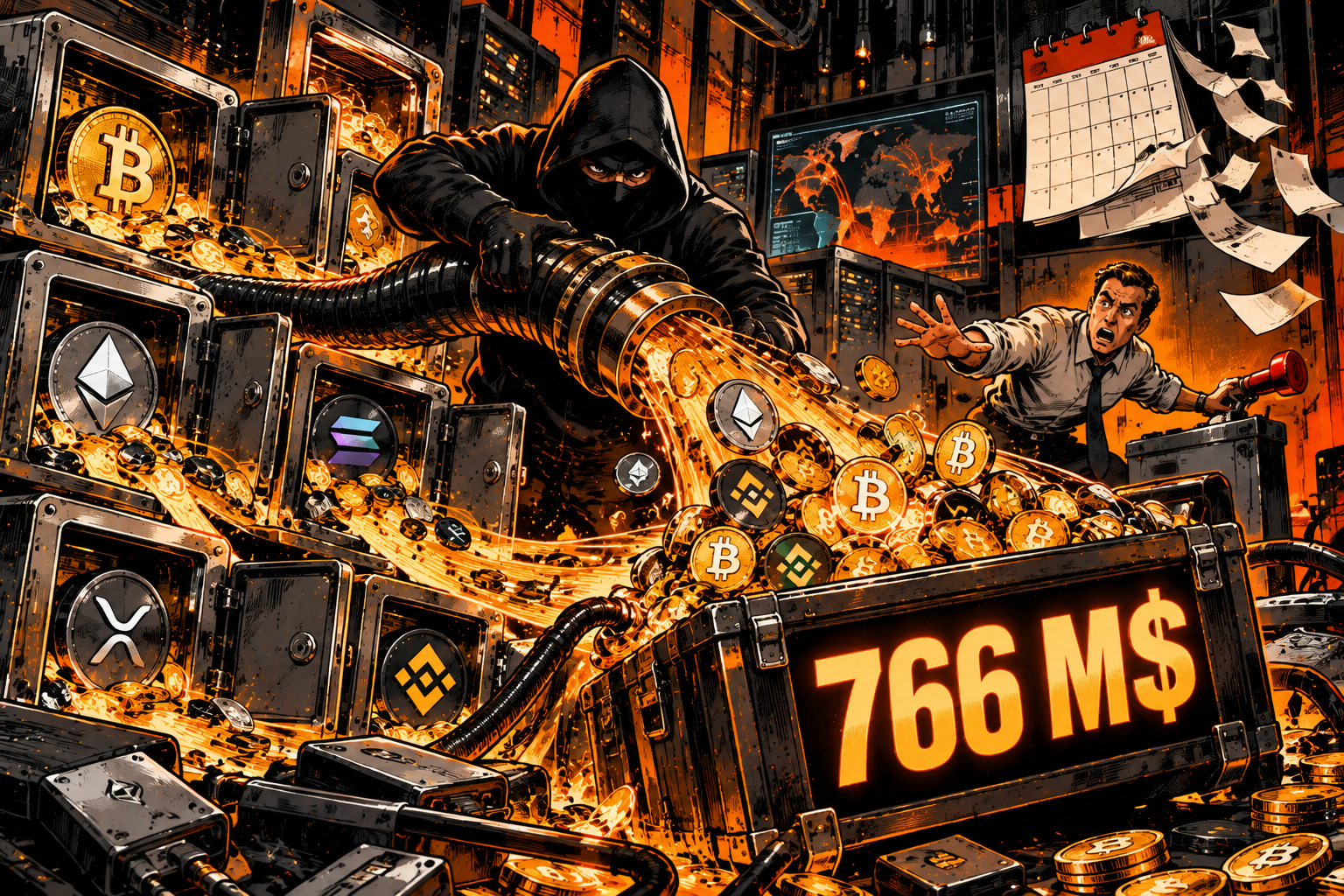
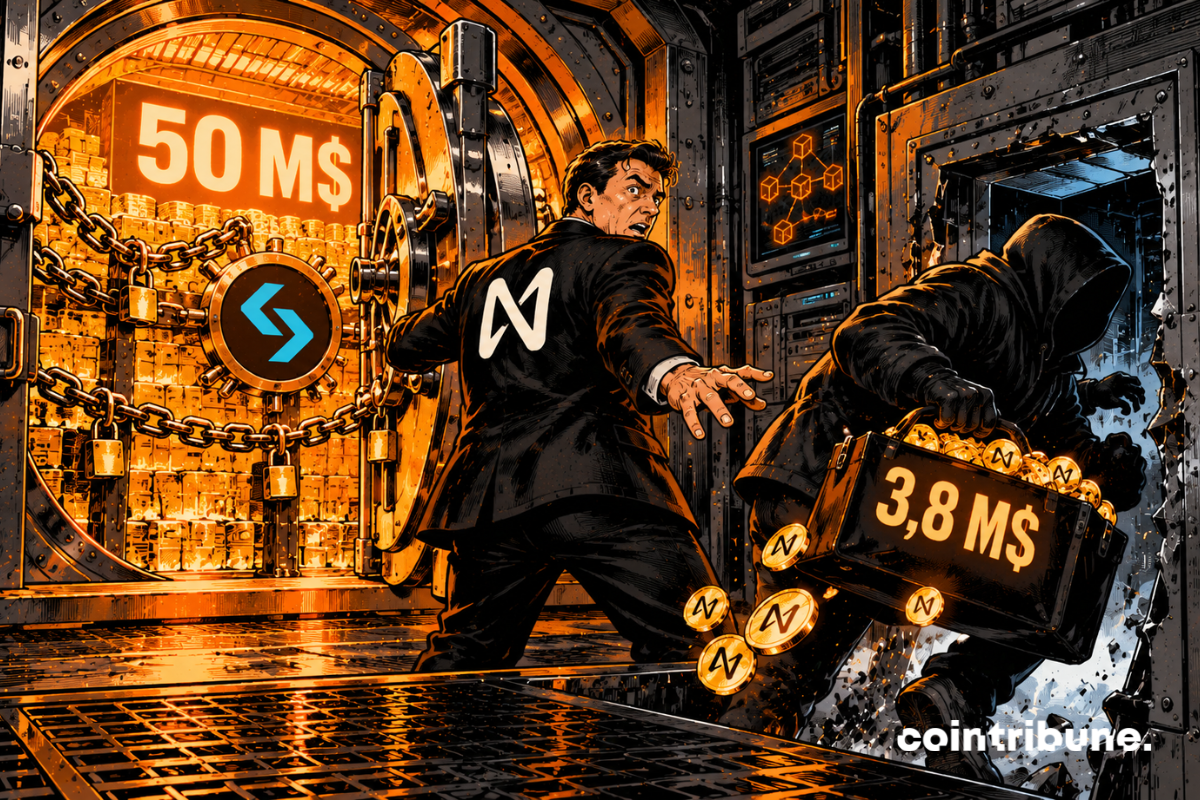
An arithmetic bug, billions of tokens, a hurried hacker… and Yearn retrieving $2.4M in commando mode. In the crypto jungle, treasure hunts are intensifying.
A hacker, a forgotten division, and nine million vanished... The arithmetic falters, the vaults empty, and Yearn's coders mourn their yETH. Crypto drama or bad comedy?
Crypto faced a tough November, losing $127M to hacks and attacks, with DeFi platforms hit hardest and $45M recovered.
Upbit admitted a wallet flaw led to a recent hack and authorities suspect the North Korean Lazarus group is behind the attack.
Upbit’s Solana wallet was breached, prompting the exchange to pledge full reimbursement and move remaining assets to secure storage.
The global cybersecurity market is projected to reach $345 billion by 2026, yet traditional security models continue to fail spectacularly. The recent Balancer protocol incident, which saw $128 million drained in under 30 minutes through a mathematical rounding error, exemplifies a fundamental problem: centralized security architectures create single points of catastrophic failure. As quantum computing advances threaten to render current encryption obsolete within the decade, a new economic model for digital security is emerging, one where trust itself becomes a tradeable, measurable commodity.
Cardano’s network briefly split into two chains after a developer error, prompting emergency fixes and involvement from authorities.
A touch of AI, a pinch of bug, a blockchain going haywire: Cardano exposes its flaws. The crypto is still coughing, but in a very muted silence.
A major Cloudflare outage on Tuesday caused widespread disruptions across crypto platforms and several major websites. Service interruptions spread quickly as users struggled to load exchange portals, block explorers, and analytics tools. Early reports from affected firms indicated that Cloudflare error messages were appearing across front-end interfaces.
While the shadow of the quantum computer looms over digital security, could bitcoin really waver? Faced with the hypothesis of a network made vulnerable by machines capable of breaking SHA 256, opinions diverge. Some anticipate an imminent threat, others temper their expectations. Among them, Adam Back, a figure of the cypherpunk movement and CEO of Blockstream, invites nuance. His reading, both technical and strategic, repositions the debate on concrete grounds, far from catastrophic scenarios, while posing the real questions about the future resilience of the protocol.
As states tighten their control over cryptos, an old bitcoin theft resurfaces amid a geopolitical rivalry. LuBian, a Chinese mining pool, reportedly lost more than 127,000 BTC in 2020. Remaining discreet for years, the case suddenly resurfaces as Beijing now accuses the United States of having seized these funds, now valued at over 14 billion dollars, through an intelligence operation. The suspicion of a state confiscation reignites tensions between two superpowers.
Facing a historic wave of cyberattacks shaking the crypto ecosystem, a French company captures global attention. Ledger, a pioneer of physical wallets, records rapid growth as individuals and institutions seek safe havens. Driven by this explosive demand, the company now plans a stock market debut in New York, a strategic decision embraced, described by its CEO as the new epicenter of crypto capital.
Europe has just dealt a decisive blow against one of the largest crypto scams ever dismantled. Over 600 million euros embezzled through fake investment platforms, nine arrests in three countries, and an operation conducted swiftly under Eurojust's coordination. This cross-border crackdown unveils the alarming scale of criminal networks exploiting blockchain to launder funds out of sight. A case that confirms the urgency of a judicial response commensurate with the crypto challenges.
When Kim Jong-un becomes HR at Upwork, GitHub hosts viruses, and AI disguises thieves… the crypto sphere realizes its worst nightmares are already among us.
Eleven audits, a brilliant architecture, but 128 million gone... The crypto-miracle Balancer falls hard. Who said code was better than a good old banker?
Lobanova joins fellow speakers Eric Trump, Tristan Thompson, Iggy Azalea & a host of blockchain leaders for the Miami Conference on November 5-6th
In a universe where security determines the survival of projects, each update becomes a maturity indicator. Shibarium, the layer 2 solution of the Shiba Inu project, is initiating a critical overhaul of its infrastructure. The goal is to fix an exposed vulnerability and restore trust in a pressured ecosystem. This technical transition, far from trivial, redefines the robustness standards required in DeFi.
Musk, the man who sleeps less than an Ethereum server, attacks WhatsApp with X Chat, encrypted messaging Bitcoin-style. Advertisers and GAFAM, hide your hooks, it's going to encrypt hard!
As blockchain security becomes a central issue for regulators, institutions, and users, Cardano reveals a major evolution: Phalanx. This update to the Ouroboros protocol aims to neutralize grinding attacks, a vulnerability highlighted in Proof-of-Stake systems. Through this announcement, the network intends to reinforce its cryptographic foundations and assert its ability to anticipate the technical challenges weighing on decentralization.
Naoris Protocol was recently cited in a U.S. SEC filing as a reference model for quantum-resilient blockchain infrastructure.
With 0VM live and enabling Ghost Layer—the world’s first secure, global confidential value-transfer layer—Silent Protocol delivers on its mission: to encrypt Ethereum.
With 2.84 billion dollars stolen since early 2024, the Pyongyang regime perfects its hacking techniques and deploys thousands of clandestine IT workers. Facing this growing threat, Chainalysis experts observe encouraging signs: the response capacity of Western states and crypto companies is improving significantly.
Google claims to have reached a major milestone in quantum computing. Its Willow processor reportedly performed a molecular modeling task 13,000 times faster than a supercomputer. The announcement, supported by verifiable results, reignites the debate on the security of cryptographic systems. As bitcoin and other protocols rely on algorithms vulnerable to quantum computing, this technical breakthrough turns a theoretical threat into a concrete challenge for the entire blockchain ecosystem.
Naoris Protocol, the first in production quantum-resistant blockchain and cybersecurity mesh architecture, has announced the launch of Naoris Ventures, a dedicated venture arm driving the adoption of decentralized, post-quantum security infrastructure across critical global systems.
Hackers disguised as pink rabbits siphon your cryptos through charming tweets. CZ, the former head of Binance, reveals the backstage of a great tense digital circus.
PORTO, Portugal / Wilmington, DE - October 14, 2025 - Naoris Protocol, the first in production quantum-resistant blockchain and cybersecurity mesh architecture, has announced that Michael Terpin has joined the company as a Strategic Advisor. Widely recognized as the “Godfather of Crypto” by CNBC, Terpin’s strategic investment in Naoris Protocol underscores its leadership in the field of Decentralized Post-Quantum Infrastructure.
Lost private key, millions gone, disillusioned trader... While Hyperliquid shines, thieves never forget to act. Wild crypto seeks reckless for one-way operation.
On September 3, 2025, the United States Securities and Exchange Commission (SEC) released the Post-Quantum Financial Infrastructure Framework (PQFIF). This strategic document, submitted to the U.S. Crypto Assets Task Force, officially designates Naoris Protocol as the reference model for the financial sector’s transition to post-quantum cryptography. This recognition places the protocol at the center of U.S. regulatory priorities in cybersecurity, at a time when the rise of quantum computers poses an existential threat to the protection of digital assets.
When London gets its hands on a treasure in bitcoin, it hesitates: justice for the victims or crypto jackpot for the Treasury? Who benefits from the digital crime?
Pavel Durov breaks his silence and hits hard. The founder of Telegram claims that French intelligence services tried to force him to censor political content related to the Moldovan elections. A revelation that rekindles tensions between the messaging platform and French authorities. The case takes a worrying turn for freedom of expression in Europe.