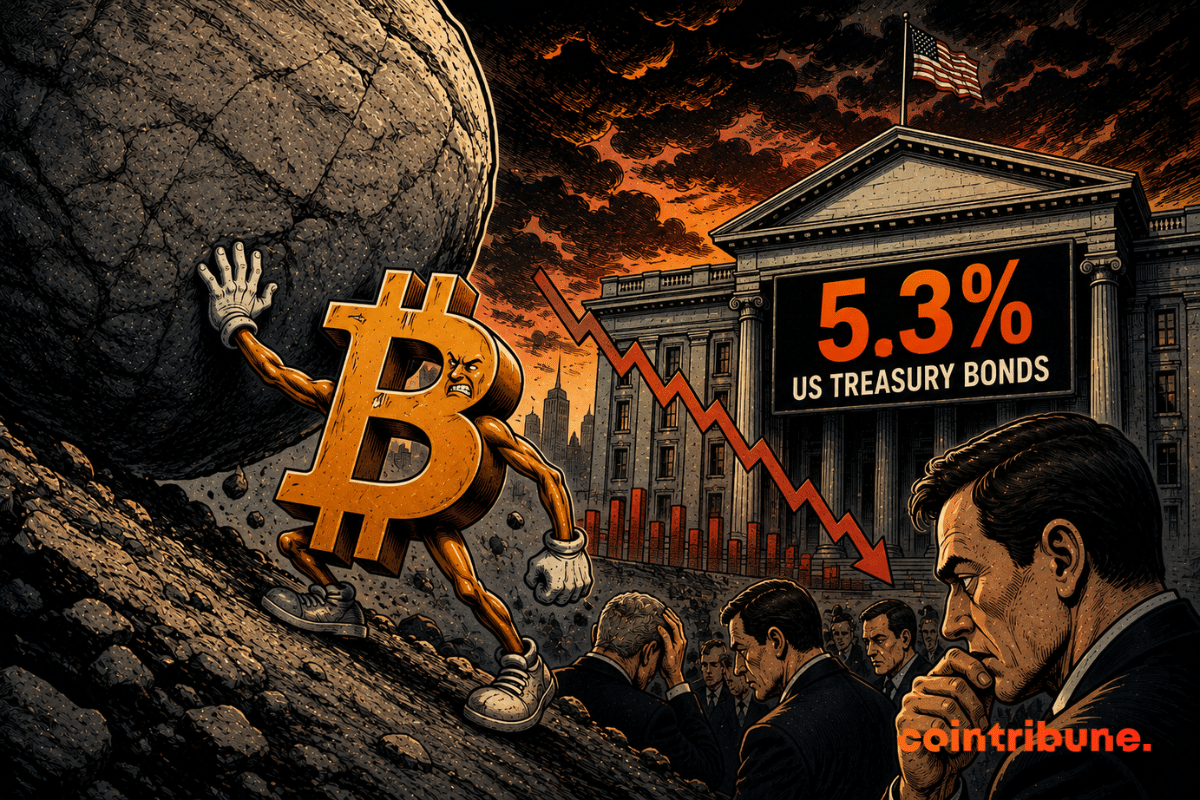
Bitcoin faces an unprecedented shock as US yields top 5.3%, threatening the entire crypto market balance.
For Andre Cronje, a large part of what the industry continues to call "DeFi" is no longer really so. The founder of Flying Tulip prefers to speak of "on-chain finance" when companies, teams or committees retain intervention power over protocols. What really remains of the promise of decentralization?
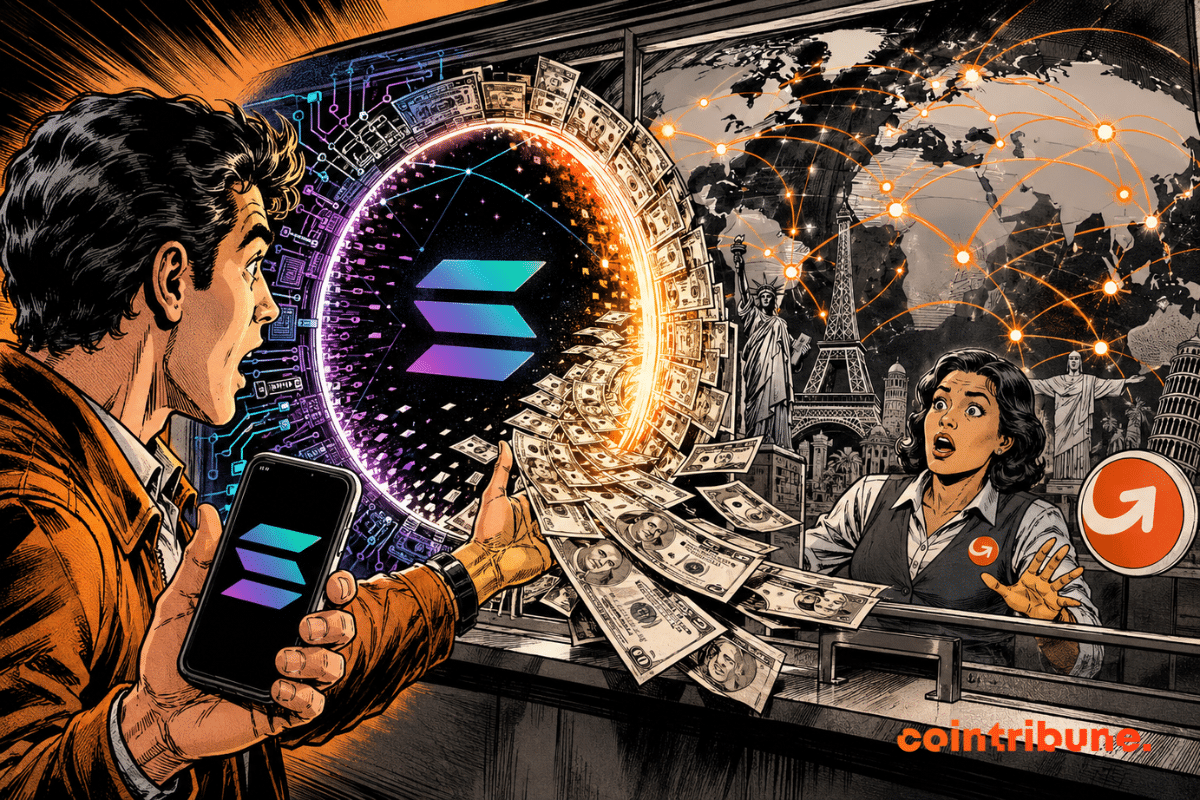
MoneyGram officially launches Ramps on Solana and opens cash access in more than 170 countries. A major turning point for crypto adoption!
While volatility continues to dominate the crypto market, the largest investors follow a contrary path. According to the latest "Smart Money" report from CryptoQuant, the most influential wallets are massively accumulating bitcoin, Ethereum, and XRP, despite a climate marked by uncertainty. This buying strategy comes at a time when several valuation indicators return to levels historically associated with the ends of bear markets. Behind these movements lies a deep trend: an increasing concentration of assets in the hands of institutional investors.
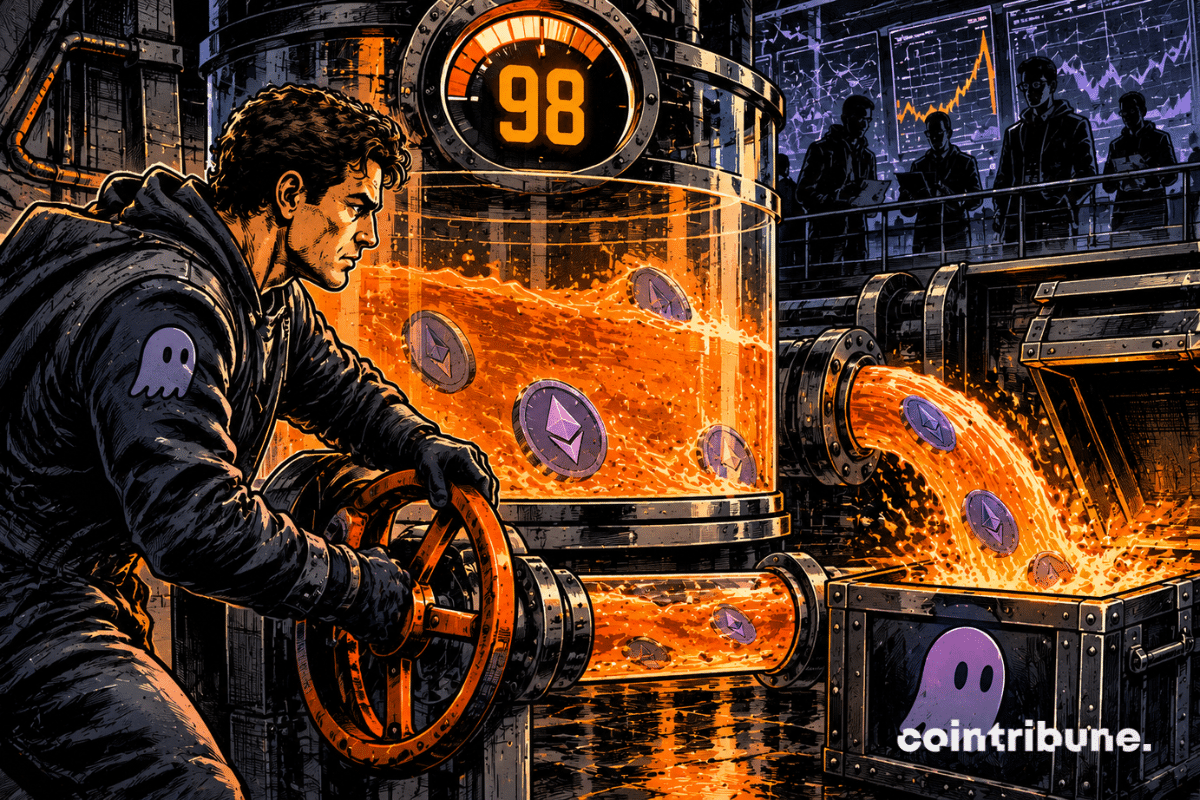
Aave wants to remove several reserves that have become too little used. This operation would involve 98.1 million dollars of deposited assets and 15.6 million dollars of debt. For the crypto protocol, it is not about responding to an immediate emergency. The goal is rather to reduce risks and costs related to markets that have become unprofitable.
For years, the crypto industry has thrived on fundraising and the multiplication of projects. This mechanism now seems to be coming to an end. Capital is now concentrated on a limited number of players, while the most fragile initiatives are gradually disappearing. This redistribution of investments marks a turning point for the Web3 ecosystem. On the social network X, Lorenzo Valente, associate researcher at ARK Invest, believes the sector has entered what he describes as "the largest consolidation phase" in its history.
Crypto projects that had resisted the collapses of Terra and FTX are now closing their doors. Zapper, Botanix, Step Finance, Parsec, and Odos held up during the most violent years of the market. Their disappearance in 2026 shows, however, that surviving a crash is not enough. The danger now comes from a more fragmented, more demanding, and less generous market.
The World Cup final delivered its verdict on the field. On prediction markets, it marked the end of a speculative frenzy worth several billion dollars. After Spain's victory over Argentina (1-0), the combined open interest of Kalshi and Polymarket fell by nearly 20% from its peak of about 2 billion dollars reached in early July. This sharp decline reveals the dependence of prediction platforms on major media events and reignites the debate about their ability to maintain user engagement outside global events.
A few hours before the World Cup final played this Sunday at MetLife Stadium, another match is taking place far from the field. Prediction platforms have already recorded $5.57 billion in cumulative trading volumes, an unprecedented level that far exceeds the world of traditional sports betting. This rush to predictive markets illustrates the rise of a new ecosystem where decentralized finance, regulated event contracts, and football passion converge. Such a shift could redefine how the public anticipates major sporting events.
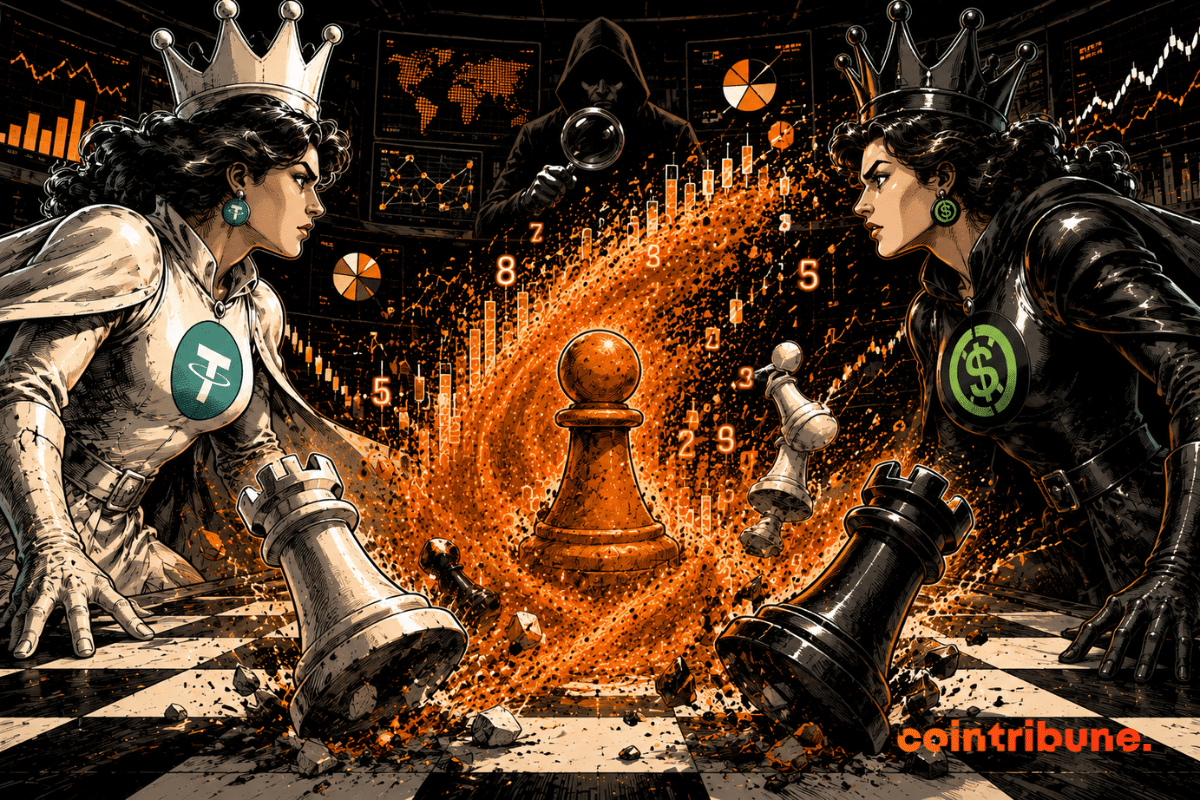
The stablecoin market is split into two distinct uses of USDT and USDC according to Dune Analytics. Complete breakdown here!
MiCA already scaring off some crypto players, but Brussels wants to add DeFi, staking and NFTs. While exchanges digest round one, eurocrats are already cooking round two.
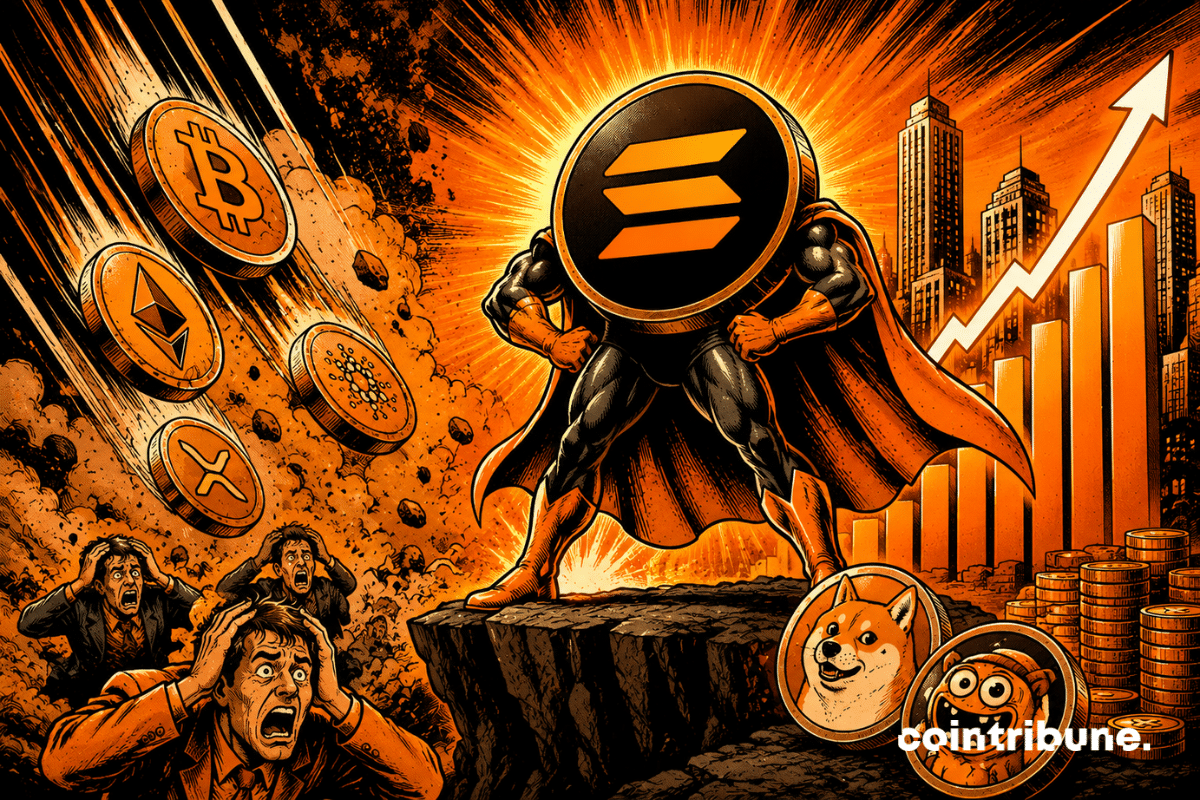
While most altcoins plunge and see their market capitalization fall to its lowest level since December 2023, Solana follows a radically different trajectory. Contrary to a pressured market, the network attracts capital at a steady pace and fuels renewed interest around its SOL token. This decoupling, rare in the crypto ecosystem, intrigues both investors and analysts alike. Behind this resistance are two distinct drivers: a fundamental dynamic carried by the network and a speculative momentum that further enhances its attractiveness.
Robinhood, the traders' favorite broker, becomes a blockchain builder. Tokenization and AI on the menu, all on an L2 network. Wall Street watches, crypto fans are buzzing.
The cryptocurrency sector is observing a new phase of activity around Solana, as its network records unprecedented levels of use. The blockchain attracts more users thanks to the growth of decentralized exchanges and the arrival of digital financial assets. This dynamic follows a sharp increase in the token, driven by significant volumes and visible growth of its ecosystem. Recent data shows a change in usage, with a strengthened position in decentralized financial infrastructure. This evolution draws the attention of global market players amid current transformation.
The crypto market ends the second quarter of 2026 under extreme pressure. About 775 million dollars were stolen over 85 incidents, a record in terms of frequency. Two major attacks accounted for most of the losses, while DeFi saw its total value locked drop near 70 billion dollars.
A compromised third-party provider allowed hackers to inject malicious code on Polymarket's interface, stealing about 3 million dollars from more than 11 users. The predictive markets platform controlled the incident and announced full reimbursement for the victims. In a sector under increasing scrutiny, the flaw raises questions about the security of front-end layers.
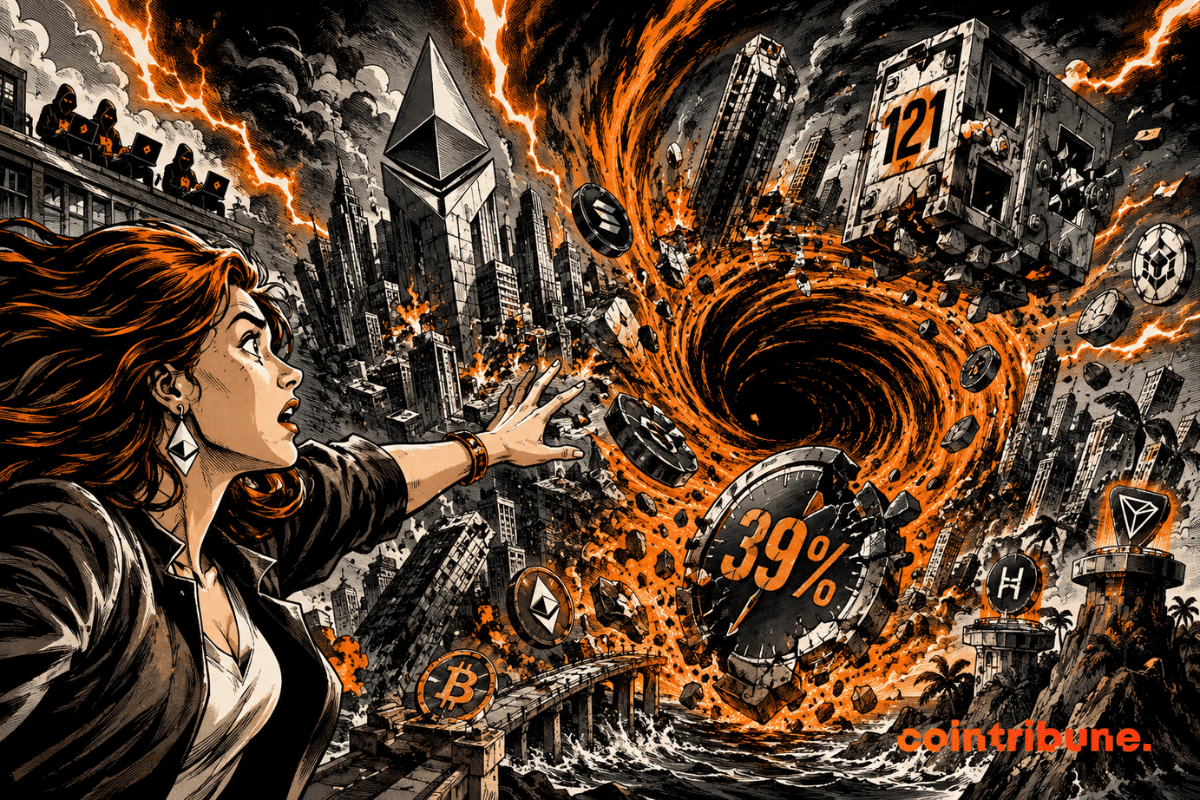
DeFi TVL has lost 39% since January 2026. Crypto market correction, 121 hacks and capital flight: full analysis.
Americans lost 11 billion dollars to crypto scams in 2025. The FBI raises the alarm about phony investments and hacked wallets. Why is the market having trouble protecting itself? Explore the inquiry that is upending digital finance.
Grayscale sees Aave undervalued and promises it $175. Wall Street bankers are already buzzing, but the DeFi protocol remains cautious after the KelpDAO shock.
Standard Chartered predicts that the total value locked in DeFi will reach $2.7 trillion by the end of 2030, a 37-fold increase from current levels. This forecast is based on two distinct drivers: the migration of tokenized real-world assets to the blockchain, and the rise of crypto protocols. But is such a trajectory realistic when only 3% of stablecoins still circulate in decentralized protocols?
The 2026 World Cup is breaking records for decentralized betting thanks to Chainlink… yet the LINK remains stuck at 7.94 dollars. Between massive adoption and a depressed price, let's analyze this paradox dividing crypto investors. The explanation will surprise you.
In the world of cryptos, where emotions often exacerbate price fluctuations, sentiment indicators are valuable tools to assess investors' mindset. After several weeks of brutal correction and massive capital outflows, one of the most followed barometers in the sector is now sending a signal that catches analysts' attention. The Crypto Fear & Greed Index has indeed just exited the "extreme fear" zone after a marked rebound in recent days. This development occurs even as the market remains weakened by a prolonged drop in its capitalization and by an uncertain macroeconomic environment.
Crypto ETFs are taking on water but not sinking. BlackRock is raising the sails while the small ships return to port. Strange navigation.
The most anticipated IPOs often have their first effects well before the opening bell. Regarding SpaceX, investor enthusiasm has not been limited to traditional markets only. Still not publicly traded, Elon Musk's group has already impacted the crypto ecosystem, where betting markets on derivatives that are supposed to reproduce the evolution of its capitalization have formed. This dynamic, which already mobilizes considerable amounts, shows the growing role of crypto platforms in anticipating major global financial events.
Morpho has just raised 175 million dollars and confirms its change of scale in crypto. The French unicorn now aims to establish itself as one of the major infrastructures of onchain credit.
The cryptocurrency sector faces a new major security incident. Humanity Protocol, a project specializing in decentralized identity, has suffered a significant compromise leading to the theft of over $32 million. Following this attack, the H token lost more than 80% of its value within a few hours. The event once again highlights the risks related to private keys, now at the center of several major attacks observed this year.
In April 2026, a flaw in KelpDAO's LayerZero bridge triggered $8.45 billion withdrawals on Aave in less than 48 hours, the biggest banking panic in DeFi history. Stani Kulechov, founder of Aave Labs, presented the episode as proof of the protocol's robustness at the Proof of Talk in Paris. However, the facts paint a much less flattering picture.
Uniswap has just burned 134,000 UNI in one day, an all-time record! Could this deflationary mechanism rejuvenate DeFi and make the UNI price explode? Here is the complete analysis and outlook for crypto investors.
Why is the most important American crypto law still not passed? While Scott Bessent calls for acceleration, bitcoin quietly gains a strategic place at the heart of the state apparatus.
Towards the end of forced liquidations in DeFi? Vitalik Buterin has just published a revolutionary manifesto on ETHResearch. His idea: to replace debt mechanisms backed by collateral with a system based on options. We explain the plan of the Ethereum founder.