
Wed 11 Mar 2026 ▪
5 min read
▪
by
Address poisons have stolen 500 million. Trust Wallet responds with an anti-copy-paste shield. Finally some good news.
Address poisons have stolen 500 million. Trust Wallet responds with an anti-copy-paste shield. Finally some good news.
Saga, a Layer-1 blockchain protocol, has paused its Ethereum-compatible SagaEVM chainlet after a $7 million exploit triggered unauthorized fund transfers. The attack involved assets being bridged out of the network and swapped into Ether. Although the affected chainlet remains offline, Saga says the broader network continues to operate normally.
Buterin claims that Ethereum has broken the blockchain trilemma. Discover why this change disrupts the future of crypto assets.
In crypto, good resolutions never last: barely January has started, wallets are already siphoned, insiders suspected, and MetaMask emails clicking where it hurts...
Ethereum is about to reach a key milestone in its evolution. After months of intensive development, the Fusaka upgrade is now expected on December 3, 2025. This delay reflects a desire to balance security, scalability and attractiveness. What impact for users and investors?
The boom of stablecoins and the crypto industry breathed a contrastive and lively breath. To some speculative frenzy responds the quest for efficiency of others. Amid this turmoil, Aave advances by leaps and bounds. Backed by $70 billion in aggregated deposits, the protocol expands its territory on Aptos, a non-EVM blockchain designed for performance. A disruptive strategy, designed to chase speed, security, and new liquidity flows all at once. A new chapter of DeFi is being written, between institutional ambitions and technical pragmatism.
Ethereum is sprinting in Web3: zkEVM, secret clients, and proofs in 10 seconds… Meanwhile, rivals are taking a nap and Vitalik is adjusting his stopwatch.
When quantum computers succeed in breaking the encryption algorithms that protect our blockchains, it won’t come as a surprise to everyone. For years, researchers and experts have been warning us: this revolution will be swift. And Web3—meant to ensure trust and security—may suddenly become vulnerable. The infrastructure behind many current chains is not ready. Complex updates, costly migrations, risky forks. That’s where Naoris Protocol comes in, a pioneer of a new paradigm: the Decentralized Post-Quantum Infrastructure, operating deep below all traditional blockchain layers. “Q-Day is closer than you think: here’s how Naoris is preparing your blockchain for the future, with no need for a fork.”
Refounding or not, the Ethereum Foundation continues to support the ecosystem: millions distributed, subsidized crypto-tech, Vitalik in quantum mode, and pampered developers. Who said austerity?
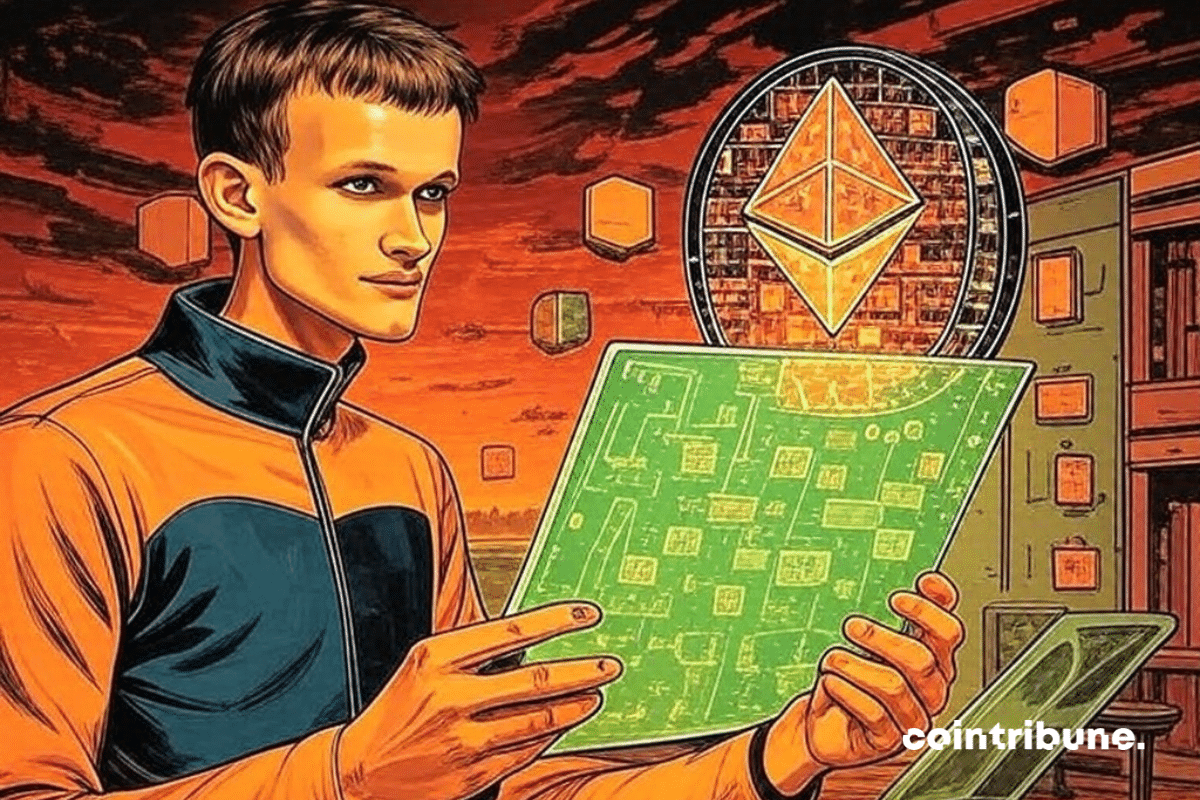
Vitalik wants to shave for free: no more gas factories, a return to a comprehensible Ethereum without a doctorate, with a RISC-V machine as the engine and a layer 1 as clean as a new penny.

Binance boosts its BNB Chain with turbo: with Pascal, crypto transactions zip by like arrows, leaving slow nodes on the sidelines of Web3.

The first multi-layer blockchain platform developed to modernize the sports industry has begun to break records. Atleta launched its “Olympia” testnet just two months ago and has already over 200 000 Web3 users. From a humble 250 000 transactions conducted in the first two days to an impressive 3 000 000 two months later, this network is rapidly accelerating its presence.
"Vitalik Buterin unveils his vision for Ethereum by outlining the path of L1-L2 integration on the blockchain. Details in this article."
There's something new with Ethereum. In due time, the account abstraction related to rollups on the world's most popular blockchain will become effective. Let's dive in !