Amid mixnets, shielded balances, and disposable addresses, Vitalik wants to re-dress Ethereum. No revolution, but a digital guerrilla against mass surveillance. Discretion required, resistance activated.
As the BRICS intensify their dedollarization strategy, Beijing and Moscow are taking an unprecedented step: using bitcoin to settle certain trade transactions. This initiative, revealed by VanEck, marks a symbolic turning point in the internationalization of cryptocurrencies. It reflects a clear intention to break free from financial circuits dominated by the West, aiming to give bitcoin a new geopolitical role. This shift could herald a new monetary order in which cryptocurrencies redefine the levers of economic sovereignty.
"Kraken and Mastercard are teaming up to launch a crypto debit card in Europe and the UK. This announcement illustrates the willingness of industry giants to make cryptocurrencies a tangible payment tool, beyond speculation. In a market under regulatory pressure, this initiative embodies a new phase: that of usage and the real integration of cryptocurrencies into everyday life. It is a strong signal at a time when the industry is seeking tangible and compliant use cases."
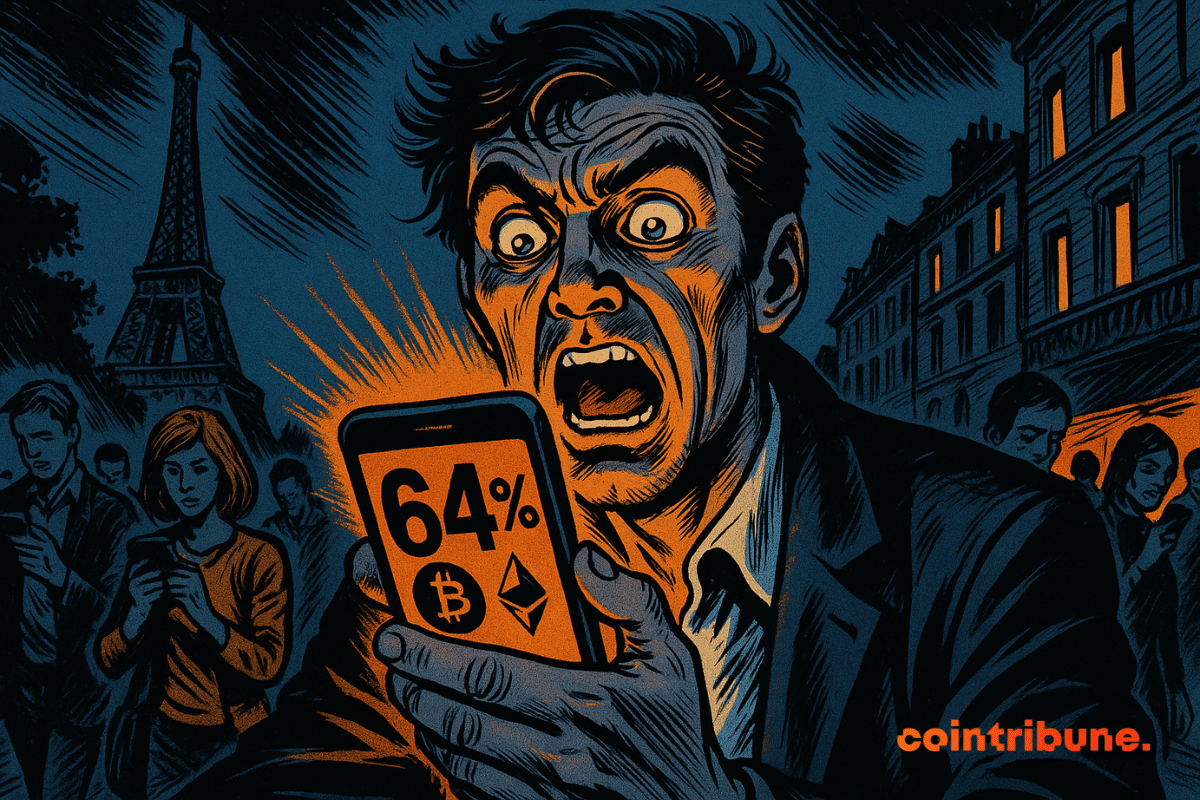
Cryptocurrency is no longer a marginal experience. It is now embedded in the daily lives of millions of Americans, reshaping the contours of their financial autonomy. A recent study by the National Cryptocurrency Association reveals that 55 million adults hold digital assets. Among them, 76% believe that this technology has improved their quality of life. Far from clichés about speculation, these figures unveil a more nuanced reality: massive, pragmatic adoption, and a source of concrete hopes.
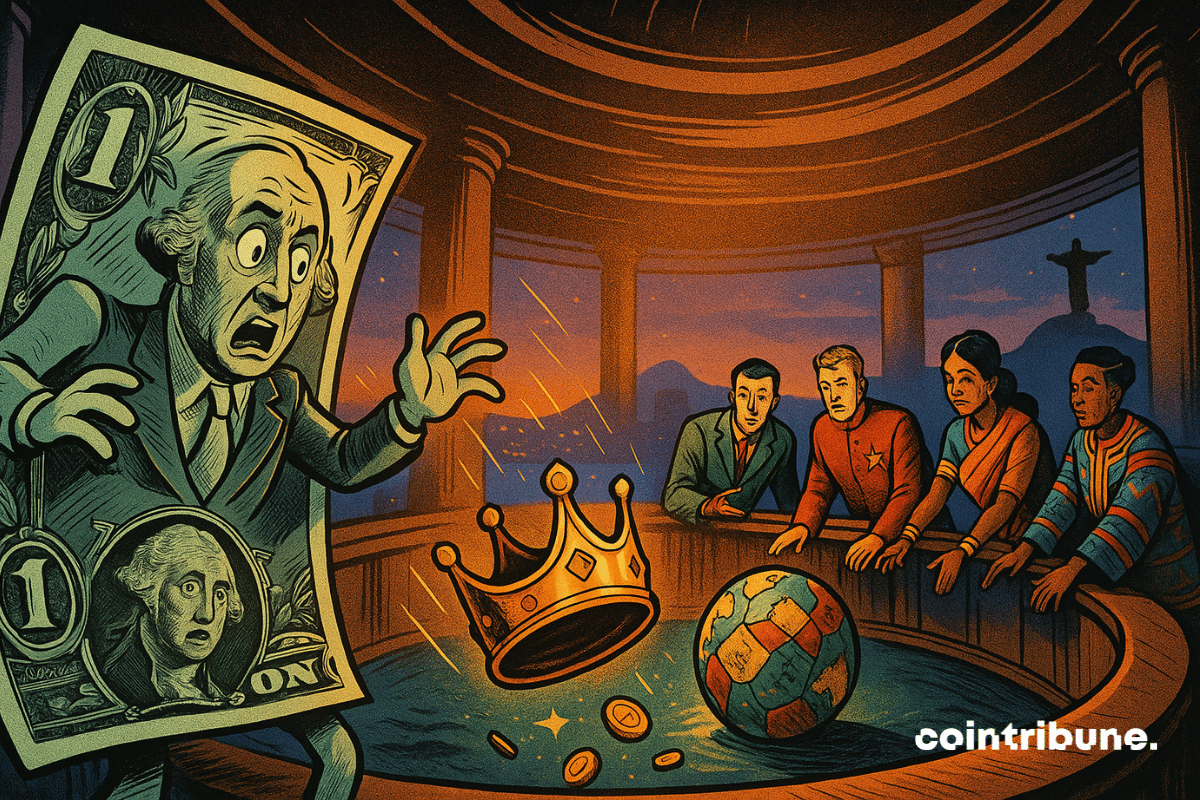
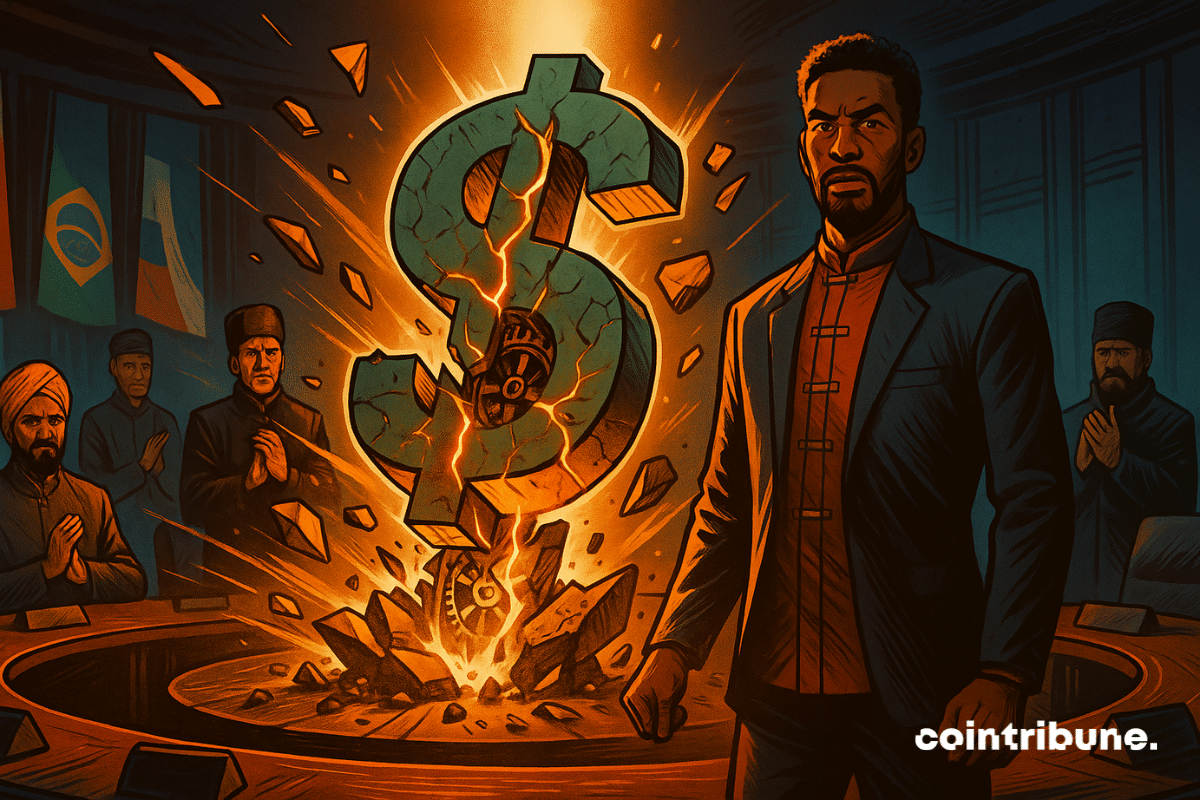
In a geopolitical context undergoing a major reshuffle, two significant initiatives are shaking the hegemony of the dollar. Brazil and China are making a strategic shift by favoring their national currencies for bilateral exchanges. For their part, Russia and Iran are announcing the launch of a new common currency to circumvent Western sanctions. These distinct yet converging movements illustrate a shared desire among influential BRICS members: to build a financial system that is less dependent on the greenback and to assert monetary sovereignty in the face of external pressures.
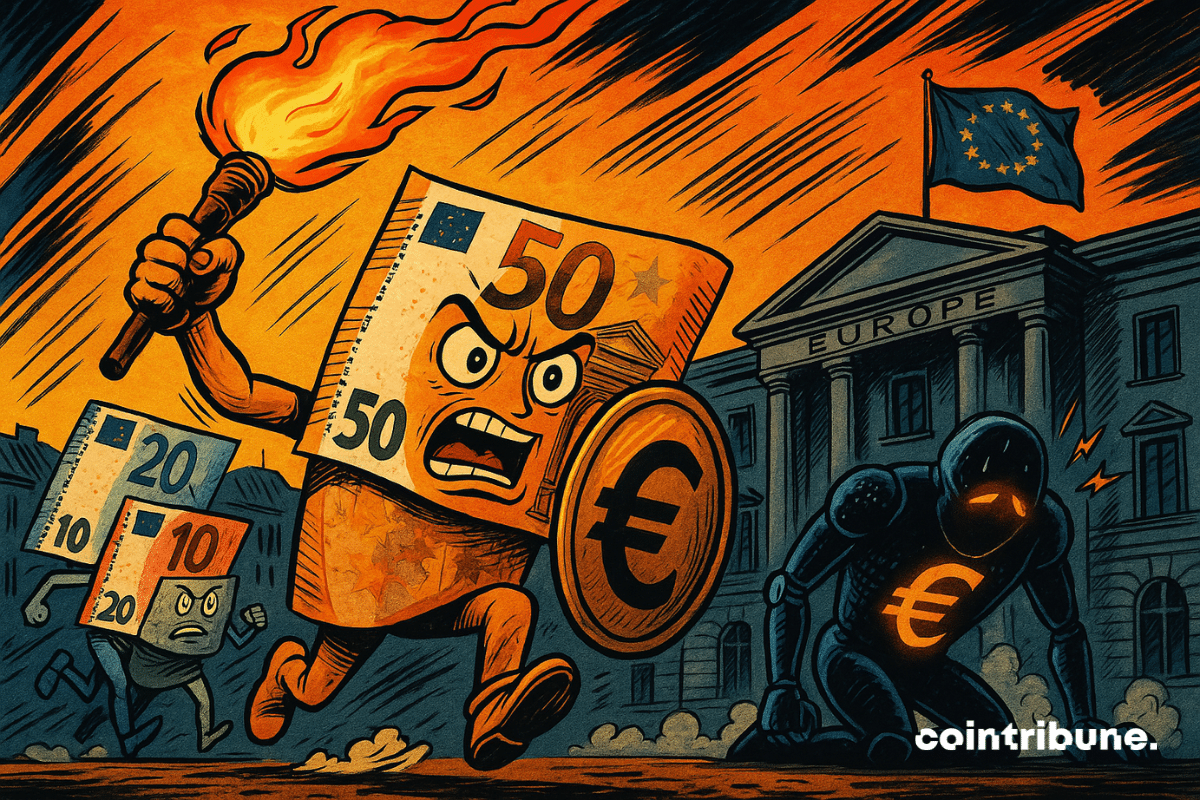
In a single session, the euro surged 2.15% against the dollar, reaching $1.109, its largest increase since 2015. This abrupt jump exceeds the mechanics of exchange rates. It signals a sudden loss of confidence in the American currency. Through this shift, markets appear to be reassessing the balance of power among major currencies, in a context where macroeconomic signals and central bank choices are redefining monetary fault lines.
In a single session, the euro surged 2.15% against the dollar, reaching $1.109, its largest increase since 2015. This sharp rebound goes beyond the mechanics of exchange rates. It signals a sudden loss of confidence in the American currency. Through this shift, markets seem to be reevaluating the balance of power between major currencies, in a context where macroeconomic signals and the choices of central banks are reshaping the lines of monetary fracture.
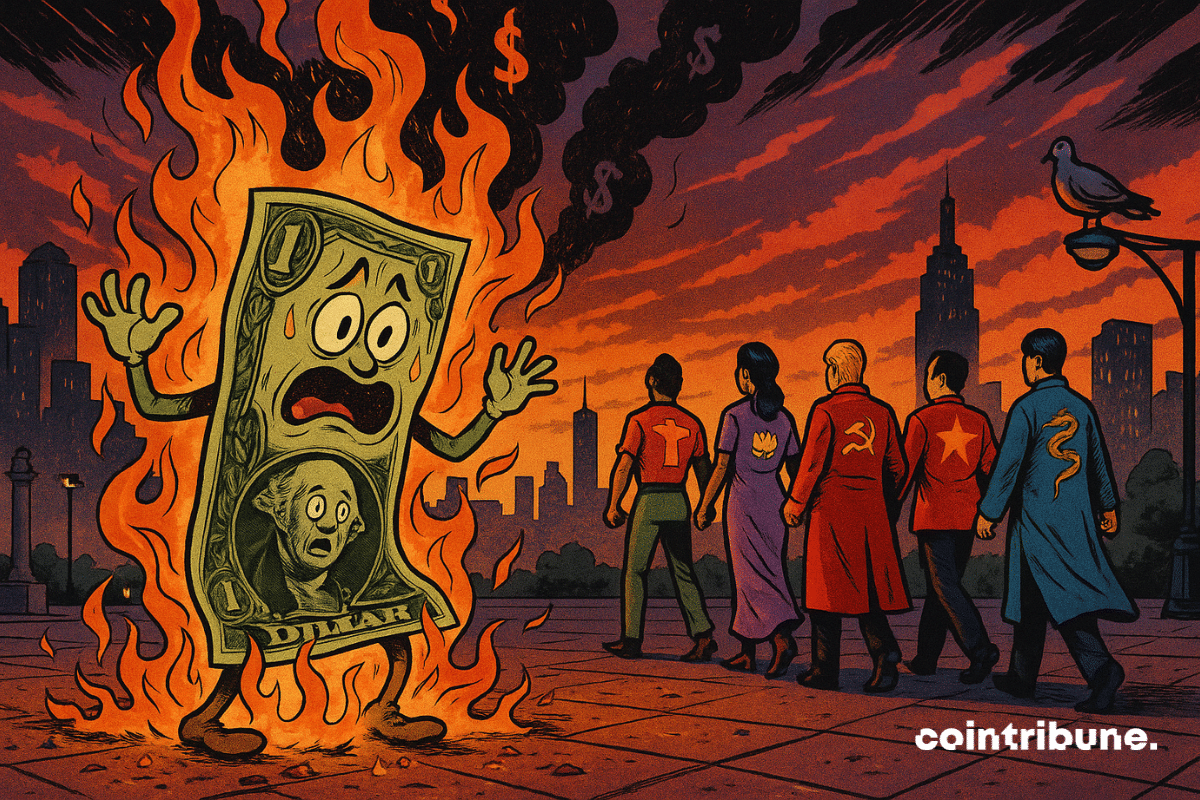
At the start of this year, amid high geopolitical tension, dedollarization emerges as a strong signal of a global monetary shift. Once relegated to the background of economic debate, this dynamic is intensifying as confidence in the stability of the United States erodes. The dollar's share in global reserves is slowly but surely declining, a trend closely watched by markets and feared by strategists. Behind this retreat, the international monetary order may be entering a phase of reorganization.
In the shadow of tyrannies, outstretched hands receive satoshis. The HRF sows crypto light in the invisible pockets of silent resistances, where fiat no longer prevails.
The dominance of the US dollar in international trade and global reserves has never been so challenged. Indeed, Deutsche Bank is sounding the alarm on a growing phenomenon: dedollarization among the allies of the United States. In the face of geopolitical tensions and financial sanctions, several nations are seeking to reduce their dependence on the greenback. If this trend accelerates, the impact could be considerable, drastically altering the global monetary balance and redefining the power dynamics within the international financial system.
And if independence no longer came through weapons, but through blocks of code? The BRICS dream of sovereignty in cryptocurrencies, with Siluanov as a digital scout.
Central bank digital currencies would eliminate all privacy, but few seem to care. Fortunately, there will always be Bitcoin.
Crypto payments are booming, but a danger persists. Bitget Wallet reveals all in its report! Details in this article.
The European Union is undergoing a discreet yet persistent revolution. A recent report from Oobit, a platform specialized in crypto payments, reveals that 70% of crypto transactions on its network are absorbed by retail, food, and beverages. This figure shatters the clichés about the marginal use of cryptocurrencies. But how can we explain this silent infiltration into the daily lives of Europeans? Between regulatory adoption and economic pragmatism, the landscape is reshaping.
In his recent intervention, Subrahmanyam Jaishankar sought to dispel any ambiguity about India's position regarding the dollar: "there is no policy on our part aimed at replacing the dollar. At the end of the day, the dollar as a reserve currency is a source of international economic stability."
The president of the Russian central bank ridiculed herself by trying to rein in bitcoin.
In the shadow of the economic restrictions imposed by the West, Moscow is charting a new path for its energy trade. In the face of exclusion from the international financial system, Russia has found an alternative solution: the use of Bitcoin (BTC) and Tether (USDt) to bypass sanctions and ensure the continuity of its oil exports.
Alephium, the innovative blockchain project focused on scalability and security, continues its expansion in terms of adoption and compatibility. Users can now securely store and manage their ALPH tokens thanks to the support of Tangem Wallet, a hardware wallet known for its simplicity and unique approach to managing digital assets.
The global economic order is trembling under the impact of protectionist decisions from the United States. While the BRICS aim to reduce their dependence on the dollar, a major upheaval could be on the horizon. The resurgence of American tariffs could fuel a rise in the greenback, threatening to weaken emerging economies and hinder their efforts for dollarization. This potential rise of the dollar, far from being trivial, could mark a turning point for global monetary balance.
The economic clash between the Global South and the United States is taking a new turn, with Brazil emerging as a key player in this monetary battle. By opposing the supremacy of the US dollar, the Latin American country is redefining global financial balances and questioning the traditional architecture of international trade. This decision is part of a process of dedollarization, which is gaining momentum within the BRICS and could deeply modify international economic circuits.
The giant Fidelity has published a very interesting report on the Lightning Network, a network that allows for instant and nearly free bitcoin transactions.
In an already geopolitically tense context marked by increasing economic tensions, Donald Trump has rekindled trade hostilities and is once again targeting the BRICS. The American president called the economic alliance "dead" and threatened to hit its members with a 100% tax on their exports to the United States if they continued to challenge the supremacy of the dollar. This statement immediately provoked a diplomatic reaction from China, which condemned a destructive protectionism and affirmed its commitment to strengthening cooperation among emerging economies.
Financial institutions around the world are scrutinizing blockchain technology, oscillating between skepticism and opportunism. Indeed, the European Central Bank (ECB), after years of analysis, is taking a significant step forward with the announcement of a blockchain-based interbank settlement project. This initiative, which aims to enable banks to settle their transactions in central bank money on a blockchain infrastructure, could mark a decisive turning point in the modernization of payments in Europe.
Currency symbols are not just simple coins; they embody eras, values, and habits rooted in a country's culture. However, in the United States, the existence of the penny is once again being questioned. Donald Trump, in search of budgetary rationalization, wishes to eliminate this one-cent coin, which he considers a waste of resources. This decision, far from being trivial, sparks a fundamental debate between economic necessity and attachment to American numismatic heritage. If enacted, the measure could disrupt commercial habits and provoke adjustments in the daily lives of Americans.
The fusion of technology and power is an equation that Elon Musk seems to have made his playground. From controlling Twitter (now X) to space initiatives with SpaceX, the billionaire has made numerous incursions into spheres traditionally reserved for states. His latest initiative, targeting the U.S. Treasury's payment system, has not succeeded this time. What was supposed to be a transparency operation regarding the management of financial flows has turned into an unprecedented legal confrontation, questioning the legality of such control. In light of the controversy and the risks of disclosing sensitive information, the judiciary has ruled and imposed an immediate ban on Musk and his collaborators.
The status of the US dollar in the global economy once again causes tensions. While the BRICS seek to free themselves from its hegemony, Donald Trump brushed aside any possibility of dedollarization. "There is no chance that the BRICS will replace the US dollar in international trade or elsewhere," he stated. This declaration comes at a time when China, Russia, and their allies are intensifying their efforts to limit their dependence on the greenback, particularly through exchanges in local currencies and the establishment of alternative financial infrastructures. Behind this statement from the American president, one question arises: is the dollar really unassailable, or are we witnessing the beginnings of a new monetary order?
The cryptocurrency XRP is making headlines again despite the fact that the Lightning Network has rendered it completely useless for a long time...
Economic tensions between major powers are reaching a new level. The President of the United States, Donald Trump, has issued a direct threat to the member countries of the BRICS alliance, which are seeking to reduce their dependence on the U.S. dollar. In response to these de-dollarization initiatives, he announced 100% tariffs on their exports to the United States. This stance, accompanied by the establishment of a new agency to collect these customs duties, reflects a clear intent to defend the supremacy of the dollar and to counter any challenges to American economic hegemony. As the BRICS explore alternative payment systems, this statement could redefine the power dynamics on the global geopolitical and commercial stage.
The BRICS project to create a common currency is generating growing interest among economists and analysts, as it could redefine global financial balances. For decades, the US dollar has dominated as the main reserve currency, giving the United States substantial economic and geopolitical power. During their summit in 2024 in Kazan, Russia, the leaders of the BRICS intensified their discussions on establishing an alternative called "Unit," designed to facilitate exchanges within the bloc. This project fits into a broader strategy aimed at reducing their dependence on the dollar, in the context of increasing geopolitical tensions and economic sanctions. At a time when many countries are seeking to diversify their reserves and bypass the constraints imposed by the current monetary system, can this initiative truly shake the dollar's supremacy?
For several years, the BRICS have been seeking to reduce their dependence on the US dollar by developing a monetary alternative. However, at the beginning of 2025, the reality of the foreign exchange market is slipping away from them. The dollar is asserting itself more than ever and reaching new heights while the currencies of the bloc are collapsing. The Indian rupee has plummeted to a historic low of 85.93, the Chinese yuan is weakening, and other local currencies are struggling to hold on. Despite the BRICS' efforts to counter the hegemony of the greenback, the current dynamics expose the limits of their dedollarization strategy and raise the question of the viability of a credible alternative.