RWA, once discreet, now flamboyant: +94% in one year, 4 billion in inflows, crypto rejoices. A revived market, a revolution underway, and numbers that are dizzying.
The medical technology company Semler Scientific (NASDAQ: SMLR) continues its aggressive investment strategy in bitcoin with the acquisition of an additional 871 BTC, bringing its total portfolio to 3,192 BTC. This transaction comes as the giant MicroStrategy takes a pause in its acquisitions.
In the grand theater of power, Trump outlines a bold move: perhaps a crypto-friendly sovereign fund. Between a bluff and strategic genius, the suspense remains intact.
As the crypto ecosystem holds its breath, Ethereum is set to make a historic leap. Slated for March 2025, the Pectra update is not just about fixing bugs or tweaking parameters. It is reshaping the very foundations of the network. Vitalik Buterin, an unending visionary, recently unveiled innovations that could transform Ethereum into a scaling machine and a mainstream ecosystem. But behind the technical promises lies a deeper strategy: to make Ethereum the backbone of an accessible Web3. Here's an explanation.
The price of bitcoin has fallen below the $100,000 mark following China's announcement of new tariffs on American imports. This decision, which comes amid increasing trade tensions between the two powers, has caused a shockwave in the markets. Analysts fear a period of heightened volatility if Sino-American negotiations do not progress.
The cryptocurrency market is experiencing a new phase of instability, with XRP at the forefront. Within a few hours, its price saw a dramatic drop of 31%, before rebounding with a similar intensity. This extreme movement has created doubt among investors, torn between hope for a recovery and fear of a mere technical bounce. In this context, Bollinger Bands, a key technical indicator, are delivering mixed signals. If XRP manages to stabilize above its median threshold, a new bullish momentum could emerge. Conversely, a return to recent lows remains a credible hypothesis. This extreme volatility puts investors in a decisive position: to hold their positions betting on a recovery or to reduce their exposure to limit risks.
MicroStrategy, known for its massive commitment to bitcoin, surprised the markets by temporarily halting its BTC purchases. According to an announcement from Michael Saylor on February 3, 2025, the company has not acquired any bitcoin for a week already. This pause raises questions... strategy or is BTC just not interesting at the moment?
Shiba Inu is plunging, traders are panicking, and liquidations are pouring in. A crypto tragedy worthy of a soap opera, except this time, it's the wallet that is crying.
The crypto market is experiencing a spectacular rebound following the decision by U.S. President Donald Trump to temporarily suspend the proposed tariffs on Canada and Mexico. This announcement comes amid intense negotiations between the United States and its North American neighbors concerning border security and trade.
The crypto market is going through a period of instability, and Solana (SOL) is on the front lines. Since February 1st, the drop of Bitcoin below $100,000 has caused a shockwave across altcoins. Solana, whose price moves in strong correlation with BTC, has seen its price fall below the critical threshold of $200. The impact has not been limited to price declines: investors have massively reduced their exposure, leading to a withdrawal of $367 million from spot markets in three days. This massive liquidation has reversed market sentiment, as evidenced by a long/short ratio dropping to 0.93, confirming seller dominance. While technical indicators signal sustained bearish pressure, a break of current support levels could send Solana to new lows, unless a sudden surge in demand comes to reverse the trend.
As the crypto markets struggle under the shock of Trump’s tariffs, a new player enters the scene: David Sacks, the man who whispers to AI and digital assets. On February 4th, this shadow strategist will unveil Washington’s battle plan to regain control of a space in complete chaos. Between historical…
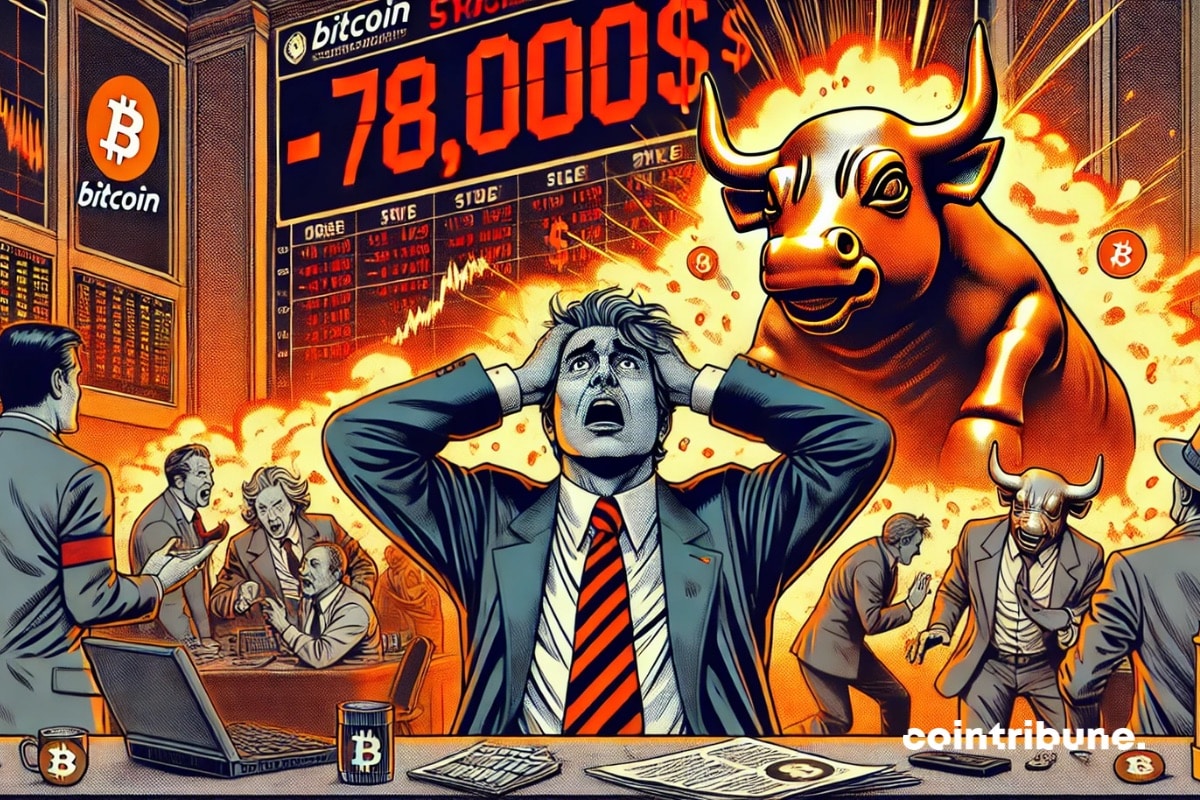
The crypto market has just experienced an unprecedented financial tsunami. In 24 hours, 2.24 billion dollars evaporated under the blows of trade wars, propelling Ethereum to the forefront of a historic debacle. A massive liquidation, driven by Donald Trump's surprise announcement on customs duties, shattered the records of the FTX crisis and the COVID-19 crash. Behind these dizzying numbers, over 730,000 traders saw their positions turned to ashes. How could a political tweet shake a decentralized ecosystem? Let's dive into the machinery of this debacle.
On February 3, 2025, Bitcoin reached a local low of $91,530 before rebounding to $95,306 later in the day. This decline comes after China, Canada, and Mexico promised severe retaliatory measures in response to tariffs imposed by the Trump administration. These measures have rekindled fears of a global trade war, prompting investors to shy away from risky assets, including cryptocurrencies.
Blockchain-based finance is evolving rapidly, providing innovative solutions to democratize access to investments and financing. Among the challenges still present in this ecosystem, the integration of real-world assets (RWA) remains a central issue. The collaboration between Lumia and Credefi aims to address these challenges by combining layer 2 (L2) infrastructure and expertise in RWA-backed loans.
The Crypto Fear and Greed Index has just reached 39, signaling a significant period of uncertainty in the markets. This indicator, ranging from 0 (extreme fear) to 100 (extreme greed), is an essential barometer of market sentiment. A value of 39 suggests some anxiety, but is it a sign of imminent panic or a strategic investment opportunity?
Amid revolutionary announcements, technological developments, and regulatory turbulence, the crypto ecosystem continues to prove that it is both a territory of limitless innovations and a battleground of regulatory and economic struggles. Here is a summary of the most significant news from the past week surrounding Bitcoin, Ethereum, Binance, Solana, and Ripple.
Bitcoin asserts its dominant position against altcoins. The queen of cryptos sees its market share cross the symbolic threshold of 60% on February 2, while altcoins suffer significant losses following the new trade measures imposed by President Trump.
Donald Trump unveils his radical strategy to counter the monetary ambitions of the BRICS. In response to their proposal for a common currency, he threatens to impose 100% tariffs against any country that adopts it. This tough approach masks secret negotiations that could reshape the global monetary order.
India is currently reassessing its position regarding cryptocurrencies. Ajay Seth, the economic secretary of the Ministry of Finance, stated that India is closely monitoring international developments related to cryptocurrencies. The rise of these digital assets globally is prompting the country to reflect on its regulation and policy regarding crypto.
Bitcoin, freshly crowned with a peak of $102K, stumbles and dangerously flirts with $95K. A slight shiver or the beginning of a major downfall? Cryptocurrency trembles, and so do investors.
Ethereum (ETH) is drastically down to $3000, and despite that, some traders are still managing to profit from this downward trend. This is the case for a savvy investor, who has made nearly 16 million dollars in gains by betting against the crypto! So, is Ethereum more profitable during a downturn?
The stablecoin market has just crossed a historic milestone, reaching a market capitalization of over $200 billion. This rapid progression reflects a growing interest from investors in these dollar-backed assets, often perceived as a more stable alternative amidst the volatility of cryptocurrencies. While Tether (USDT) still dominates the market with $139.4 billion, the current dynamics indicate a rise of USDC, whose capitalization has more than doubled in three months. This shift in balance raises strategic questions: are we witnessing a mere redistribution of capital or a precursor signal of a major turning point for the crypto market?
After a decade of exceptional growth, India's economy is showing signs of slowing down. Government forecasts predict a growth rate between 6.3% and 6.8% for 2025, a significant decline from the 8.2% of 2023-2024.
The crypto market is currently undergoing a decline, significantly impacting major assets such as Bitcoin, XRP, and Dogecoin. This downward trend has raised concerns among investors and traders, who are now adopting a more cautious approach in light of the increased market volatility. Here are the reasons behind this drop!
Bitcoin has experienced a significant drop, falling below the symbolic mark of 100,000 dollars for the first time since January 27. This decline comes amid heightened trade tensions, following Donald Trump's announcement of new tariffs targeting China, Canada, and Mexico, prompting immediate reactions from these countries.
The intense cold wave in the United States has caused the first negative adjustment in Bitcoin mining difficulty since September 2024, according to mining company Luxor. In January, a powerful explosion in the Arctic dropped temperatures in the USA, increasing the demand for electricity and driving up energy prices. This situation forced many BTC miners to slow down their operations, resulting in a decrease in mining difficulty.
Uniswap, the leader of decentralized exchanges, is launching its version 4 on twelve major blockchains. This strategic evolution strengthens its position in an increasingly competitive DeFi market.
Asset management company 21Shares has recently filed an application with the Securities and Exchange Commission (SEC) to launch a Polkadot (DOT) exchange-traded fund (ETF). According to the filing on January 31, 2025, the goal is to list the 21Shares Polkadot Trust on the Cboe BZX crypto exchange, with Coinbase acting as the custodian of the DOT. However, there are potential risks associated with the Polkadot network that could compel the regulator to shut down this fund if it is approved.
January was a festival for XRP: 50% increase, regulatory green lights, and a crypto market in ecstasy. But at 4 dollars, does the party continue or will the wake-up call be brutal?
Ethereum (ETH) is currently in a complex phase, caught between a decline, poor performance, and a critical resistance level. Currently, ETH is trading around $3,241, which is a drop of about 33% from its all-time high! However, for Ethereum to regain the record level of $4,878 reached in November 2021, several significant developments need to take place, or the cryptocurrency risks experiencing a more pronounced drop.