Sequans, bitcoin's friend just yesterday, quietly dumps 970 tokens: tactic or panic? Meanwhile, crypto markets are tying themselves in knots with their wallet.
Bitcoin has just fallen back below $100,000, reviving doubts about the strength of its upward trend. Behind this symbolic threshold lies a weakened market, caught between weakening demand and macroeconomic tensions. For CryptoQuant, the threat is clear. If this support does not hold, BTC could plunge to $72,000 within two months. A scenario that worries, as technical and fundamental signals turn red.
While traditional markets waver under the weight of macroeconomic uncertainties, the crypto ecosystem goes through an unprecedented turbulence zone. Bitcoin falls below $104,000, dragging all other assets along with it. However, this correction goes beyond the usual volatility. Investor sentiment collapses, switching from optimism to extreme fear in a few days. This sudden reversal marks a major trend break, which could well redefine the market balance in the short term.
In a rebuilding sector, Ripple takes a strategic step by launching its primary spot brokerage service aimed at American institutions. This turning point, made official at the Swell 2025 conference in New York, relies on the acquisition of Hidden Road, finalized in October. By betting on an integrated infrastructure, Ripple intends to capture a growing demand for professional asset trading services, at a time when market standards are being redefined.
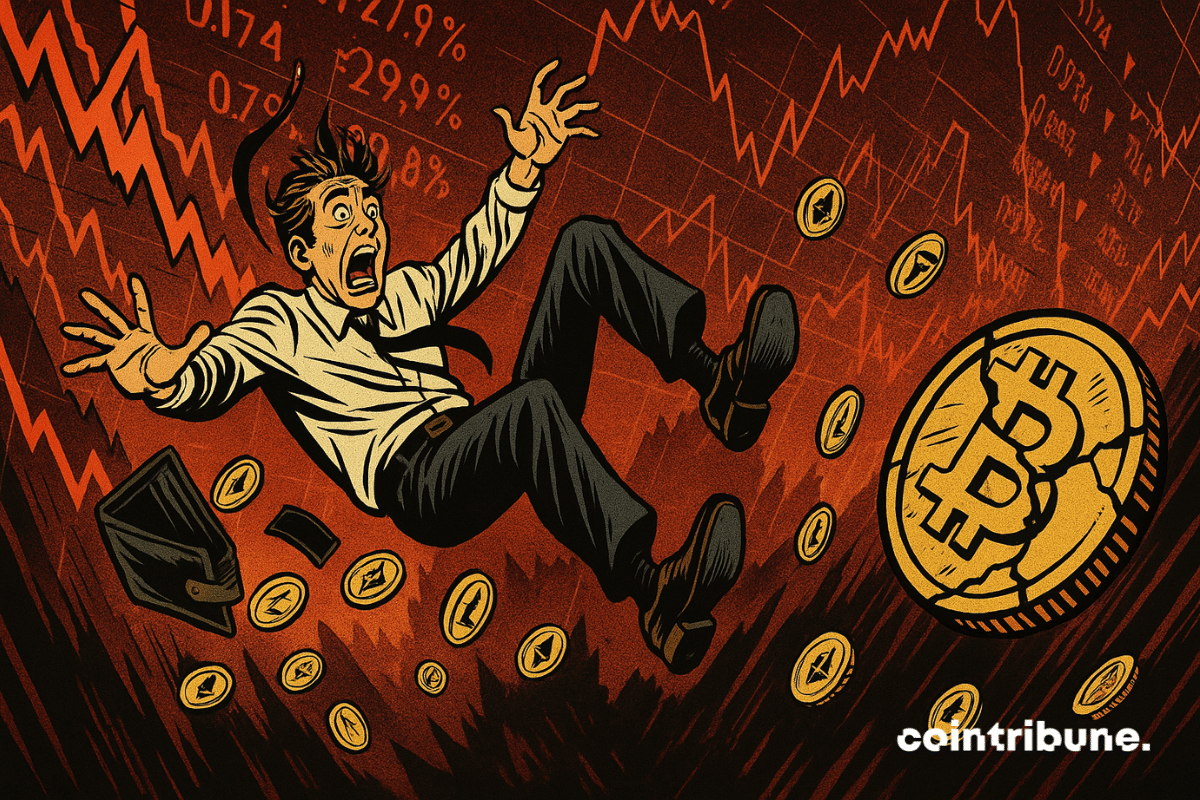
The crypto market experienced a sharp decline at the start of the week. While US stocks remained in the green, Bitcoin, Ethereum, and Dogecoin collapsed, triggering over $1.1 billion in liquidations within 24 hours. A sudden drop, without a clear catalyst, revealing the weaknesses of an ecosystem still unstable and vulnerable to panic movements. This massive setback rekindles doubts about the market's strength and investors’ resilience amid an ever unpredictable volatility.
As the crypto market moves toward a new bullish cycle in 2025, identifying promising projects becomes crucial for investors. This selection analyzes seven cryptocurrencies that, through their technological innovation and growing adoption, position themselves as strategic choices. Each project solves concrete problems and stands out against its direct competitors.
Sam Bankman-Fried Blames Lawyers for FTX’s $100B Collapse, Claims Exchange Was Never Insolvent
Facing a debt considered "unsustainable", the Tesla CEO warns: the United States is heading towards a budget wall. In a discussion with Joe Rogan, he denounces an economic trajectory that has become, in his view, "dead end". For some, this looming crisis could propel bitcoin to new heights. The asset, historically linked to distrust of the dollar, could strengthen thanks to this announced crisis.
Long overshadowed by regulatory constraints and the rise of centralized platforms, Zcash makes an unexpected comeback to the forefront of the crypto scene. Driven by a spectacular rise in its price and growing adoption of its privacy features, the project regains momentum. At a time when demand for private transactions is exploding, Electric Coin Company unveils an ambitious roadmap to assert Zcash's central role in the ecosystem.
In October, decentralized platforms reached a historic milestone. More than $1.3 trillion in perpetual contracts were traded in one month. A symbolic threshold, never reached before, illustrating a profound shift in the crypto ecosystem. Long dominated by centralized platforms, the derivatives market is witnessing a new dynamic, driven by DeFi. This rapid growth is not by chance but the result of a structural change in usage, tools, and trader confidence.
Tether has just crossed a dizzying threshold: more than $10 billion in profit in just nine months. Behind this extraordinary figure lies the rise of a key player in the crypto ecosystem. Issuer of the USDT, the most used stablecoin in the world, Tether impresses as much as it raises questions. This record profitability, revealed in its latest attestation report, triggers as much enthusiasm as concerns, especially in terms of transparency and regulation.
For nearly ten years, the last week of October has been known to offer bitcoin a bullish surge, to the point of being nicknamed the "golden week." But this year, despite a promising Uptober month, the momentum is slowing down. The king of cryptos defies expectations, sowing doubt among investors accustomed to now weakened seasonal patterns.
While the European Union is preparing to fully deploy the MiCA regulation by the end of the year, Germany voices a dissenting opinion. The main opposition party, the AfD, has just submitted a shock motion to the Bundestag. It demands that bitcoin be recognized as a strategic reserve asset, distinct from other cryptos. This unexpected position questions the uniformity of the European regulatory framework and could pave the way for a revision of the institutional treatment of bitcoin within member states.
After three years of forced exile, the crypto prediction platform Polymarket could reopen its doors to American traders in the coming weeks. A major regulatory breakthrough that would radically transform the landscape of prediction markets in the United States.
This Tuesday, a 4.27-meter golden statue depicting Changpeng Zhao, founder of Binance, briefly took its place in front of the Capitol in Washington. This spectacular installation comes a few days after the presidential pardon granted by Donald Trump to CZ, convicted in 2023 for violations of anti-money laundering laws. In a climate where crypto figures are increasingly occupying public space, this unexpected tribute marks a symbolic turning point between justice, political power, and the cult of blockchain innovation.
Cryptos are attracting more and more investors, but security remains a major concern. In the face of unregulated platforms and hacking risks, choosing a reliable player becomes essential. Bitpanda stands out as an ideal alternative, combining simplicity, transparency, and regulatory compliance. Now, with the obtaining of the MiCAR license issued by BaFin, it strengthens its position as a secure platform compliant with European standards. Bitpanda is also registered as a Digital Asset Service Provider (DASP), which offers advanced security and optimal protection of funds and data. In this article, we explore the guarantees offered by Bitpanda, its innovative features, and its advantages over other crypto platforms.
Is investing in cryptocurrencies only reserved for financial experts? Not necessarily. Today, simplified platforms allow everyone to enter this universe without difficulty.
While the crypto market shows signs of recovery, BitMine Immersion Technologies stands out with a $321 million Ethereum purchase. This operation places the company, listed on the NYSE, at the top of public ETH treasuries. At the helm, Tom Lee, co-founder of Fundstrat, orchestrates this bold bet in a climate of renewed risk-taking in the markets. This strong signal could redefine the balance of power between Bitcoin and Ethereum.
A historic turning point could unfold in just a few days. Geoffrey Kendrick, crypto head at Standard Chartered, suggests that one favorable week would suffice for bitcoin to never fall below $100,000 again. In a note released this Monday, October 27, he states that if current macroeconomic and geopolitical dynamics hold, the six-figure threshold could become a new durable floor for the market. This projection, if confirmed, would redefine the benchmarks of the entire industry.
A discreet but historic shift has occurred in central bank reserves. For the first time in nearly 30 years, gold surpasses U.S. Treasury bonds. This adjustment, far from trivial, reflects a growing loss of confidence in U.S. sovereign debt. Behind this choice, central banks are reshaping their priorities, betting on the timeless strength of the yellow metal. This signal, almost unnoticed, could redefine the foundations of the global monetary system.
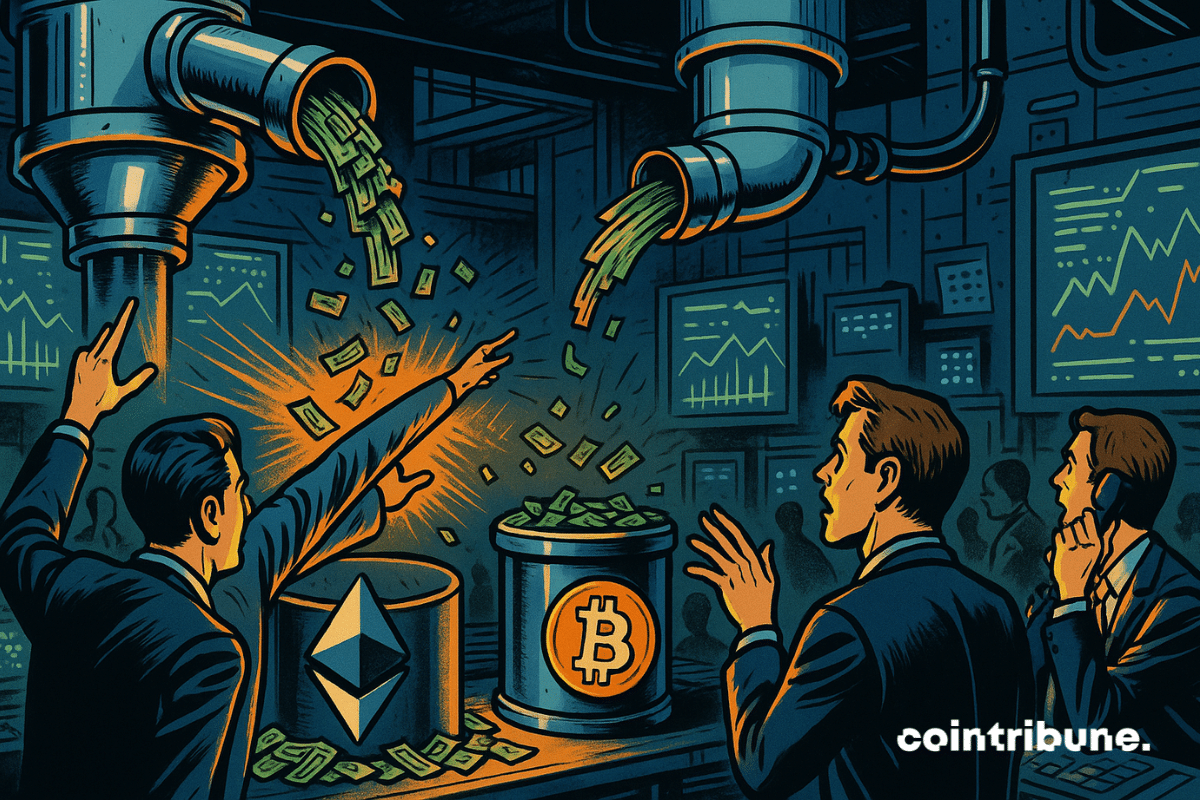
Ethereum-based exchange-traded funds (ETFs) are losing traction as investor demand cools, marking a second consecutive week of outflows. In contrast, Bitcoin ETFs are experiencing a strong resurgence, drawing hundreds of millions in new capital as institutional investors rotate back into the market’s leading digital asset. The diverging flows highlight a shift in sentiment, with traders favoring Bitcoin’s relative stability over Ethereum’s recent weakness.
Cardano has just crossed 115 million on-chain transactions. Remittix, for its part, opens its testing phase for a wallet designed for cross-border payments. Two distinct pieces of information, but indicative of a common trend: the growth of concrete uses in an ecosystem long dominated by speculation. Far from theoretical promises, these projects illustrate a shift towards measurable, functional, and user-oriented applications.
The traditional landmarks of investment are faltering. Faced with market volatility and eroding confidence in classic portfolios, more and more American investors are turning away from stocks and bonds to explore assets deemed more dynamic: crypto, gold, oil, private equity. This movement reflects a profound questioning of established models, driven as much by distrust as by the pursuit of return and freedom. A structural shift confirmed by the latest figures from the Charles Schwab survey.
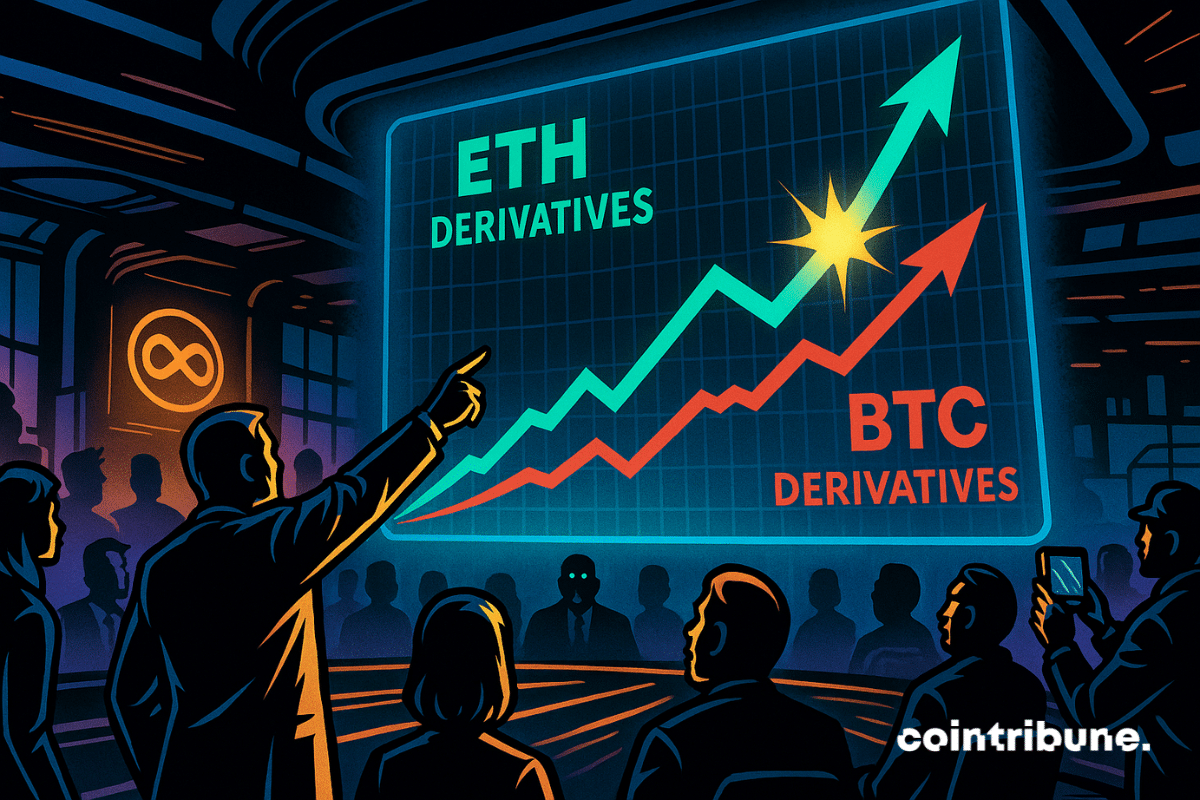
The Bitcoin derivatives market enters a new phase of euphoria. According to CoinGlass data, the open interest on Bitcoin options has reached an all-time high of 63 billion dollars, driven by a wave of massive bullish positions. Investors now target strike prices between 120,000 and 140,000 dollars, a sign of renewed optimism about the market trajectory.
Driven by Wall Street enthusiasm and the massive arrival of institutional capital, bitcoin seems stronger than ever. Yet, behind this displayed confidence, a warning disrupts the market's euphoria. Tom Lee, president of BitMine, reminds us that the world's leading crypto remains vulnerable. According to him, bitcoin could still collapse by 50%, despite its growing adoption. A warning that brutally brings investors back to the reality of an asset as promising as it is unpredictable.
While cryptos are in turmoil, Elon Musk moves 133 million in bitcoin without a word: secret plan, space whim or just portfolio management? Mystery at the top.
October often rhymes with "Uptober", the month where bitcoin ignites the markets with spectacular increases. However, this year, the scenario turns to disappointment. After a promising start, the queen of cryptos gets stuck in an unexpected bearish dynamic, reviving fears of a possible "red October". A first since 2018, which tests investors' confidence and questions the market's solidity in the face of an increasingly tense global economic context.
A Ripple co-founder quietly sold $764 million worth of XRP over seven years. The operation, although legal and transparent, reignites tensions within the community. As crypto struggles to keep pace with its competitors, this revelation reopens the debate on the impact of internal sales on the token's performance.
Stuck in a symmetrical triangle since mid-September, Solana's price reflects a war of attrition between buyers and sellers. Neither side gives up. But technical and on-chain signals converge: this stalemate is coming to an end. The next breakout could well decide SOL's fate for the coming weeks.
While gold crashes like a soufflé, bitcoin heavyweights enter ETFs. Golden savings melt, crypto heats up... Who stole the cash box?