US: Bessent Sees Crypto As a Way to Defend the Dollar
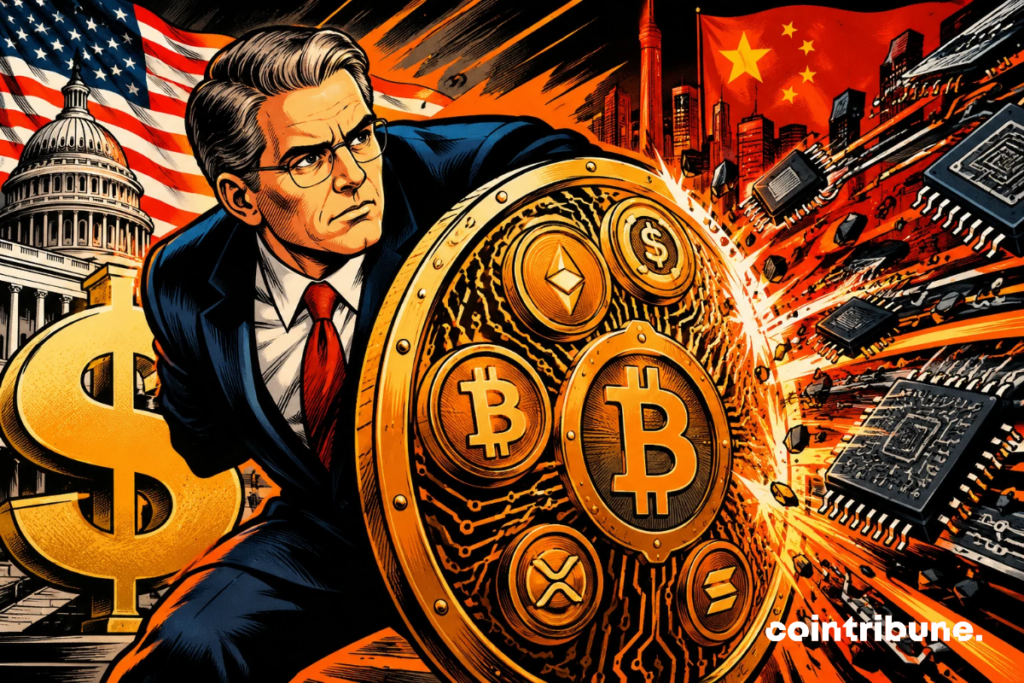
At the Ripple Swell conference held on October 27, 2026, US Treasury Secretary Scott Bessent presented crypto as a tool to preserve the global dominance of the dollar. According to him, digital assets join AI and semiconductors in the technological rivalry with China. He also mentioned a joint action by the Treasury, SEC, and CFTC following the blocking of the Clarity Act in the Senate during a procedural vote.
In brief
- On October 27, 2026, Scott Bessent places crypto alongside AI and chips in the rivalry with China.
- More than 90% of stablecoins are dollar-backed, according to Bessent (unverified figure).
- Enacted on July 18, 2025, the GENIUS Act establishes a federal framework for payment stablecoins, effective January 18, 2027.
- On September 15, 2026, the Clarity Act was blocked in a procedural vote in the Senate by 49 to 50.
Why does Bessent associate crypto with the power of the dollar?
According to Scott Bessent, the era when the dollar’s dominance historically relied on military strength is now over. Today, it increasingly relies on technology. On October 27, 2026, he cited AI and semiconductors, then placed crypto in the same competition between the US and Chinese ecosystems.
On the Swell stage, the Treasury Secretary summed up his idea as follows:
We will keep our military umbrella, but increasingly, it becomes a technological umbrella.
Scott Bessent, United States Treasury Secretary, Ripple Swell conference, October 27, 2026
He therefore predicts that the United States will win in this infrastructure, which will strengthen the dollar.
Can stablecoins finance the US Treasury?
According to Scott Bessent, yes, as their adoption progresses. More than 90% of stablecoins are indeed dollar-backed and their issuers often hold US Treasury securities in reserve. The rise of stablecoins could thus increase demand for US debt.
That’s not all! He also sees access to the dollar for countries with unstable currencies. Signed on July 18, 2025, the GENIUS Act already sets the federal framework for this crypto asset. It takes effect on January 18, 2027, according to the OCC, which published its implementation rule on October 21, 2026.
For crypto investors in France, the framework differs. The MiCA regulation has already regulated stablecoins in the European Union since June 30, 2024.
What happens to US crypto regulation after the Clarity Act blockage?
The US Senate blocked the Clarity Act on September 15, 2026. The motion to proceed to the bill’s examination received 49 votes for and 50 against, while 60 were required, according to Senate roll call vote no. 234. Scott Bessent considers this setback disappointing. However, he assures that the Treasury can bring together the SEC and CFTC to move forward through agencies.
He also mentions regulatory safeguards against delisting (the cutting off of banking services to crypto companies). However, an agency rule is easier to change than a law. A new vote remains possible since on the day of the vote, Senator Tillis filed a motion to reconsider.
At this stage, Scott Bessent’s statements on coordinated action by the Treasury, SEC, and CFTC remain intentions, with no timeline reported. The GENIUS Act already provides a framework for stablecoins, with enforcement starting January 18, 2027, while the future of the Clarity Act remains uncertain, pending the November 3, 2026 midterm elections. Crypto file to follow…
Maximize your Cointribune experience with our "Read to Earn" program! For every article you read, earn points and access exclusive rewards. Sign up now and start earning benefits.

My name is Ariela, and I am 31 years old. I have been working in the field of web writing for 7 years now. I only discovered trading and cryptocurrency a few years ago, but it is a universe that greatly interests me. The topics covered on the platform allow me to learn more. A singer in my spare time, I also cultivate a great passion for music and reading (and animals!)
The views, thoughts, and opinions expressed in this article belong solely to the author, and should not be taken as investment advice. Do your own research before taking any investment decisions.