A study mentions a brain mesh caused by intensive use of AI
Artificial intelligence was supposed to free workers from tedious tasks and boost their productivity. But a scientific study has just dampened this enthusiasm. By juggling with more and more tools, millions of employees end up… exhausted. Is AI creating the problem it promised to solve?
In brief
- Researchers from Boston Consulting Group and the University of California warn about a phenomenon of ‘AI-related cognitive overload’.
- 14% of 1,500 surveyed American workers report suffering from mental fatigue directly linked to intensive AI use.
- Reported symptoms include brain fog, headaches, slower decisions, and difficulties concentrating.
When AI tires more than it soothes
A research team from Boston Consulting Group and the University of California conducted a survey of nearly 1,500 full-time American employees. Their conclusions, published Friday in the Harvard Business Review, are blunt.
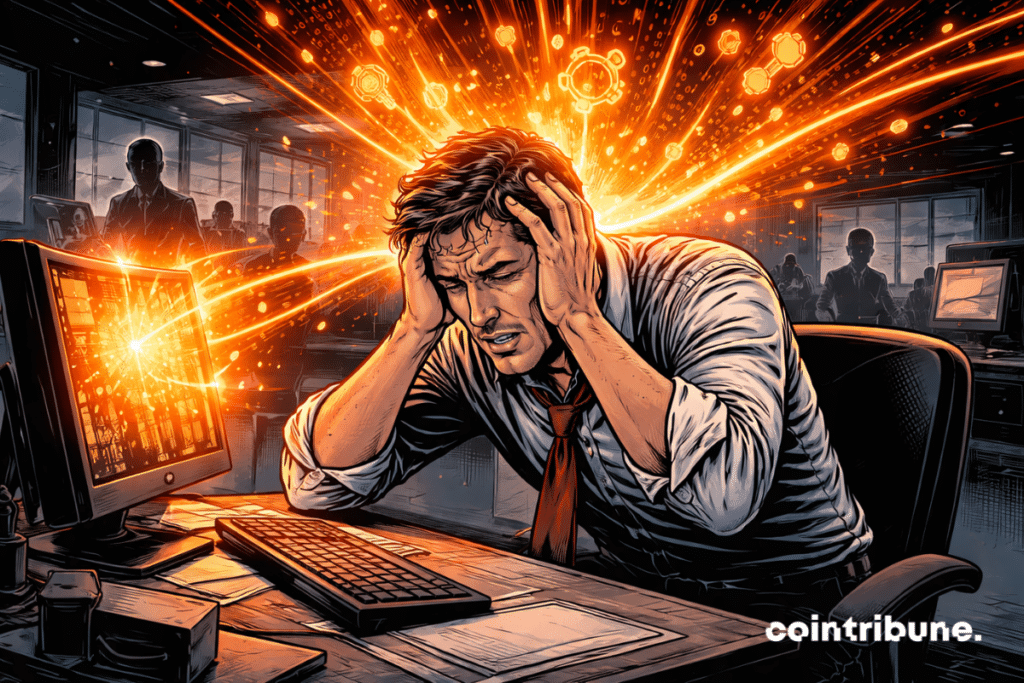
14% of respondents suffer from what they call “AI-related cognitive overload,” in other words, mental fatigue directly caused by intensive use or excessive monitoring of artificial intelligence tools at work.
The collected testimonies speak for themselves. Employees describe a “mental hangover,” a feeling of “fog” or “buzzing” in the head, an inability to think clearly. Added to this are headaches, slowed decision-making, and persistent concentration problems. Simply put: AI, instead of lightening mental load, weighs it down.
Marketing and human resources professionals rank highest among the most affected categories. These are precisely jobs where the pressure to adopt AI and to demonstrate its results is strongest.
Hidden costs that weigh heavily
Behind these individual symptoms lie considerable economic consequences. Workers suffering from cognitive overload make nearly 40% more serious errors compared to their unaffected colleagues.
These errors—those that affect safety, financial outcomes, or strategic decisions—can cost large companies millions of dollars annually.
The picture does not stop there. These same employees show 33% more decision fatigue and are 40% more likely to want to quit their position. In a context where companies rely precisely on AI to improve efficiency and retain talent, the paradox is harsh.
Yet, AI is not destined to weigh on employees. The study clearly shows: when it serves to eliminate repetitive and routine tasks rather than multiplying tools to monitor, it reduces burnout by 15%. In other words, it is not AI itself that is problematic. It is how it is used.
And this use has already been radicalized by some companies. At Coinbase, for instance, CEO Brian Armstrong now measures AI usage as a performance indicator and admitted having fired engineers refusing to adopt it. A strong signal illustrating how far pressure on employees can go when adoption becomes a managerial obsession.
This is precisely where the danger lies. AI fulfills its productivity promises, provided it does not turn every employee into a juggler of tools, overwhelmed before even starting the day.
In an already strained labor market, adding unnecessary cognitive pressure on teams would be a mistake as strategic as it is human. Ultimately, AI will remain a competitive advantage only if companies choose to use it with discernment, and not as an end in itself.
Maximize your Cointribune experience with our "Read to Earn" program! For every article you read, earn points and access exclusive rewards. Sign up now and start earning benefits.

Passionné par le Bitcoin, j'aime explorer les méandres de la blockchain et des cryptos et je partage mes découvertes avec la communauté. Mon rêve est de vivre dans un monde où la vie privée et la liberté financière sont garanties pour tous, et je crois fermement que Bitcoin est l'outil qui peut rendre cela possible.
The views, thoughts, and opinions expressed in this article belong solely to the author, and should not be taken as investment advice. Do your own research before taking any investment decisions.