Banking reform : The EU Wants To Free Up Billions To Finance Its Economy
The European Union (EU) is preparing a banking reform aimed at freeing up more capital to finance its economy. Brussels wants to reduce national barriers that prevent banks from easily moving their resources within the single market. The challenge is immense: bridging an estimated annual investment shortfall of 1.4 trillion euros.
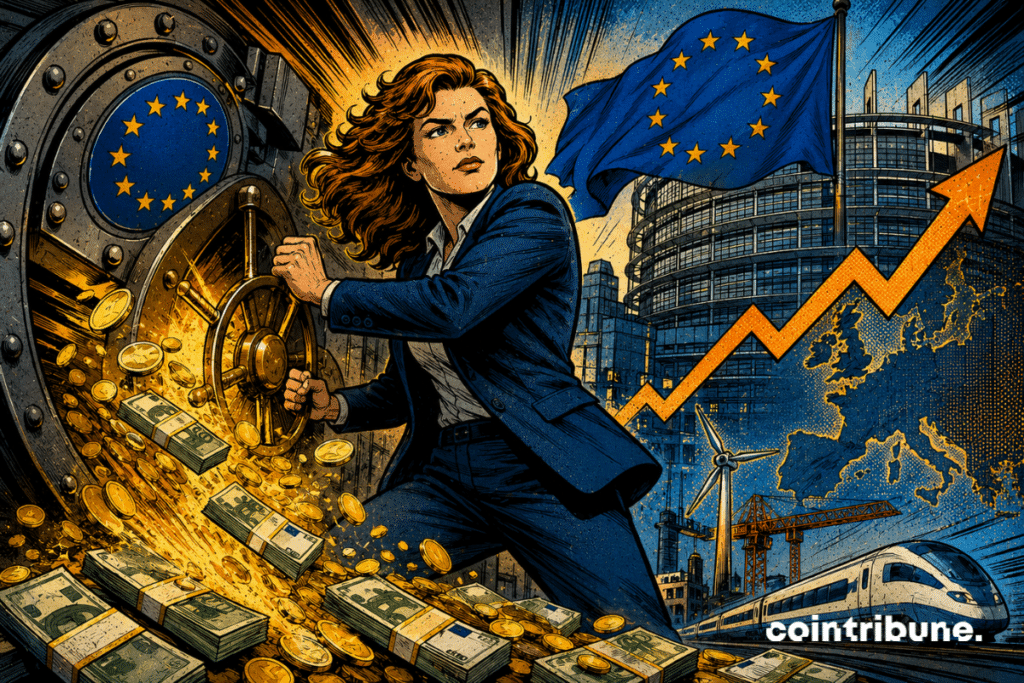
In brief
- The EU is preparing a banking reform to reduce barriers between its markets.
- The simplification could free up more than 2 trillion euros of credit.
- The first legislative proposals are expected in 2027.
The banking reform aims to put capital back into circulation
The European banking reform targets a structural problem: a significant portion of resources remains locked in national subsidiaries. Despite progress in the banking union, large groups still have to meet capital and liquidity requirements at multiple levels.
This setup would immobilize nearly 225 billion euros of capital and 250 billion euros of liquidity. These reserves strengthen the subsidiaries’ solidity, but they also limit banks’ ability to quickly move their funds to sectors or countries that need them most.
Brussels therefore envisions supervision more centered on the entire banking group. Parent companies would gain flexibility to allocate their resources. In exchange, they might be legally required to intervene when a subsidiary faces difficulties.
The challenge goes beyond the internal organization of banks. Depending on the sector, more coherent rules could create over 2 trillion euros of additional credit capacity. This is not an amount available overnight, but a financing potential enabled by a more efficient use of capital.
This margin is especially important in Europe, where banks still provide about 65% of real economy financing. Businesses, households, and infrastructure projects therefore heavily depend on their lending capacity. In the United States, a larger share of financing goes directly through the markets.
However, the European Union needs to accelerate its investments in defense, energy, artificial intelligence, and industrial modernization. Its annual funding shortfall would reach nearly 1.4 trillion euros. Without more effective mobilization of savings and bank capital, the gap with the United States and China could widen further.
Brussels finally wants to break down barriers between European banks
The banking reform aims to allow banks to more easily move their capital and liquidity from one European country to another. Today, the single market exists on paper, but banking groups largely remain organized around national subsidiaries.
Each state seeks to retain resources on its territory to protect its financial system in case of crisis. This logic reassures local authorities, but it hinders pan-European banks and reduces their ability to finance companies where needs are most urgent.
Brussels wants to loosen these barriers without reversing the safeguards established after 2008. The ECB accepts simplification of the rules but currently refuses a general lowering of capital requirements. The goal is to improve capital circulation, not to make banks less solid.
Banks demand simpler rules. Regulators fear disguised deregulation. States want to retain control over their financial systems. These conflicting interests make negotiations difficult.
However, the challenge goes beyond the banking sector. Europe must mobilize more savings to finance its industry, infrastructure, innovation, and energy transition. It also seeks to strengthen the role of the euro against the dollar.
Above all, Brussels will have to show where the freed money will go. If the reform only improves the balance sheets of large banks, it will be contested. If it actually increases loans to businesses and strategic projects, it can reduce Europe’s dependence on foreign capital and strengthen its financial sovereignty.
Maximize your Cointribune experience with our "Read to Earn" program! For every article you read, earn points and access exclusive rewards. Sign up now and start earning benefits.

Enseignante et ingénieure IT, Lydie découvre le Bitcoin en 2022 et plonge dans l’univers des cryptomonnaies. Elle vulgarise des sujets complexes, décrypte les enjeux du Web3 et défend une vision d’un futur numérique ouvert, inclusif et décentralisé.
The views, thoughts, and opinions expressed in this article belong solely to the author, and should not be taken as investment advice. Do your own research before taking any investment decisions.