Bitcoin: BTC stagnates around $74,000 despite the rebound in stock markets
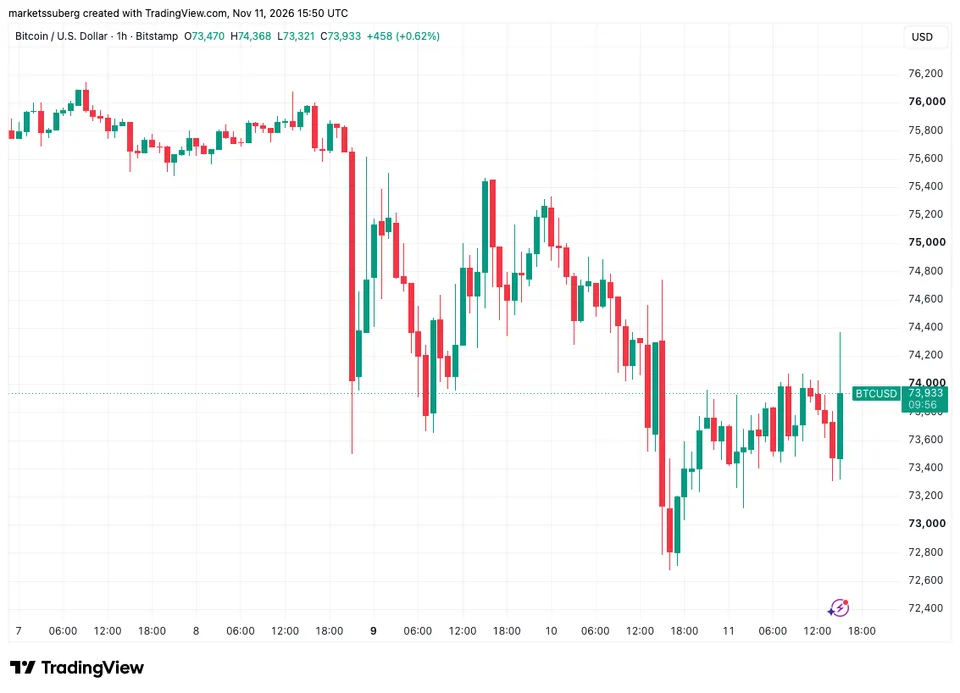
Bitcoin trades around 74,000 dollars, without following the rebound observed in the US stock markets. This divergence comes after the release of inflation figures higher than expected, which pushed bond yields up. At the same time, investors resumed their purchases of certain technology stocks. In the cryptocurrency market, operators are now waiting for a signal capable of driving BTC out of its current zone for investors and reviving trading.

In brief
- Bitcoin stagnates around 74,000 dollars despite the rebound in US stock markets.
- Technology stocks advance, notably CoreWeave (+20%) and Nvidia (+2.5%).
- The yield on 10-year US bonds drops below 5% again after inflation-related tensions.
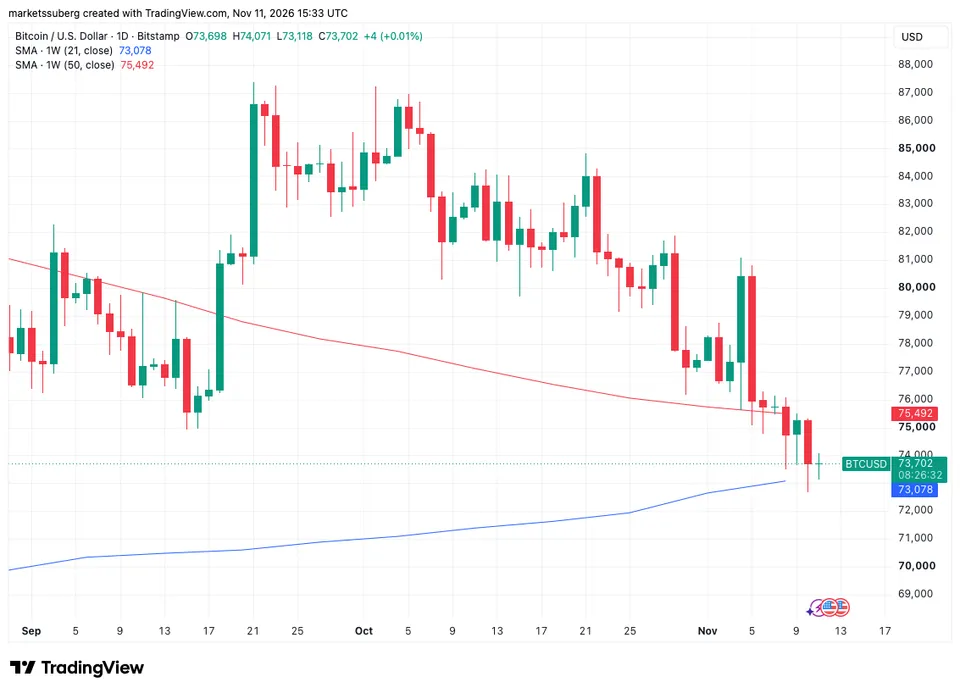
- BTC trades between its 21-week (73,078 $) and 50-week (75,492 $) moving averages.
- Short-term holders have transferred over 47,000 BTC to exchange platforms, fueling selling fears.
Technology Stocks Rebound Despite Rate Tensions
TradingView data relayed by Cointelegraph show that the bitcoin/USD price moved contrary to stocks. While technology shares have regained ground, the BTC remained in a narrow range. Investors took advantage of the pullback in several stocks to resume buying. The artificial intelligence sector led this rebound, notably thanks to CoreWeave, whose shares gained more than 20% following quarterly revenues above expectations and an upward revision of 2026 forecasts.
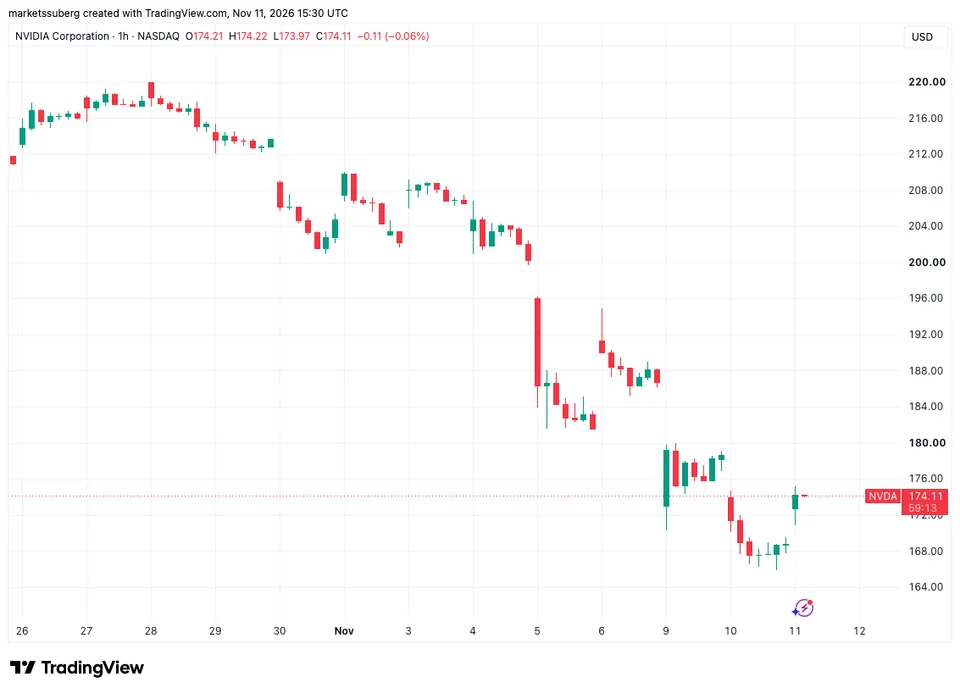
Nvidia also opened higher by about 2.5% after falling on Monday and Tuesday amid controversy around Jensen Huang. Meanwhile, oil prices rose as hopes for a diplomatic solution to the Iranian conflict dwindled. Attacks on ships in the Strait of Hormuz complicate a return to normal traffic. LSEG Oil Research reminds that an agreement would not be enough: demining, insurance, and shipowners’ willingness remain decisive.
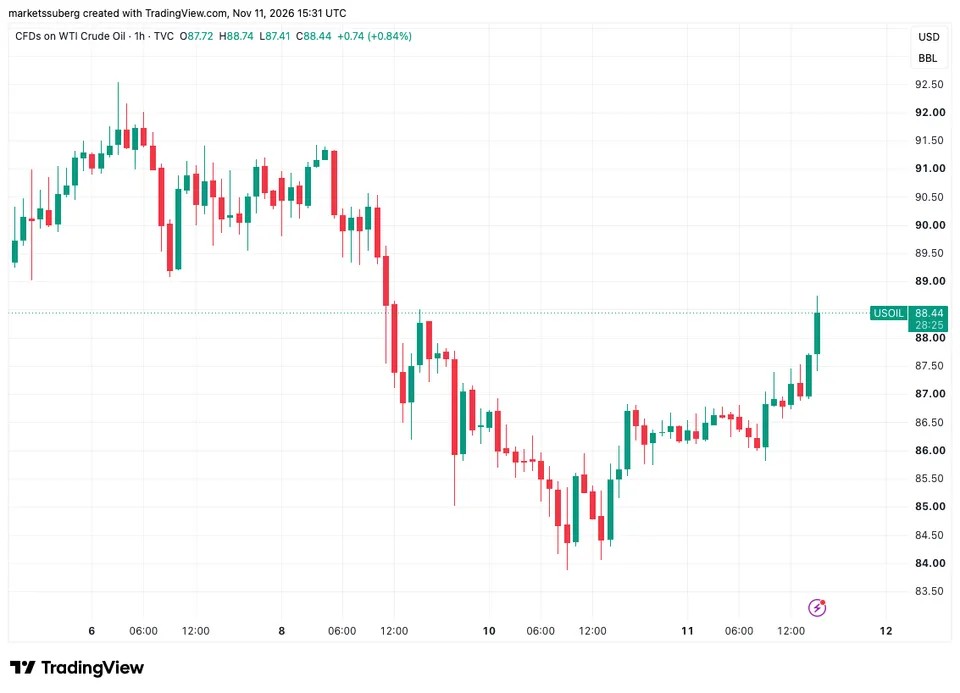
WTI gained 1.4% to $87.70 per barrel after reaching $84 on Tuesday. This level marked its lowest price since late August. Brent rose 1.5% to $93.40. Meanwhile, consumer price index figures published Tuesday exceeded expectations and drove bond yields up. On Wednesday, the 10-year yield fell below 5% again for the first time since October 29, while the 30-year yield reached 5.378%.
US inflation maintains pressure on markets
Peter Boockvar, Chief Investment Officer at One Point BFG Wealth Partners, estimates that bonds already anticipate a stricter Federal Reserve policy. Markets price in a 0.25 point hike in December, while the probability of a 0.5 point increase is rising. This outlook weighs on rate-sensitive assets and helps explain why bitcoin does not benefit from the stock rebound. Investors therefore monitor both yields and movements specific to the cryptocurrency market.
Bitcoin trades between its simple moving averages at 21 and 50 weeks, located respectively at $73,078 and $75,492. Bitcoin remains caught between these two markers, without a strong enough movement to confirm a breakout of the range. Volatility decreased after the inflation data release, while investors await a new catalyst. This technical zone places BTC near $74,000 and keeps attention on the thresholds that could direct the next trend.
Loss of support around $75,700 has weakened the profitability of short-term holders. Their overall cost basis corresponds to the average price at which these investors acquired their bitcoin holdings. This group includes entities that hold their assets for 155 days without selling. When the price falls below their average purchase price, their positions show unrealized losses and psychological pressure can increase.
Short-term holders increase pressure on Bitcoin
On Tuesday, wallets of these holders transferred more than 47,000 units of bitcoin to exchange platforms. These movements were accompanied by unrealized losses and could signal an increase in supply for sale. However, depositing on a platform alone does not confirm a sale: investors may move assets for other reasons. Thus, flows from short-term holders are an indicator to watch to measure pressure on the market.
These transfers occur while the price remains below $75,700. The holders concerned may seek to limit their losses if the trend deteriorates. However, available data do not confirm that these movements will automatically result in more sales. The evolution of deposits on platforms and moving averages will better measure investors’ intentions.
In the short term, maintaining the BTC price above the 21-week moving average could preserve the current zone. A break below this level would increase pressure, while a rebound above the 50-week average would provide a more favorable signal. Bitcoin could thus remain near $74,000 as long as markets await clarity on rates and short-term holder flows show no clear direction.
Maximize your Cointribune experience with our "Read to Earn" program! For every article you read, earn points and access exclusive rewards. Sign up now and start earning benefits.

Journaliste et rédacteur web passionné par l’univers des cryptomonnaies et des technologies Web3. J’y traite les dernières tendances et actualités afin de proposer un contenu de haute qualité à un large public du secteur.
The views, thoughts, and opinions expressed in this article belong solely to the author, and should not be taken as investment advice. Do your own research before taking any investment decisions.