Bitcoin, collateral victim of Basel III according to Pierre Rochard
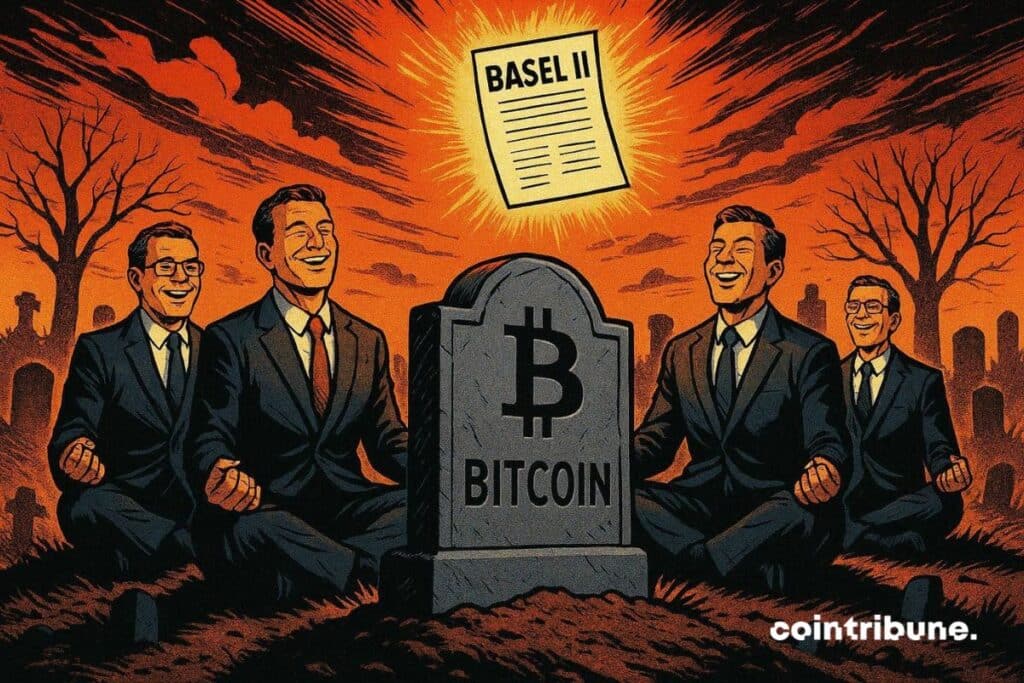
American regulators have just published a major revision of Basel III. Problem: Bitcoin is absent. For Pierre Rochard, CEO of The Bitcoin Bond Company, this silence creates a systemic risk. Banks, without clear guidelines, could end up in a costly gray area.
In brief
- The Basel III revision does not mention Bitcoin, leaving banks without clear guidelines on its treatment (loans, custody, derivatives).
- Pierre Rochard warns that this regulatory uncertainty could slow innovation and expose banks to unforeseen costs or sanctions.
- While Europe and Asia clarify their crypto rules, the United States risks losing its financial leadership on digital assets.
Basel III: Pierre Rochard criticizes the lack of framework for Bitcoin
The Basel III proposals, published in March 2026, deliberately ignore Bitcoin. Pierre Rochard sounds the alarm: without a clear framework, American banks do not know how to handle exposures related to Bitcoin, whether it is loans, custody, or derivative products. Furthermore, the Basel SCO60 framework, which imposes a risk weight of 1250% for unbacked cryptocurrencies, is not even mentioned.
This regulatory silence is not incidental. Indeed, it creates legal uncertainty that could push banks to avoid any activity related to Bitcoin, for fear of sanctions or unforeseen costs. Rochard insists and believes that regulators cannot let this void persist. For him, the consequences could be heavy, both for financial institutions and for innovation in the crypto sector.
Why this silence on Bitcoin is a strategic mistake for the United States
While Europe and Asia clarify their rules to attract crypto companies, the United States remain silent. Pierre Rochard criticizes this lack of vision. For him, American regulators are sabotaging financial innovation. The most shocking part is that the Basel III proposals specify the treatment of “tokenized securities”, but ignore Bitcoin, a far more dynamic and influential asset.
This double standard could be costly. Indeed, banks without clear guidelines could interpret the rules differently, creating market distortions. Investors, in turn, might turn to more welcoming jurisdictions, weakening the United States’ position. Rochard emphasizes that this regulatory uncertainty is a strategic error and the United States risks losing its financial leadership.
Pierre Rochard’s warnings must be heeded. American regulators have a historic opportunity: to clarify the treatment of Bitcoin in Basel III. Otherwise, the United States risks losing its leadership. And you, do you think the United States should adopt the SCO60 framework for BTC?
Maximize your Cointribune experience with our "Read to Earn" program! For every article you read, earn points and access exclusive rewards. Sign up now and start earning benefits.

The world is evolving and adaptation is the best weapon to survive in this undulating universe. Originally a crypto community manager, I am interested in anything that is directly or indirectly related to blockchain and its derivatives. To share my experience and promote a field that I am passionate about, nothing is better than writing informative and relaxed articles.
The views, thoughts, and opinions expressed in this article belong solely to the author, and should not be taken as investment advice. Do your own research before taking any investment decisions.