Bitcoin Security Debate Intensifies Ahead Of 2028
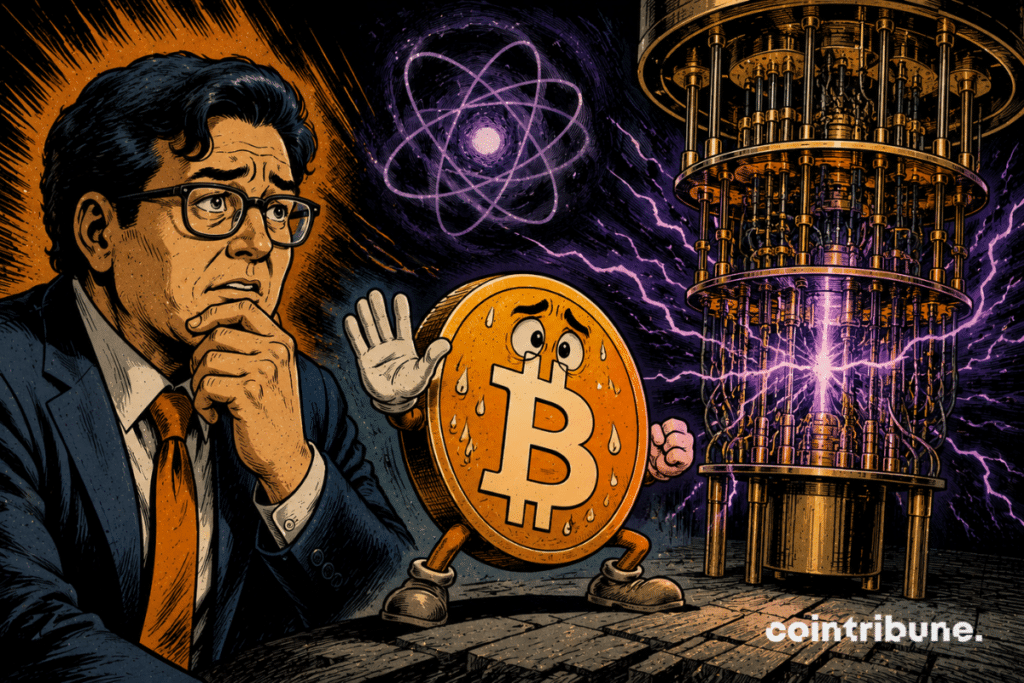
Quantum computing is no longer a theoretical threat to cryptos. As tech giants accelerate their advances, the cryptographic resistance of blockchains becomes an immediate issue for investors, financial institutions, and developers. Recent warnings from several major industry figures have reignited the debate over decentralized networks’ ability to face this technological disruption. Amid technical disagreements, industrial urgency, and market concerns, the crypto ecosystem faces one of the greatest challenges in its history.
In Brief
- Tom Lee (BitMine) warns about the lack of consensus on Bitcoin facing the ‘Q-Day’, while other blockchains are already anticipating this threat.
- IBM CEO alerts about vulnerabilities coming in 3 to 4 years, pushing investors like Jim Cramer to liquidate their bitcoin holdings.
- Adam Back (Blockstream) reminds that Bitcoin relies on digital signatures and not direct encryption to validate transactions.
- The community studies the BIP-360 proposal and handling of old wallets, while actors like BitGo claim to be already protected.
The Institutional Alert and the Specter of “Q-Day”
The debate about the vulnerability of the world’s leading crypto reached a critical milestone following widely noted public interventions. Tom Lee, chairman of BitMine, publicly sounded the alarm on Bitcoin’s unpreparedness for the rise of quantum computing, pointing out the lack of consensus within the community to anticipate the “Q-day”. Referring to this pivotal moment when quantum power could break current cryptographic systems, he cited work by Google researchers indicating this stage could arrive as early as 2028.
Comparing Bitcoin’s situation to that of other networks, Tom Lee lamented a clear strategic delay: “many blockchains are already developing quantum resistance. But on Bitcoin’s side, no consensus has yet been found on how to counter Q-day”. He added that architectures like Ethereum, Solana, or Canton already benefit from advanced work to counter this threat, while noting a growing divergence between crypto’s performance and that of the Nasdaq.
This warning comes amid growing mistrust expressed by tech leaders and Wall Street players. On CNBC, IBM CEO Arvind Krishna strongly advised investors to exercise extreme caution within a three to four-year window. He stated regarding the quantum risk: “at this point, I’d become rather paranoid”.
The market impact was immediate. Finance host Jim Cramer announced the liquidation of his bitcoin holdings: “Arvind Krishna knows quantum like no one else… I’m going to sell mine”. Tom Lee emphasized that the danger extends well beyond cryptos to the entire banking system and public infrastructures faced with the synergy between AI and quantum computing, concluding “it will be very difficult to stay ahead of security flaws”.
Here is a summary of statements and major events currently shaking the market :
- Tom Lee’s warning : noting a lack of consensus on Bitcoin facing the 2028 deadline estimated by Google, unlike networks like Ethereum or Solana which are already developing their quantum resistance ;
- Arvind Krishna’s alert : a recommendation of extreme vigilance within three to four years facing vulnerabilities in current cryptographic systems ;
- Jim Cramer’s capitulation : he announced the full sale of his bitcoins following warnings issued by IBM’s management ;
- The extended systemic risk : a global threat also weighing on the traditional banking sector and public infrastructures under the combined pressure of AI and quantum.
The Cryptographers’ Response and the Technical Debate
In response to these media statements, the Bitcoin developer and security specialist community quickly sought to clarify the protocol’s actual operation. Blockstream co-founder Adam Back responded on X to correct vocabulary inaccuracies by pointing out that “Bitcoin does not use encryption to validate spendings”.
The network relies on digital signature mechanisms rather than direct encryption, although sufficient quantum power could theoretically weaken some public keys. Meanwhile, BitGo CEO Mike Belshe emphasized the robustness of professional custody solutions, stating that his company is “already protected against the quantum threat”, while promising to integrate future protection standards upon validation.
At the protocol level, community research focuses on specific improvement proposals like BIP-360, which introduces the P2MR structure, as well as managing old wallets whose public keys are already visible on the blockchain. However, the real difficulty lies in the heavy validation process. Integrating a new post-quantum algorithm indeed requires massive and coordinated consensus among developers, mining companies, trading platforms, and users.
Bitcoin’s Decentralized Governance and Perspectives
This controversy shows that the quantum threat is no longer a purely technical problem but a real governance test for the Bitcoin ecosystem. Decentralization, historically the network’s strength by protecting it against censorship, becomes a factor of slowness when it comes to executing complex updates on a constrained schedule.
While more centralized competing networks can quickly impose software patches, Bitcoin must deal with a multitude of actors with sometimes divergent interests, which slows decision-making against a threat whose deadline is approaching.
As the 2028 deadline approaches, the major challenge will be to transform this alert into a catalyst for innovation without compromising existing security. Institutional investors will closely watch the community’s ability to reach clear consensus without causing on-chain schism. Thus, Bitcoin’s legendary resilience will be measured by its adaptability. Successfully transitioning to post-quantum cryptography would firmly establish its status as a global store of value, while prolonged delay risks eroding market confidence in favor of more agile architectures.
Maximize your Cointribune experience with our "Read to Earn" program! For every article you read, earn points and access exclusive rewards. Sign up now and start earning benefits.

Diplômé de Sciences Po Toulouse et titulaire d'une certification consultant blockchain délivrée par Alyra, j'ai rejoint l'aventure Cointribune en 2019. Convaincu du potentiel de la blockchain pour transformer de nombreux secteurs de l'économie, j'ai pris l'engagement de sensibiliser et d'informer le grand public sur cet écosystème en constante évolution. Mon objectif est de permettre à chacun de mieux comprendre la blockchain et de saisir les opportunités qu'elle offre. Je m'efforce chaque jour de fournir une analyse objective de l'actualité, de décrypter les tendances du marché, de relayer les dernières innovations technologiques et de mettre en perspective les enjeux économiques et sociétaux de cette révolution en marche.
The views, thoughts, and opinions expressed in this article belong solely to the author, and should not be taken as investment advice. Do your own research before taking any investment decisions.