Bitcoin stalls at $64,000 amid the oil shock and tech sell-off.
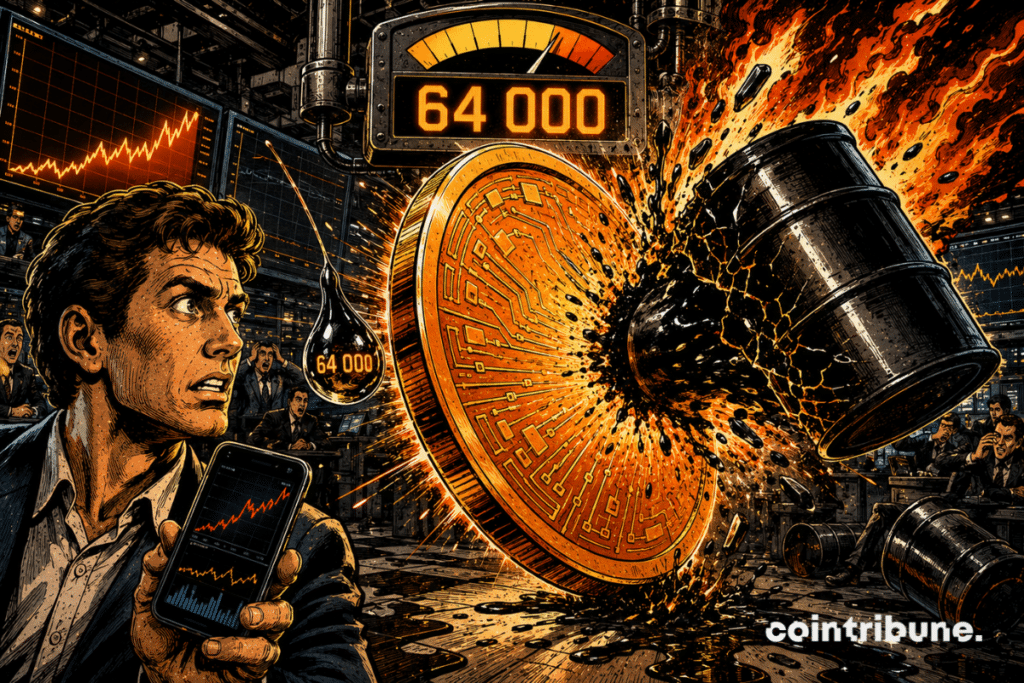
Bitcoin remains close to $64,000 despite a strong surge in oil and a more tense market climate. Brent jumped with the military escalation between Washington and Tehran, reigniting inflation fears. Yet, BTC does not falter. This resistance is intriguing, as it comes when risky assets also absorb the backlash of the Kimi AI shock.
In Brief
- Bitcoin remains close to $64,000 despite Brent’s surge.
- Oil price increase reignites fears of inflation and high rates.
- The Kimi AI shock adds pressure on tech stocks and risky assets.
Bitcoin: A Fragile Calm Against Oil
Bitcoin holds around $64,000 in a context that could have triggered a more brutal selloff. The oil surge awakens the same concerns seen during recent debates on US inflation. When energy prices rise, markets often anticipate a more cautious Fed.
Brent climbed up to $91.42 per barrel. This level hasn’t been seen since June. The rise comes from cross strikes between the United States and Iran, which broaden geopolitical risk beyond just military targets. Normally, this cocktail weighs on bitcoin. Expensive oil, possible inflation, and higher rates for longer reduce appetite for risky assets. But this time, BTC absorbs the shock without a clear break.
Bitcoin trades near $64,200, with little intraday variation. Over the week, it gains about 3%. It’s not a surge. But in a market shaken by oil, this holding is already a signal.
Ethereum performs better over seven days, with an increase of about 5%. It remains one of the strongest major assets at the moment. XRP, Solana, BNB, and Dogecoin move little. The crypto market thus gives the image of a sector waiting, not panicking.
This nuance matters. Sellers exist, but they do not yet take control. Buyers neither. Bitcoin moves within a zone of nervous neutrality, where every new shock can tip the trend. The current resistance should not be mistaken for definite strength. It only shows the market has not yet decided to penalize BTC despite macro pressure.
Kimi AI Adds a Second Shock
Oil isn’t the only factor today. The market is also continuing to digest the effect of Kimi K3, Moonshot AI’s new model. Its coding performance has triggered selling in semiconductors, questioning some valuations linked to AI.
This shock indirectly affects crypto. For several months, bitcoin has sometimes followed the behavior of major tech stocks, especially when Wall Street treats BTC as a growth asset. Pressure is also seen among companies linked to mining and digital infrastructures. Bitcoin miners have multiplied announcements around AI, data centers, and electrical power. A drop in the AI theme could thus cool this narrative.
Asia has already felt the shockwave. South Korea’s Kospi lost 3.5% after traders returned. In the US, Nasdaq futures tried to stabilize, but doubts remain. This week will not be dominated by major US statistics. The real test will come from corporate earnings. Alphabet, Tesla, and Intel are due to publish their figures, and the market is mainly expecting indications on AI spending.
If these results reassure, tech stocks could breathe again. Bitcoin could benefit, especially if oil stabilizes. A return of risk appetite would help BTC defend $64,000. This resistance around $64,000 shows bitcoin is not as vulnerable as a simple speculative asset. But it also reminds us of its dependence on the outside world. Oil, the Fed, AI, and Wall Street earnings now weigh on its pace. If oil soars again, the market will quickly know if this solidity is real or only a pause before the next move.
Maximize your Cointribune experience with our "Read to Earn" program! For every article you read, earn points and access exclusive rewards. Sign up now and start earning benefits.

Fascinated by Bitcoin since 2017, Evariste has continuously researched the subject. While his initial interest was in trading, he now actively seeks to understand all advances centered on cryptocurrencies. As an editor, he strives to consistently deliver high-quality work that reflects the state of the sector as a whole.
The views, thoughts, and opinions expressed in this article belong solely to the author, and should not be taken as investment advice. Do your own research before taking any investment decisions.