Bitcoin : The Coldcard Flaw Drives Investors Back to Exchange Platforms
Security incidents quickly influence investors’ decisions in the cryptocurrency market. This time, a vulnerability affecting the Coldcard hardware wallet caused an unusual movement of funds. While self-custody had gained popularity after the FTX bankruptcy, many bitcoin holders adopted the opposite strategy. Onchain data now shows an increase in deposits to exchange platforms, illustrating a temporary behavioral shift in response to risks.
In Brief
- Up to 1,300 BTC were stolen after the Coldcard flaw.
- Deposits to platforms reached 7,300 BTC in one day.
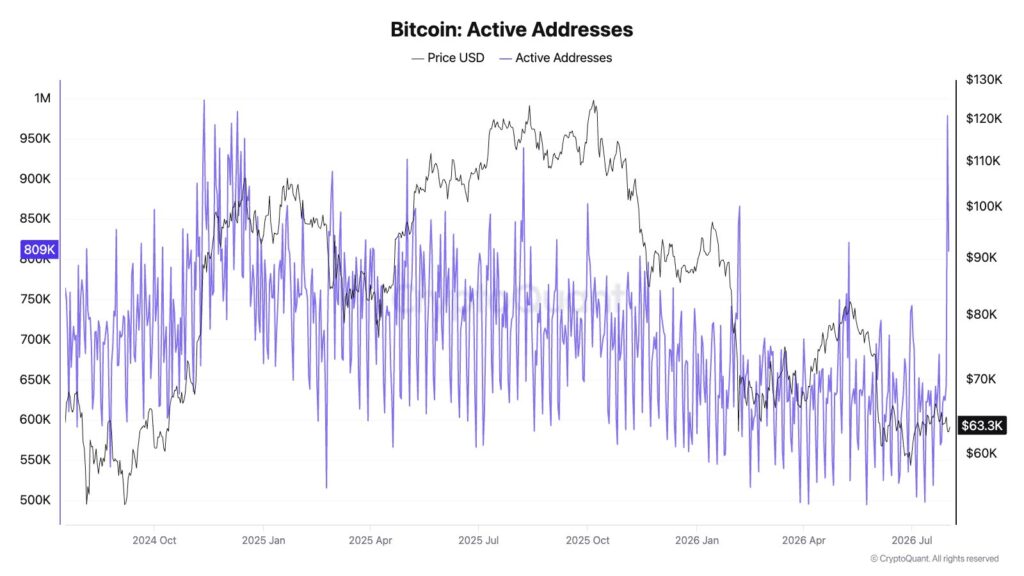
- Nearly one million addresses were active on July 31.
- Investors favored platforms as a precaution.
- This reaction is the opposite of what was observed after the FTX bankruptcy.
The Coldcard Flaw Challenges Trust in Self-Custody
Coldcard, the hardware wallet developed by Canadian company Coinkite, is going through one of the most significant security episodes in its history. The incident results from a bug present in the firmware, which weakened the generation of recovery phrases on certain devices. This weakness opened the door to attacks directly targeting affected users.
CoinDesk reported that the first thefts were observed on July 30 before continuing in successive waves. Blockchain analysts now estimate the losses to be between 1,000 and 1,300 BTC, valued between 70 and 90 million dollars. More than 1,000 addresses were reportedly affected, while some attacks allowed the transfer of several hundred BTC in less than an hour.
According to CoinDesk, the vulnerability dates back to March 2021. Some Coldcard units were then using a predictable software generator instead of the hardware generator intended to create new wallets. This error reduced the randomness level of the recovery phrases. Attackers could then reconstruct probable combinations and recover private keys without physical access to the wallet.
This incident has rekindled the debate around self-custody security. Several ecosystem players, including Binance founder CZ, have discussed the need to reassess hardware wallet security practices. In this context, some bitcoin holders temporarily moved their assets to centralized platforms.
On-chain Data Shows an Unusual Influx to Platforms
Figures published by Julio Moreno, head of research at CryptoQuant, highlight a rapid investor reaction. On July 31, daily deposits of transactions under 10 BTC on exchange platforms reached 7,300 BTC. This is the highest level recorded since February 6.
The head estimates that “this increase directly corresponds to concerns caused by the Coldcard incident.” According to him, many users transferred their holdings to platforms to protect their funds while the situation evolved.
Activity indicators also confirm this trend. The number of daily active addresses rose from 645,000 on July 30 to nearly one million the next day. This increase represents the highest level observed since December 10, 2024. Much of this activity comes from addresses sending their cryptocurrencies to exchange platforms.
Small transactions tell the same story. CryptoQuant indicates that the cumulative volume of transfers under 1 BTC reached 39,600 BTC on Friday, July 31. This result is very close to the 39,900 BTC recorded the day after the FTX bankruptcy, when individuals massively moved their assets. This time, bitcoin holders chose a completely different destination.
Timechainindex Confirms Behavioral Change of Bitcoin Holders
Observations from Timechainindex reinforce findings by CryptoQuant. The data shows that net inflows to exchange platforms reached 11,163 BTC on July 31. Most of these transfers were directed toward large platforms and companies, including Binance, River, Kraken, and OKX.
This increase in deposits also translated into a rise in reserves held on centralized platforms. The total volume rose from 2.703837 million BTC before the exploit to 2.715 million BTC after the initial movements. This development reflects many users’ desire to temporarily keep their assets in an environment perceived as safer regarding the specific problem encountered by Coldcard.
Julio Moreno points out that “retail users had not moved this much funds in a single day since the FTX collapse.” The observed volumes indicate a precautionary reaction rather than a lasting strategic change. Investors seem to have chosen an immediate solution to limit risks tied to the discovered vulnerability.
On-chain data also highlights the role of small holders in this dynamic. Low-value transactions constitute the bulk of recorded movements during this period. Bitcoin holders thus reacted quickly by transferring their holdings without waiting for more information on the incident’s evolution.
A Scenario Opposed to That Observed after the FTX Collapse
The comparison with the FTX bankruptcy illustrates the evolving perceived risk by investors. In November 2022, the main concern was the insolvency of exchange platforms and the potential withdrawal freeze. Users had then massively withdrawn their assets to regain control of their wallets.
The current incident presents a different situation. This time, the risk stems from a vulnerability identified in a specific hardware wallet, not centralized platforms. This context explains why some holders have temporarily chosen to deposit their assets on exchange platforms rather than keep them on their own device. The observed behavior therefore reflects adaptation to the nature of the encountered risk.
Analysis firms remind, however, that this flaw remains specific to Coldcard. It does not call into question all self-custody solutions available on the market. Hardware wallets that correctly generate their recovery phrases, as well as backups created without this vulnerability, are not affected by this incident.
The coming days will reveal whether these flows to exchange platforms continue or remain limited to an immediate reaction. On-chain data will keep indicating how bitcoin holders adjust their strategy regarding this flaw. The investigation’s progress and any measures taken around Coldcard should also influence user decisions and the future distribution of bitcoins between self-custody and centralized platforms.
Maximize your Cointribune experience with our "Read to Earn" program! For every article you read, earn points and access exclusive rewards. Sign up now and start earning benefits.

Journaliste et rédacteur web passionné par l’univers des cryptomonnaies et des technologies Web3. J’y traite les dernières tendances et actualités afin de proposer un contenu de haute qualité à un large public du secteur.
The views, thoughts, and opinions expressed in this article belong solely to the author, and should not be taken as investment advice. Do your own research before taking any investment decisions.