Bitget Report : 54% of Web3 Candidates Remain Locked Out of Their First Job
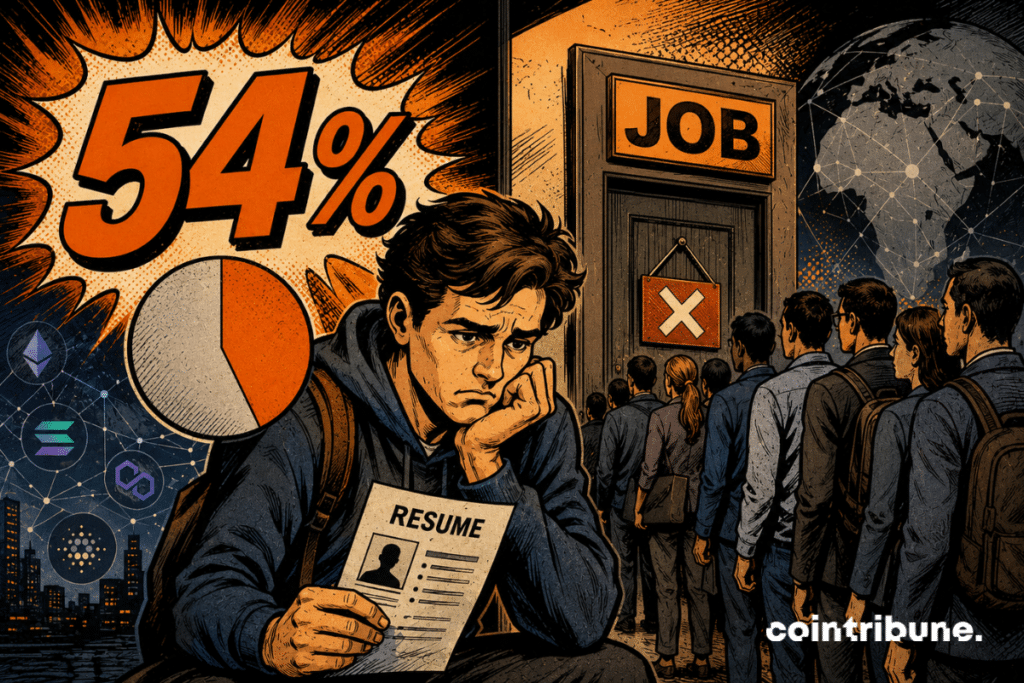
More than half of aspiring Web3 professionals cannot secure their first industry role because even junior positions demand prior experience, according to a new Bitget report. The findings expose a hiring contradiction: Web3 keeps attracting educated candidates, yet its entry doors remain remarkably narrow.
In Brief
- More than 54% of candidates say experience requirements block their first Web3 job.
- Education often provides theory without enough practical industry exposure.
- Mentorship and genuine entry-level roles could close the employment gap.
Bitget Identifies an Access Problem
The latest Bitget talent report finds that 54% of respondents see prior experience requirements as the biggest obstacle to securing their first Web3 job. The result suggests that the industry is not simply facing a talent shortage. It has built an access problem.
Many junior vacancies ask candidates to demonstrate previous blockchain work, onchain activity or experience with crypto companies. That expectation creates a familiar loop. Candidates need experience to get hired, but they need a first opportunity to gain that experience.
The findings connect directly with Bitget’s broader recruitment campaign. Through Blockchain4Youth, the exchange has been experimenting with less conventional ways to place young applicants in front of Web3 employers. The report now explains why those bridges are needed.
Education alone is not solving the problem. Around 52% of participants said their studies gave them theoretical knowledge but failed to provide enough practical skills for real industry work.
That gap becomes more striking when looking at the candidates themselves. More than 58% of respondents held a bachelor’s, master’s or doctoral degree. Nearly 46% were between 23 and 30 years old. This is not an uneducated workforce waiting to be trained from zero.
The problem lies in translation. Candidates may understand blockchain architecture, decentralized finance or token economics, but employers often want evidence of execution. They look for portfolios, smart contracts, community work, research, product contributions or direct exposure to active projects.
Emerging Markets Shape the Talent Pipeline
Nigeria, Indonesia and China accounted for nearly half of all respondents. Their strong representation shows that Web3 career interest is expanding beyond traditional technology centers in Europe and North America.
This geographic shift matters. Blockchain has always promoted the idea of a borderless economy, and its future workforce increasingly reflects that promise. Skilled candidates can emerge from regions where access to conventional technology companies remains limited.
Remote work should theoretically make the sector more open. In practice, candidates still face barriers linked to professional networks, employer visibility and access to mentors. A globally distributed industry can remain exclusive when its hiring pipelines depend on referrals and previous crypto experience.
AI and blockchain convergence has also become the most popular career direction. Around 61% of respondents selected it as their preferred path. This interest reflects where many candidates believe the next wave of technical demand will appear.
Mentorship Becomes the Missing Bridge
The report shows that candidates do not only want more courses. Around 62% selected mentorship from experienced professionals as the support most likely to accelerate their careers.
That preference makes sense. A mentor can explain how hiring works, review a portfolio and direct a candidate toward practical projects. More importantly, mentorship can provide context that online lessons often miss. Knowing blockchain concepts is different from knowing how a Web3 team actually operates.
Bitget is trying to address this gap through its Blockchain4Youth Learning Hub, Talent Alliance and career-focused initiatives. The learning platform has surpassed 10,000 registered users, while successful participants can receive certificates and priority review for selected opportunities.
Certificates alone will not fix the hiring market. Employers must also rethink what they expect from junior applicants. Entry-level positions cannot function as disguised mid-level roles. Companies may need apprenticeships, paid internships, supervised projects and clearer assessment criteria.
The real lesson from the Bitget report is therefore uncomfortable. Web3 has successfully sold its future to a new generation, but it has not built enough routes into that future. Expanding blockchain education remains useful. Yet without practical exposure and genuine junior opportunities, thousands of qualified candidates will continue standing outside an industry that claims to be open.
Maximize your Cointribune experience with our "Read to Earn" program! For every article you read, earn points and access exclusive rewards. Sign up now and start earning benefits.

Fascinated by Bitcoin since 2017, Evariste has continuously researched the subject. While his initial interest was in trading, he now actively seeks to understand all advances centered on cryptocurrencies. As an editor, he strives to consistently deliver high-quality work that reflects the state of the sector as a whole.
The views, thoughts, and opinions expressed in this article belong solely to the author, and should not be taken as investment advice. Do your own research before taking any investment decisions.