CLARITY Act Gains Powerful SEC Support
American crypto regulation has just taken a new step. On July 28, Paul Atkins, chairman of the SEC, publicly supported the CLARITY Act, a bill intended to finally define the rules of the crypto market in the United States. This stance strengthens the chances of adopting a highly anticipated text by investors, platforms, and issuers. Now in the hands of the Senate, the bill could offer the country its first comprehensive supervisory framework for these assets.
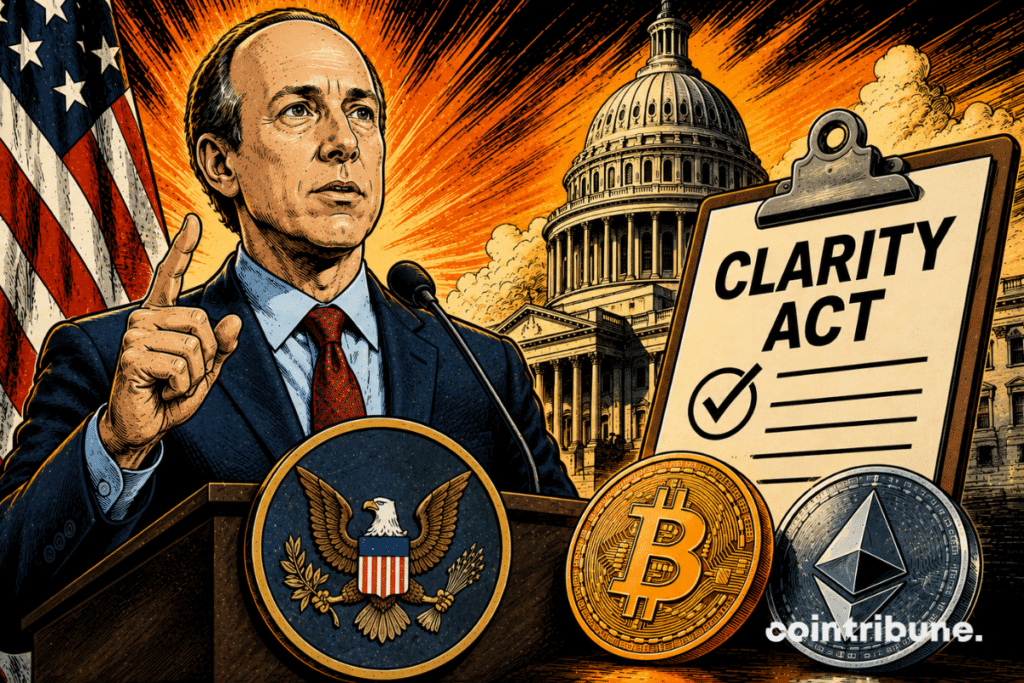
In Brief
- Paul Atkins affirms the SEC’s commitment to support the CLARITY Act vote by providing technical assistance to lawmakers.
- After its adoption by the House of Representatives, the bill enters a decisive phase during Senate review.
- In case of parliamentary blockage, the SEC says it is ready and able to issue its own rules to regulate the crypto market.
- Establishing a predictable framework provides transparency to investors and secures the establishment of technology firms in the United States.
The SEC’s Official Support
The Securities and Exchange Commission has formally confirmed its commitment alongside lawmakers to advance the crypto regulatory bill. Recent developments on the timeline and the agency’s involvement are summarized as follows :
- Official stance on X : Paul Atkins posted : “I commit to supporting Congress in advancing the CLARITY Act, notably by providing technical assistance” ;
- Legislative progress of the bill : the CLARITY Act successfully passed the House of Representatives and is currently under Senate review ;
- Agency technical support : the SEC is mobilizing administrative resources to address lawmakers’ precise questions and refine the bill ;
- The imperative of innovation : the SEC chairman emphasized that maintaining American leadership requires a regulatory system adapted to the pace of FinTech companies.
The Senate’s window of action remains particularly narrow, which captures the full attention of crypto industry players. Indeed, policymakers are trying to find a balance between encouraging financial innovation and providing adequate consumer protection. This direct cooperation between the regulator and Congress aims to move past past uncertainties to establish sustainable regulation in the market.
SEC’s Plan B and Preparation of Autonomous Internal Rules
Alongside its support to Congress, the regulator is preparing its own levers of action to handle a potential legislative stalemate. During an interview aired on CNBC on July 27, Paul Atkins shared details about his broader vision. He stated: “I am optimistic about the adoption of the CLARITY Act by Congress, and we are doing everything possible to assist them, answer their questions, and provide technical support”. However, he immediately added: “But ultimately, the law is the only way to ensure a sustainable framework. We are ready, determined, and able to publish our own rules to address the same issues as the CLARITY Act as well as other aspects of the crypto market”.
This stance demonstrates that the federal agency will not wait indefinitely for a statutory vote to address pressing issues in the crypto sector. The SEC is developing rules concerning market structure, oversight, and administrative compliance of actors. Thanks to new guidelines and agency policy updates, the SEC aims to clearly define the operational framework applicable to exchanges and managers. This administrative shift ensures that a strict regulatory system will be ready regardless of the final outcome of parliamentary debates.
The Impact on Market Players and Asset Classification
The adoption of the CLARITY Act or the publication of equivalent SEC rules will have fundamental repercussions on the distribution of regulatory responsibilities. The proposed clarification will establish a clear distinction in the legal classifications of cryptos. Through initiatives like the one mentioned by the SEC chairman, issuers will be able to know in advance whether their tokens are considered securities before launch. This predictability greatly reduces the legal risks associated with creating new tokens and conducting financial operations.
For DeFi players, specifically investors and specialized platforms, such a framework reshapes the commercial environment on American soil. Setting precise operational requirements strengthens participants’ confidence while further integrating tokens into traditional financial circuits. Moreover, supporters of the bill highlight significant benefits for investors, provided regulatory measures remain consistent and verifiable. Establishing clear standards aims to secure the settlement of technology firms in the United States.
The evolution of American regulation lays the groundwork for a profound transformation of the global financial ecosystem. The ability to reconcile technological dynamism with investor protection will be decisive to maintain the United States’ attractiveness amid competition from other jurisdictions. Whether the law is passed by the Senate or the SEC enforces its own decrees, the crypto market is about to enter an era of growing maturity and institutionalization.
Maximize your Cointribune experience with our "Read to Earn" program! For every article you read, earn points and access exclusive rewards. Sign up now and start earning benefits.

Diplômé de Sciences Po Toulouse et titulaire d'une certification consultant blockchain délivrée par Alyra, j'ai rejoint l'aventure Cointribune en 2019. Convaincu du potentiel de la blockchain pour transformer de nombreux secteurs de l'économie, j'ai pris l'engagement de sensibiliser et d'informer le grand public sur cet écosystème en constante évolution. Mon objectif est de permettre à chacun de mieux comprendre la blockchain et de saisir les opportunités qu'elle offre. Je m'efforce chaque jour de fournir une analyse objective de l'actualité, de décrypter les tendances du marché, de relayer les dernières innovations technologiques et de mettre en perspective les enjeux économiques et sociétaux de cette révolution en marche.
The views, thoughts, and opinions expressed in this article belong solely to the author, and should not be taken as investment advice. Do your own research before taking any investment decisions.