Crypto Mining Emerges as a Supporting Force Behind Ruble Strength, Says Russia’s Central Bank
Cryptocurrency mining in Russia is being identified by Central Bank Governor Elvira Nabiullina as a contributing factor to the ruble’s recent strength. Mining operations generally require payments for electricity, equipment, and services in local currency, which sustains demand for rubles. Profits from these activities can also circulate back into Russia’s economy, adding to other market forces rather than acting as the sole driver of the currency’s gains.
In brief
- Central Bank Governor Elvira Nabiullina said cryptocurrency mining contributes to ruble strength but is hard to measure and not the sole factor behind recent gains.
- Russia currently holds 15.5% of global Bitcoin mining power, slightly down from 16.6%, while the United States leads with 37.8%.
Assessing the Mining Influence
Speaking to RBC, Nabiullina explained that measuring mining’s impact on the ruble is difficult because much of the activity remains in a ‘gray zone.’ She pointed out that mining has existed in Russia for several years, meaning recent ruble gains cannot be attributed to a sharp increase in 2025 alone. However, she acknowledged that mining activity has likely grown somewhat this year and serves as an additional factor supporting the currency’s performance.
The growth of industrial cryptocurrency mining indicates a gradual shift in Russia, with even cautious officials like Nabiullina appearing more open to discussions around broader crypto adoption. Earlier this month, Maxim Oreshkin, Deputy Chief of Staff of the Presidential Executive Office, said that forecasts for the ruble were off because the financial contributions from mining and cryptocurrency had not been fully considered. He added that these activities now provide a new inflow of funds into Russia and are affecting the ruble’s position in global currency trading.
Oreshkin added that the Bank of Russia is evaluating the cryptocurrency mining sector and believes its financial flows should be included in the country’s balance of payments.
Regulatory Steps and Coordination
In 2024, Russia implemented regulations to govern cryptocurrency mining. Despite this, a significant portion of activity continues outside formal oversight.
According to RBC, the Central Bank is now coordinating with the Ministry of Finance, Rosfinmonitoring, and other government bodies to consider potential rules for cryptocurrency operations. Transactions are expected to continue through established market participants operating under current regulatory approvals, ensuring that digital asset activity remains within a monitored framework.
Supporting these efforts, Vladimir Chistyukhin, First Deputy Chairman of the Bank of Russia, emphasized the need to establish greater order in the cryptocurrency sector. He stressed the importance of enacting legislation quickly to regulate digital asset operations, including imposing strict limits or bans where necessary.
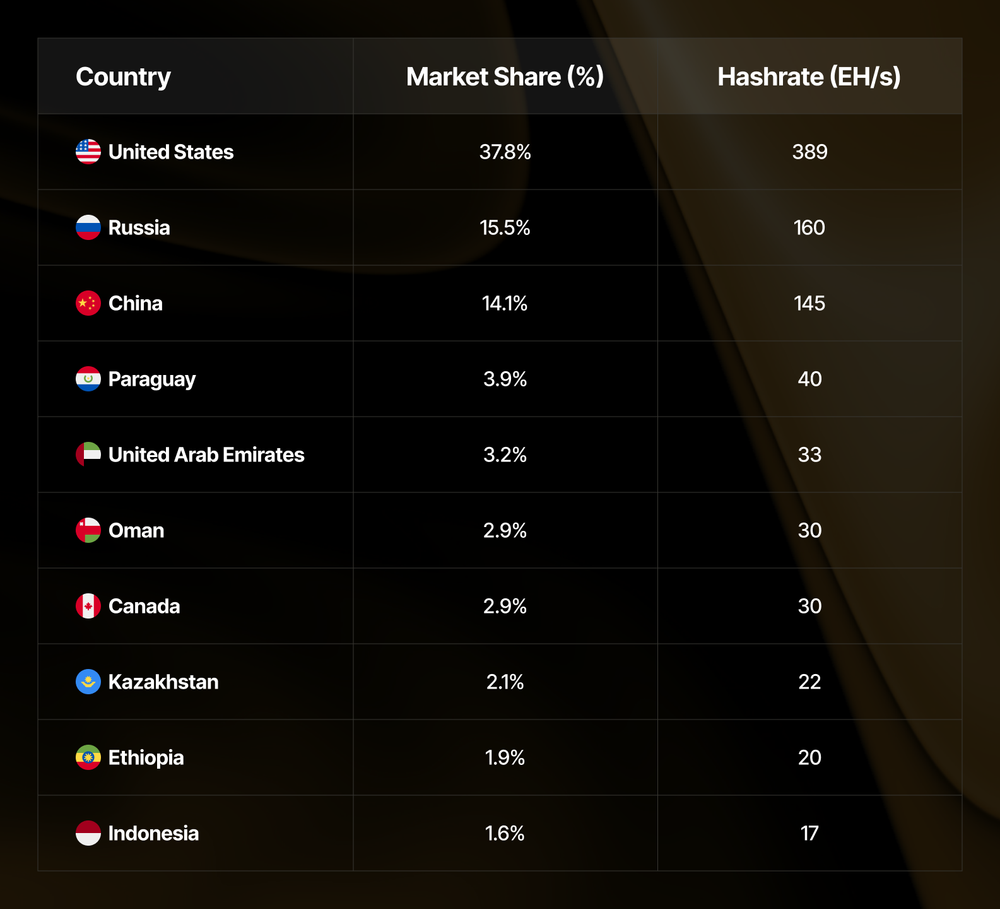
Meanwhile, global Bitcoin mining remains concentrated in a few countries, according to the Global Hashrate Heatmap by Hashrate Index. In the fourth quarter of 2025, the United States accounted for 37.8% of mining power, approximately 389 EH/s, while Russia held 15.5%, or about 160 EH/s. Russia’s share declined by 1.09 percentage points from 16.6% to 15.5%, reflecting a slight shift in the worldwide distribution of mining activity.
Maximize your Cointribune experience with our "Read to Earn" program! For every article you read, earn points and access exclusive rewards. Sign up now and start earning benefits.

Ifeoluwa specializes in Web3 writing and marketing, with over 5 years of experience creating insightful and strategic content. Beyond this, he trades crypto and is skilled at conducting technical, fundamental, and on-chain analyses.
The views, thoughts, and opinions expressed in this article belong solely to the author, and should not be taken as investment advice. Do your own research before taking any investment decisions.