Crypto: Russia to Shut Down P2P Trading in 2027
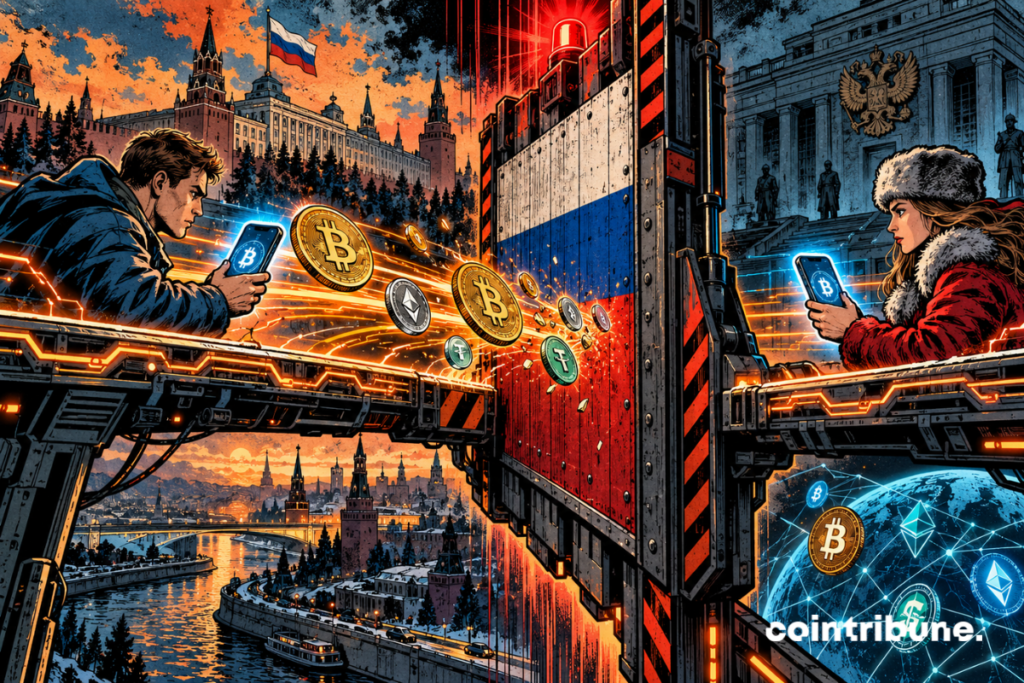
Russia will close an important door of its crypto market. From July 1, 2027, two individuals will no longer be able to buy or sell bitcoin or other cryptocurrencies directly between themselves. The Bank of Russia just confirmed this in an FAQ published on October 12. Transactions will have to go through an authorized intermediary, including a broker or a platform registered with the regulator.
In Brief
- P2P crypto trading between individuals will remain legal until July 1, 2027.
- After this date, transactions will have to go through authorized intermediaries.
- Non-qualified investors will remain limited to 300,000 rubles of annual purchases per intermediary.
Russia Gives Eight Months to P2P Crypto Trading
The Bank of Russia now leaves little room for doubt. Its new regulatory FAQ specifies that crypto transactions made directly between two individuals are only permitted until July 1, 2027. After this date, Federal Law No. 282-FZ will no longer include them in authorized operations without an intermediary.
This restriction was already in preparation when the Duma adopted its new crypto framework in July. Specifically, buying bitcoins directly from another individual against a ruble transfer will no longer work as it does today.
This type of exchange nonetheless plays an important role in Russia. After Binance withdrew from the Russian market in 2023, many users continued to buy especially USDT via P2P transactions, with payment directly sent to the seller’s bank account.
This model is now approaching its end date. The change does not, however, mean that Russia bans Bitcoin. The country is rather organizing its market around identifiable and supervised intermediaries.
Bitcoin, Ethereum, and USDT Move Through Authorized Intermediaries
Starting July 2027, residents will have to go through actors authorized to “organize the circulation” of cryptocurrencies. This category notably includes brokers and exchange platforms registered with the Bank of Russia.
The new system also distinguishes investors. A non-qualified individual will have to pass a test before being able to buy cryptocurrencies. Their purchases will be capped at 300,000 rubles per year and per intermediary, approximately $3,600 at current exchange rates.
Qualified investors will not be subject to this limit. Bitcoin, Ethereum, and USDT are already part of the assets accessible to ordinary investors in the new Russian framework.
Banks are quickly positioning themselves in this market. Sberbank is already testing the purchase and sale of bitcoin, ether, and USDT and plans its first crypto products by December 1. VTB is also preparing its own services. Russia is thus shifting from a market where a significant part of crypto transactions escaped traditional financial infrastructures to a much more centralized system.
Moscow Opens Crypto While Strengthening Its Control
Another restriction appears in the new clarifications from the Central Bank. Individuals will not be able to transfer cryptocurrencies registered on a Russian digital account to their own non-custodial wallet. In other words, autonomous custody of assets purchased in certain regulated infrastructures becomes much more limited.
Cryptocurrency loans are also regulated. Ordinary users will not be able to act freely as lenders in this framework. This activity will be reserved for certain authorized institutions. Moscow has been following the same line for several months: allow crypto but keep control over entry and exit points.
Russia already authorizes certain crypto payments in international trade, while their use for purchasing goods and services within the country remains prohibited. P2P now joins this control strategy. For Russian users, Bitcoin does not therefore disappear on July 1, 2027. They will still be able to buy and sell it. But much less directly than today.
Maximize your Cointribune experience with our "Read to Earn" program! For every article you read, earn points and access exclusive rewards. Sign up now and start earning benefits.

Enseignante et ingénieure IT, Lydie découvre le Bitcoin en 2022 et plonge dans l’univers des cryptomonnaies. Elle vulgarise des sujets complexes, décrypte les enjeux du Web3 et défend une vision d’un futur numérique ouvert, inclusif et décentralisé.
The views, thoughts, and opinions expressed in this article belong solely to the author, and should not be taken as investment advice. Do your own research before taking any investment decisions.