Crypto: Token Buybacks Reach $640 Million in 2026
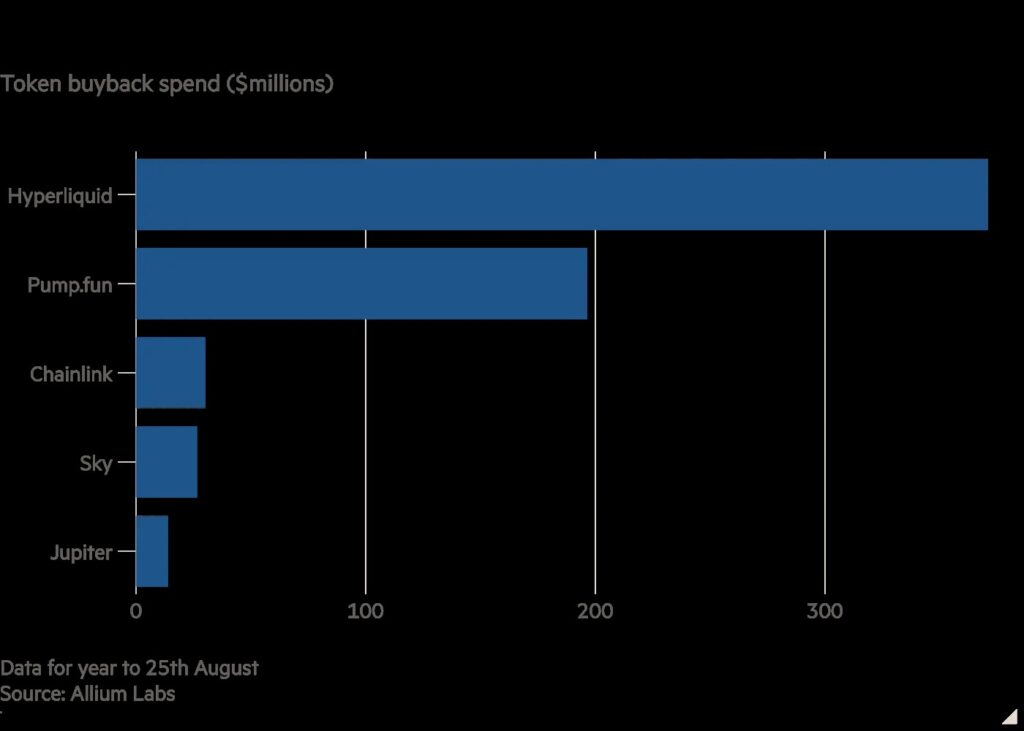
The digital assets market is seeing an emerging strategy linked to stocks: token buybacks. Since January, crypto groups have dedicated nearly $640 million to their own assets, according to Allium Labs data. Hyperliquid and pump.fun account for nearly 90% of the recorded amounts. For the projects involved, these operations aim to reduce the available supply and strengthen the connection between activity, revenue, and token value.
In brief
- Crypto groups have spent $638 million on buybacks of their own tokens since January.
- Hyperliquid and pump.fun account for nearly 90% of buybacks recorded by Allium Labs.
- Hyperliquid dedicates 99% of its fee revenues to buyback of its HYPE token.
- Several projects, including Sky Protocol and Lido, use buybacks to better link revenue and token value.
- Examples from Jupiter, Chainlink and Helium show buybacks do not guarantee price increases.
Crypto: Buybacks Scale Up
Companies specialized in cryptocurrencies have spent $638 million on buybacks since the beginning of the year. According to a Financial Times report, this amount already exceeds the $545 million recorded over the same period last year. The gap is even more striking compared to 2024, when buybacks amounted to only $366,000 for the whole year. Allium Labs thus confirms the rapid growth of a still recent practice.
This development occurs in a challenging crypto environment. Some investors turn to shares related to artificial intelligence, which show strong gains. Meanwhile, bitcoin remains about 38% below its peak, while XRP and Solana have dropped about 60%. Prices recently rebounded after a surprise intervention by the US Treasury in the bond market.
According to Elton Shehdula, head of research at Allium Labs, buybacks present a visible interest for projects. They can notably serve to show that teams remain confident in their own token. Once the assets are bought back, groups can also reduce the available market supply. This mechanism aims to support the price, although its effect remains difficult to measure.
Hyperliquid and pump.fun Dominate Operations
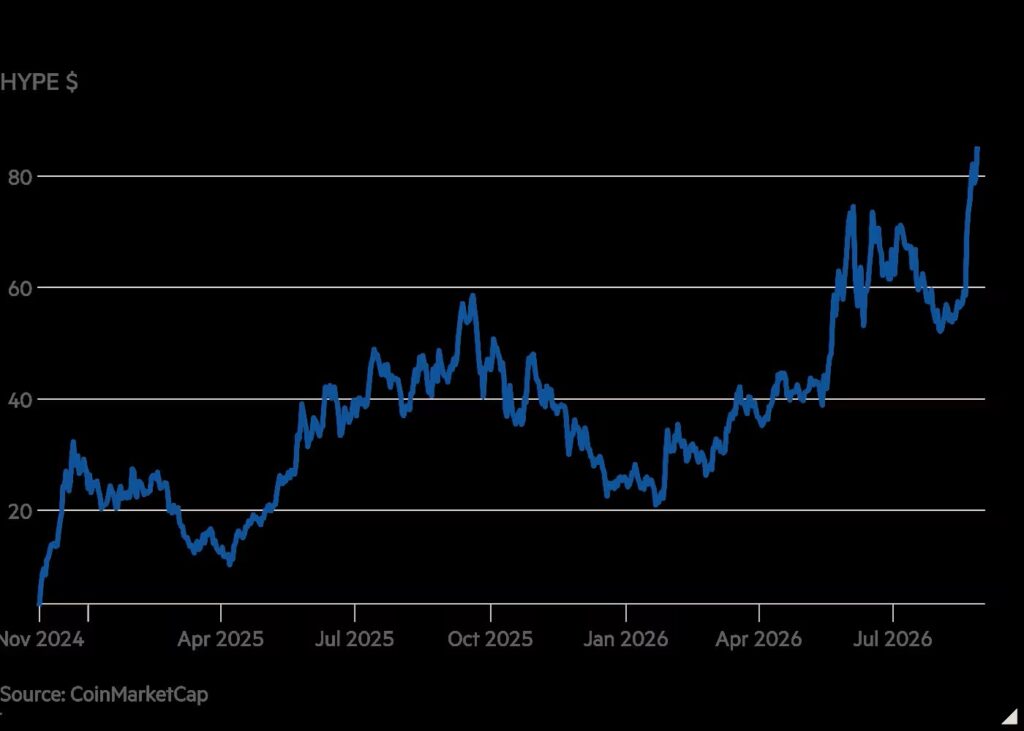
In crypto, Hyperliquid is at the forefront of this new dynamic. The perpetual contracts exchange platform dedicates 99% of its transaction fee revenue to buying back its HYPE token. Since its launch in December 2024, it has bought back and canceled $1.3 billion worth of contracts. This policy clearly distinguishes Hyperliquid from projects that allocate only a fraction of their revenue to this strategy.
The HYPE token has increased by 70% over the past year, while the overall sector experienced a decline. Matt Hougan, Chief Investment Officer at Bitwise Asset Management, considers aggressive buybacks the main reason for this rise. According to him, investors can thus more directly link the growth of a blockchain’s activity to the value of its token. This relationship is becoming central in analyzing the economic models offered by some projects.
Pump.fun is also among the groups mobilizing significant amounts for their own tokens. Together with Hyperliquid, the platform accounts for nearly 90% of the buybacks recorded by Allium Labs. This concentration shows that the overall increase mainly depends on a few projects capable of financing regular purchases. Other players have more limited means or still adopt different strategies to manage their asset values.
A Crypto Model Inspired by Stock Markets
Token buybacks follow a logic known from stock markets. In the US and UK, publicly listed companies have used stock buybacks for decades to support their shares and increase returns for existing shareholders. In the digital assets world, the logic remains different. Tokens generally do not grant economic rights or voting rights comparable to those attached to stocks.
This difference partly explains why buyback operations have long remained rare. Under former SEC chair Gary Gensler, many leaders avoided initiatives that could bring cryptocurrencies closer to securities status. They then feared increased exposure to US regulator lawsuits. The context changed under the Trump administration, with a more favorable approach by US authorities towards digital assets.
This change gave more room to leaders wishing to launch buyback programs. The strategy also emphasizes revenue rather than just visibility. This development accompanies an increased search for concrete economic benefits. Tokens can thus start to operate, in some cases, according to a logic closer to that of traditional securities.
Sky Protocol and Lido Test Other Approaches
Sky Protocol has dedicated $26 million to buying back its tokens, according to Allium Labs. Its co-founder Rune Christensen indicates that the protocol generated over $400 million in revenue during the past year. According to him, this buyback must align the interests of holders participating in decisions with the protocol’s long-term success. SKY holders have voting rights on the blockchain.
The SKY token has increased by 5% over one year. Lido, for its part, announced in August its intention to implement regular buybacks when several conditions are met. One of these is an annualized revenue of $40 million. The announcement seeks to link protocol revenue to token value, while Lido has lost 71% over one year.
Other crypto projects, however, show less favorable results. Jupiter has dedicated nearly $14 million to buying back its tokens since January, while its price dropped 55% over one year. Chainlink has also performed buybacks, but its LINK token lost half its value over the same period. These examples show that buybacks do not guarantee a lasting price increase.
Buybacks Still Far from Decisive
Helium gave a different answer by ending its buyback program in February. Its co-founder Amir Haleem then estimated that the market did not pay enough attention to these operations to justify their cost. This decision highlights a limitation: reducing supply is not enough to create sustainable demand. Without additional buyers, pressure on the price can thus remain limited.
Elton Shehdula is also skeptical about buybacks’ ability to provoke significant price increases. He points out that a project buying back its own assets does not automatically become solid. Amir Hajian, a researcher at Keyrock, observes that investors now increasingly assess the potential economic benefits of tokens. The market thus depends less on the enthusiasm that made many assets rise simultaneously.
Some crypto projects therefore seek to directly distribute part of the created value. THORSwap token holders linked to THORChain can receive 55% of the revenue when they lock their assets to secure and validate transactions. Another share, equivalent to 20%, finances token buybacks. Despite this combination, the token’s price has halved over one year, confirming that supply reduction alone is not a sufficient mechanism.
The $640 million committed since January nonetheless shows that buybacks hold an important place in the digital asset economy. This strategy brings some projects closer to mechanisms used by publicly traded companies, while retaining differences linked to rights attached to tokens. Future results will show whether revenues, buybacks, and demand can evolve together. Crypto might continue to test this model, but its effectiveness will depend on demand and the fundamentals of each project.
Maximize your Cointribune experience with our "Read to Earn" program! For every article you read, earn points and access exclusive rewards. Sign up now and start earning benefits.

Journaliste et rédacteur web passionné par l’univers des cryptomonnaies et des technologies Web3. J’y traite les dernières tendances et actualités afin de proposer un contenu de haute qualité à un large public du secteur.
The views, thoughts, and opinions expressed in this article belong solely to the author, and should not be taken as investment advice. Do your own research before taking any investment decisions.