French Gambling Authority Orders ISPs to Block Polymarket
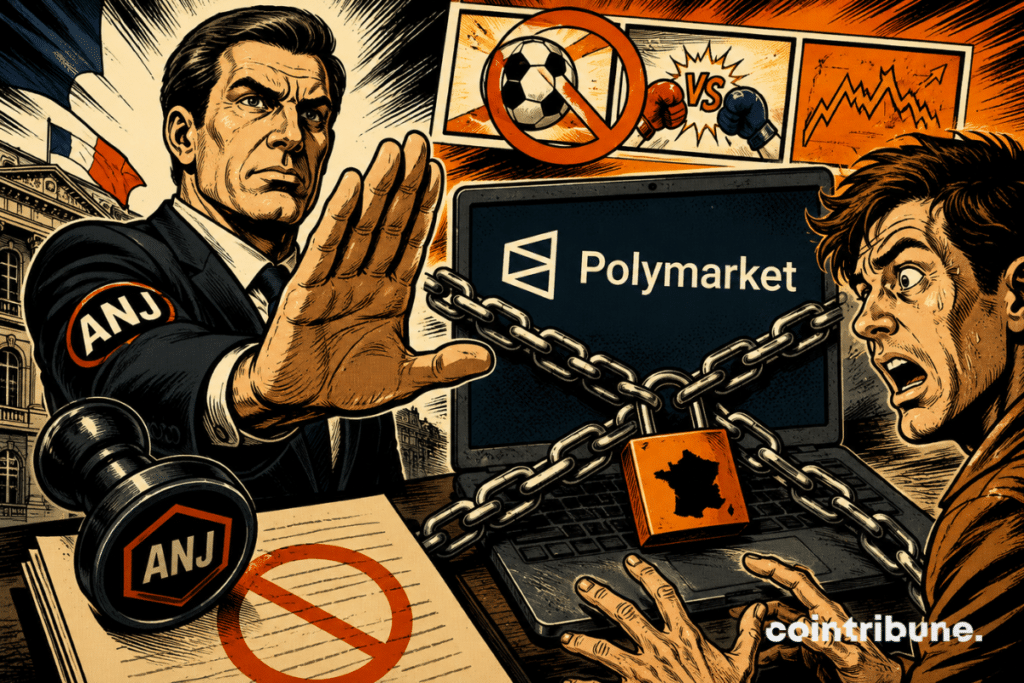
The ANJ moves from threats to action: the National Gambling Authority has ordered French internet service providers to block Polymarket, following a first warning in November 2024. It cites illegal gambling activities and risks of manipulation. The decision, announced on Friday, tightens the French framework around predictive markets.
In brief
- The ANJ ordered the geoblocking of Polymarket by French ISPs.
- The platform states it is already blocked in 36 regions at the time of publication.
- The Paris prosecutor’s office opened an investigation in May 2026 over lack of identity verification.
Paris tightens the screws on predictive markets
The ANJ has crossed the threshold of effective blocking, after an earlier warning issued in November 2024. France is no stranger to mistrust of unregulated predictive betting platforms.
A recent Stanford study documented manipulation risk on short-term contracts, reinforcing European regulators’ stance. Two years after the initial threat, the ultimatum materializes: French ISPs must now cut off Polymarket. The platform still displays billions of dollars in traded volume and a growing user base.
The regulator reminds that advertising for an unauthorized gambling site is an offense punishable by a 100,000 euro fine. Polymarket holds no operating licenses in France. The decision is based on a simple logic: the national framework classifies predictive markets as illegal gambling if they do not comply with its requirements.
The rigged bets that swayed the decision
The ANJ points out addictive mechanisms comparable to those in regulated gambling, but without the protections of the legal market. The regulator adds a more serious risk: result manipulation on certain event contracts. According to the authority, some bets offered on the platform appeared rigged, such as weather contracts where sensors were reportedly hacked.
Some of the bets offered on this platform appeared rigged: for example, weather bets revealed that meteorological sensors might have been hacked.
The Paris prosecutor’s office opened an investigation through its cybercrime unit as early as May 2026. Investigations highlighted the absence of identity verification, notably KYC controls.
Polymarket in the crosshairs of global regulators
France joins a long list of jurisdictions that have restricted access to Polymarket. Singapore, Poland, Portugal, Hungary, Ukraine, Brazil, and Indonesia have already blocked the platform. It states it is geoblocked in 36 regions at the time of publication.
Across the Atlantic, pressure is rising as well. Kentucky sued five predictive market platforms, including Kalshi and Polymarket, on June 17, accusing them of operating sports betting without a license. At least 17 other states have followed suit. The Commodity Futures Trading Commission meanwhile sued eight states, claiming they infringe upon its exclusive federal prerogative over event contracts.
In sum, the blocking ordered by the ANJ marks a turning point in the hunt for unauthorized predictive markets, at the crossroads of three pressures. France tightens its national framework, Europe questions the nature of these products, and the United States multiplies legal fronts. ESMA has already equated predictive markets to binary options banned for retail investors, signaling a lasting regulatory convergence. Polymarket will have to choose between compliance and an increasingly constrained geographic retreat.
Maximize your Cointribune experience with our "Read to Earn" program! For every article you read, earn points and access exclusive rewards. Sign up now and start earning benefits.

Passionné par le Bitcoin, j'aime explorer les méandres de la blockchain et des cryptos et je partage mes découvertes avec la communauté. Mon rêve est de vivre dans un monde où la vie privée et la liberté financière sont garanties pour tous, et je crois fermement que Bitcoin est l'outil qui peut rendre cela possible.
The views, thoughts, and opinions expressed in this article belong solely to the author, and should not be taken as investment advice. Do your own research before taking any investment decisions.