Hut 8 Loses $253M in Q1 but Signs an AI Contract Worth $9.8B
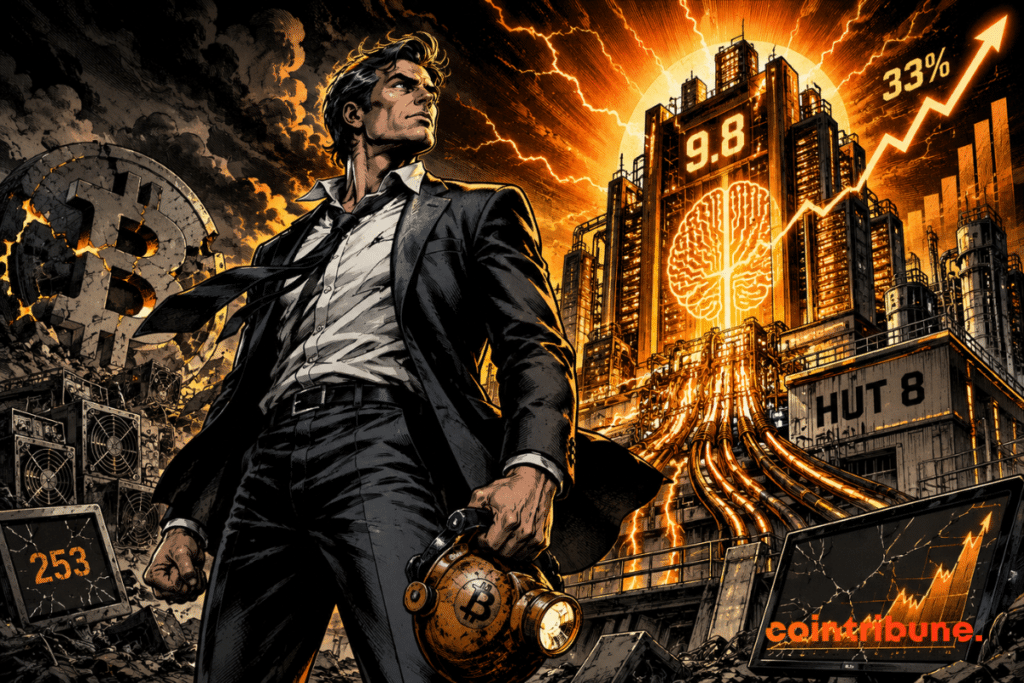
Despite a net loss of 253 million dollars in the first quarter of 2026, Hut 8 saw its stock soar by more than 33%. The reason: a mega lease contract for AI infrastructure worth a total of 9.8 billion dollars over 15 years.
In brief
- Net loss Q1 2026: 253 million dollars (BTC reserves depreciation)
- Revenues Q1 2026: 71 million dollars (–22% vs Q4 2025)
- AI contract signed: 9.8 billion dollars over 15 years, 352 MW leased
- Stock rise: +33% in a single session
- Context: massive sector pivot from mining to AI to maximize energy consumption profitability
A first quarter in the red, but the markets don’t care
The giant of bitcoin mining published mixed quarterly results on May 6, 2026. According to its official statement, the net loss of 253 million dollars is mainly explained by the drop in the market value of its BTC reserves. These fell from a peak above $126,000 to a floor around $60,000 in February 2026.
Revenues also show a decline to 71 million dollars from 88.4 million in the previous quarter. This represents a decrease of about 22%. A figure lower than analysts’ forecasts, which expected 78.5 million dollars.
However, Wall Street did not shun the HUT stock. On the contrary! Proof: the share price jumped by more than 33% in a single session on May 6, 2026. This raises the company’s market capitalization in an uncertain market context.
The AI contract that changes everything: $9.8 billion over 15 years
Simultaneously with the publication of its results, Hut 8 announces the commercialization of the first phase of its Beacon Point campus. It is a 352-megawatt lease agreement to a third-party company specialized in AI for a duration of 15 years and a total value of 9.8 billion dollars.
This contract positions Hut 8 far beyond a simple crypto miner. The company is indeed transforming into a key player in high-performance artificial intelligence infrastructure. In Q1 2026 alone, the company has already generated $66 million in combined revenues from its ASIC, AI cloud, and traditional cloud activities.
This strategic pivot reflects an underlying trend in the industry. According to crypto analyst Ran Neuner, the two sectors compete for the same critical resource: electricity. The revenues for AI infrastructure would be between $200 and $500 per megawatt, compared to $57 to $129 for bitcoin mining.
Faced with this profitability gap, many miners are repositioning their assets towards high-performance computing. Hut 8 follows the lead of Core Scientific, which announced a 1.5 GW expansion dedicated to AI.
In any case, Hut 8’s transformation illustrates a structural shift: crypto mining infrastructures built around energy and intensive computing are becoming strategic assets for the AI revolution. Investors also seem to have clearly decided: the long-term vision outweighs short-term losses. The open question remains: how many other miners will follow this path and at what speed?
Maximize your Cointribune experience with our "Read to Earn" program! For every article you read, earn points and access exclusive rewards. Sign up now and start earning benefits.

My name is Ariela, and I am 31 years old. I have been working in the field of web writing for 7 years now. I only discovered trading and cryptocurrency a few years ago, but it is a universe that greatly interests me. The topics covered on the platform allow me to learn more. A singer in my spare time, I also cultivate a great passion for music and reading (and animals!)
The views, thoughts, and opinions expressed in this article belong solely to the author, and should not be taken as investment advice. Do your own research before taking any investment decisions.