Polymarket Sues Massachusetts as States Challenge Prediction Market Oversight
Polymarket has escalated its dispute with U.S. state regulators by filing a federal lawsuit against Massachusetts, arguing that prediction markets fall under exclusive federal oversight. At the center of the case is whether individual states can restrict event-based contracts already regulated at the federal level. Ultimately, the ruling could determine how prediction markets operate across the United States.

In brief
- Polymarket argues the Commodity Futures Trading Commission has exclusive authority over event contracts.
- The lawsuit seeks to block Massachusetts from enforcing actions against federally regulated prediction markets.
- Courts in Massachusetts and Nevada have targeted sports-linked contracts tied to prediction platforms.
- Trading volumes hit $3.7B in one week as Polymarket and Kalshi valuations climb despite legal pressure.
Polymarket Warns State Actions Risk Fragmenting U.S. Prediction Markets
In its filing, Polymarket contends that Congress granted sole authority over event contracts to the CFTC, leaving states without the power to independently regulate or prohibit federally compliant prediction markets. The company argues that any state-level enforcement action would directly conflict with federal law.
Neal Kumar, Polymarket’s chief legal officer, confirmed the lawsuit on Monday, saying unresolved legal questions affecting national markets must be settled at the federal level. He criticized recent state actions targeting Polymarket US and similar platforms.
According to Kumar, such efforts do not change federal rules and risk marginalizing states from the future development of prediction markets. His comments referenced enforcement measures taken by Massachusetts and Nevada.
As per a Bloomberg Law report, Polymarket filed the lawsuit preemptively to block potential action by Massachusetts Attorney General Andrea Campbell. The company claims that any enforcement effort would interfere with federally regulated derivatives markets.
U.S. States Expand Crackdown on Sports-Linked Prediction Markets
State pressure on prediction markets has intensified following a series of court rulings focused largely on sports-related contracts:
- Massachusetts courts issued a preliminary injunction preventing Kalshi from offering sports-linked contracts.
- Nevada courts barred Polymarket from providing sports contracts to users in the state.
- Judges cited potential harm to existing state-regulated sports betting frameworks.
- Legal challenges have largely targeted contracts tied to sporting events.
Regulatory scrutiny now extends beyond Massachusetts and Nevada. Kalshi has said at least eight states—including New York, Illinois, and Ohio—have taken steps to challenge or restrict sports-focused prediction markets. State regulators argue that these contracts closely resemble sports betting, an activity traditionally regulated at the state level.
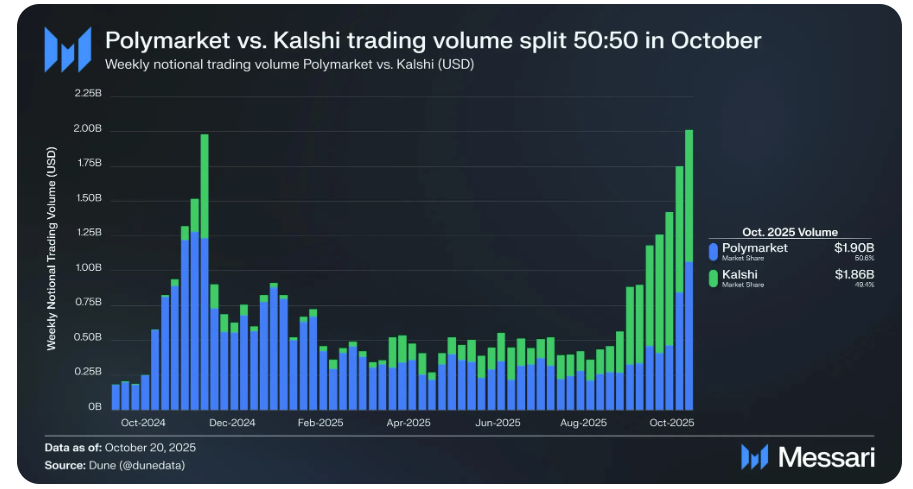
Despite the growing legal uncertainty, trading activity in prediction markets has surged. As per data from Dune, the sector posted a record $3.7 billion in trading volume in a single week in January.
Meanwhile, data from Messari indicates Polymarket and Kalshi are trading at comparable volumes. However, Polymarket operates on decentralized infrastructure. Recent funding rounds valued Polymarket at $9 billion and Kalshi at $11 billion, underscoring continued investor confidence despite unresolved regulatory questions.
Maximize your Cointribune experience with our "Read to Earn" program! For every article you read, earn points and access exclusive rewards. Sign up now and start earning benefits.

James Godstime is a crypto journalist and market analyst with over three years of experience in crypto, Web3, and finance. He simplifies complex and technical ideas to engage readers. Outside of work, he enjoys football and tennis, which he follows passionately.
The views, thoughts, and opinions expressed in this article belong solely to the author, and should not be taken as investment advice. Do your own research before taking any investment decisions.