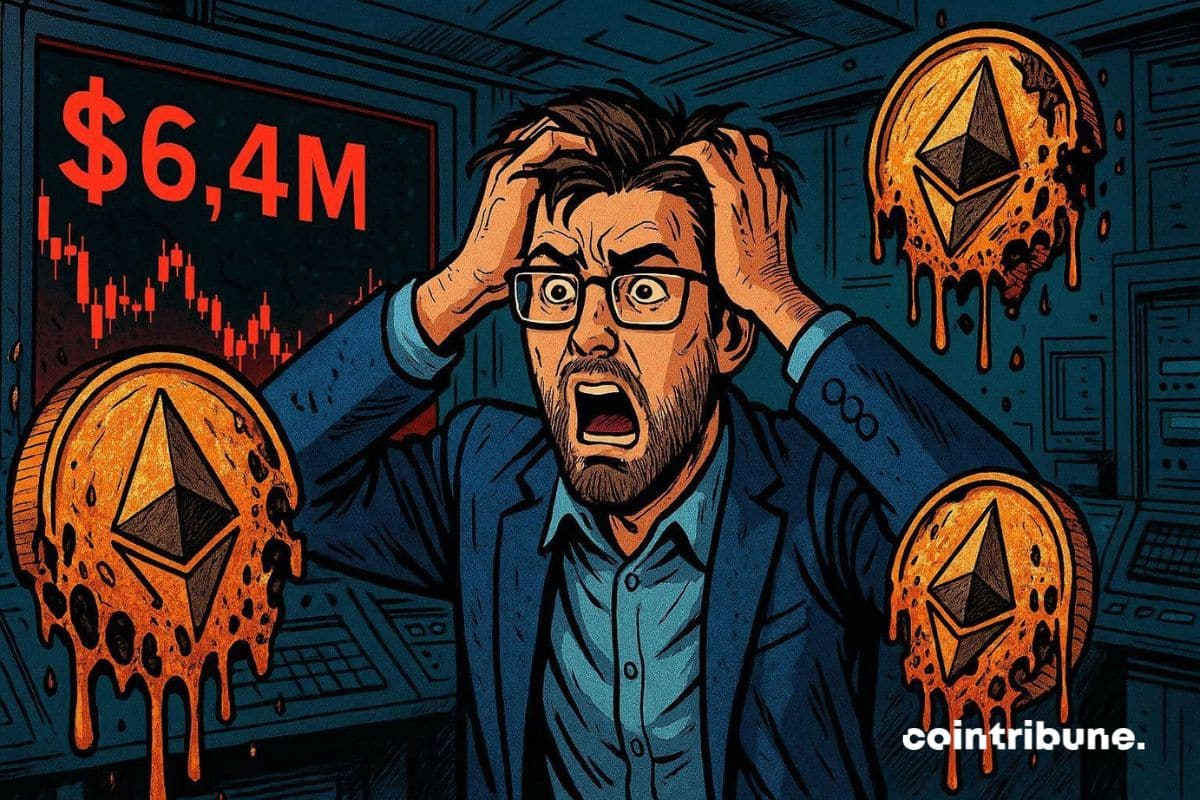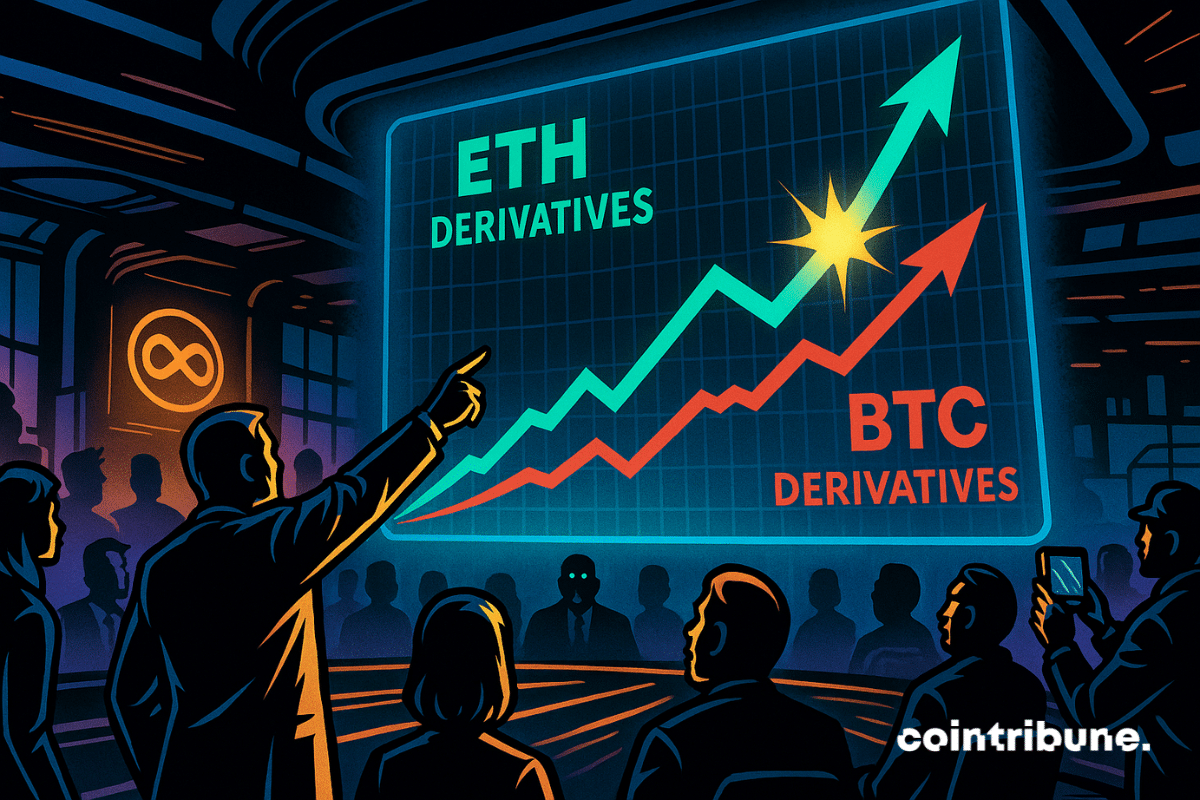
Ethereum’s revenue fell sharply in August, even as its price and institutional interest continued to rise.
Bitcoin attracts bettors, Ethereum seduces bankers, Dogecoin dreams of an ETF and Tether dresses in gold: the crypto circus continues its show, between promises, glitters and persistent doubts.
The calm was short-lived. Indeed, the crypto market is plunging back into fear, according to the Crypto Fear & Greed Index, which dropped to 44 after several weeks of stability. This psychological signal is not isolated, as it accompanies a clear shift in investment flows, leaving the most volatile altcoins to refocus on the heavyweights of the sector, bitcoin and Ethereum.
Spot Ether exchange-traded funds (ETFs) recorded $952 million in outflows over five trading days, raising concerns across digital asset markets. Investors reduced exposure to Ether products managed by major firms such as BlackRock and Fidelity, while capital shifted toward bitcoin ETFs. The withdrawals came during a period of rising recession fears and increased expectations of monetary policy easing in the United States.
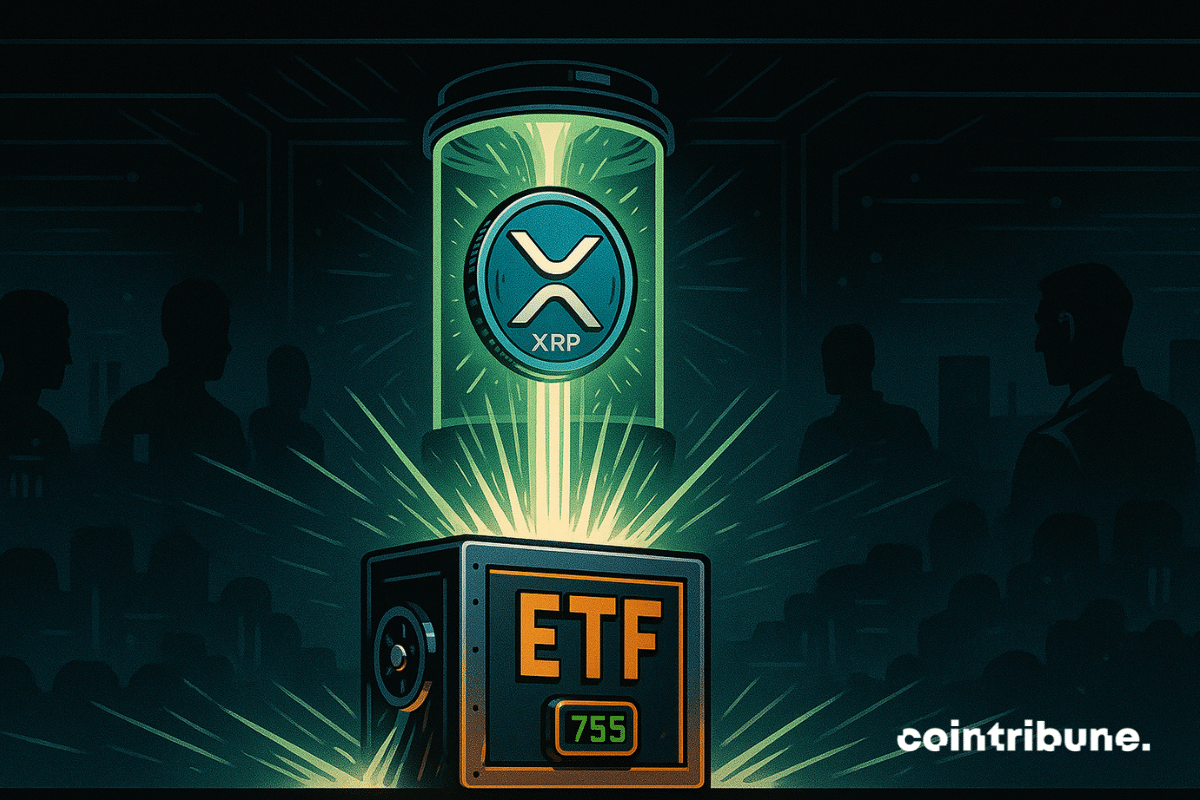
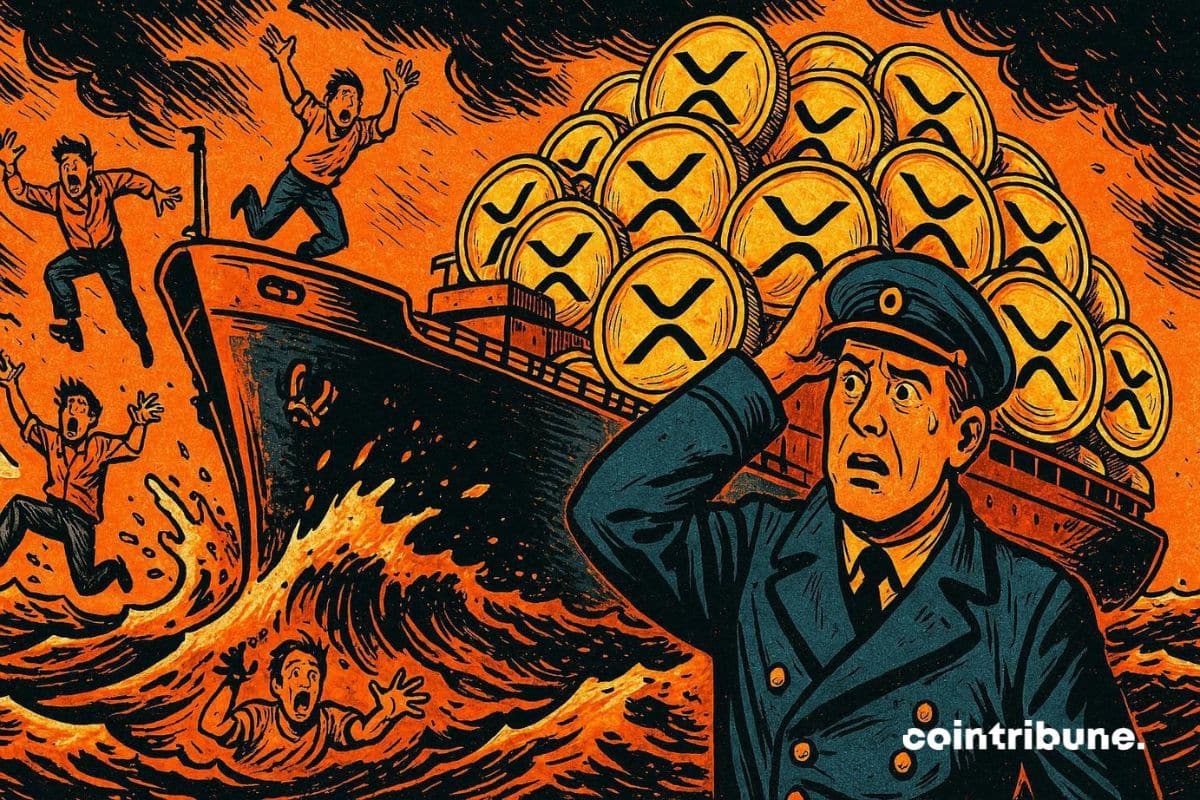
XRP is going through a decisive phase. Priced at $2.81, Ripple’s token is evolving in a weakened crypto market, undermined by persistent volatility. Technical indicators paint a mixed picture: selling pressure dominates in the short term, but some long-term moving averages indicate a possible recovery. Between investor caution and hopes for a rebound, XRP is now at a strategic turning point that captures analysts' attention.
While the entire crypto market oscillates between consolidation and correction, Dogecoin stands out with a unique behavior. Its open interest, a barometer of open positions on futures contracts, remains stable at a historically high level, nearing 16 billion DOGE, or approximately 3.36 billion dollars. This threshold is remarkable in a climate where speculative activity is significantly declining across the majority of altcoins.
The tokenized real-world asset (RWA) market reaches a new milestone with Ondo Finance's groundbreaking announcement: the deployment of over 100 American stocks and ETFs directly on the Ethereum blockchain. This major initiative propels the ONDO token to new heights, flirting with the symbolic 1 dollar mark.nThe enthusiasm around Ondo Finance signifies a silent revolution redefining access to traditional financial markets. By eliminating intermediaries and offering 24/7 trading, tokenization fundamentally transforms how investors interact with traditional assets.nThis evolution is part of a broader movement where blockchain becomes the new standard for democratizing investment, from real estate with players like RealT to listed stocks with Ondo Finance. A breakdown of a sector that could well disrupt traditional finance.n
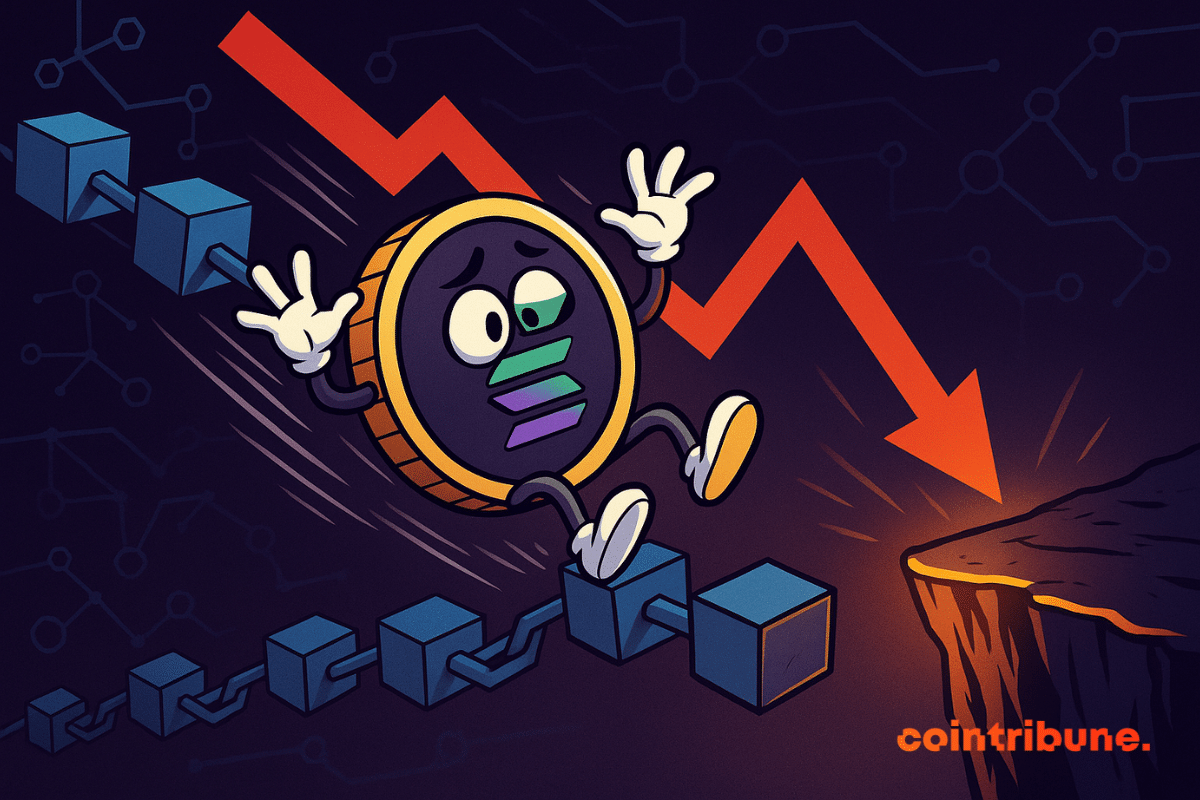
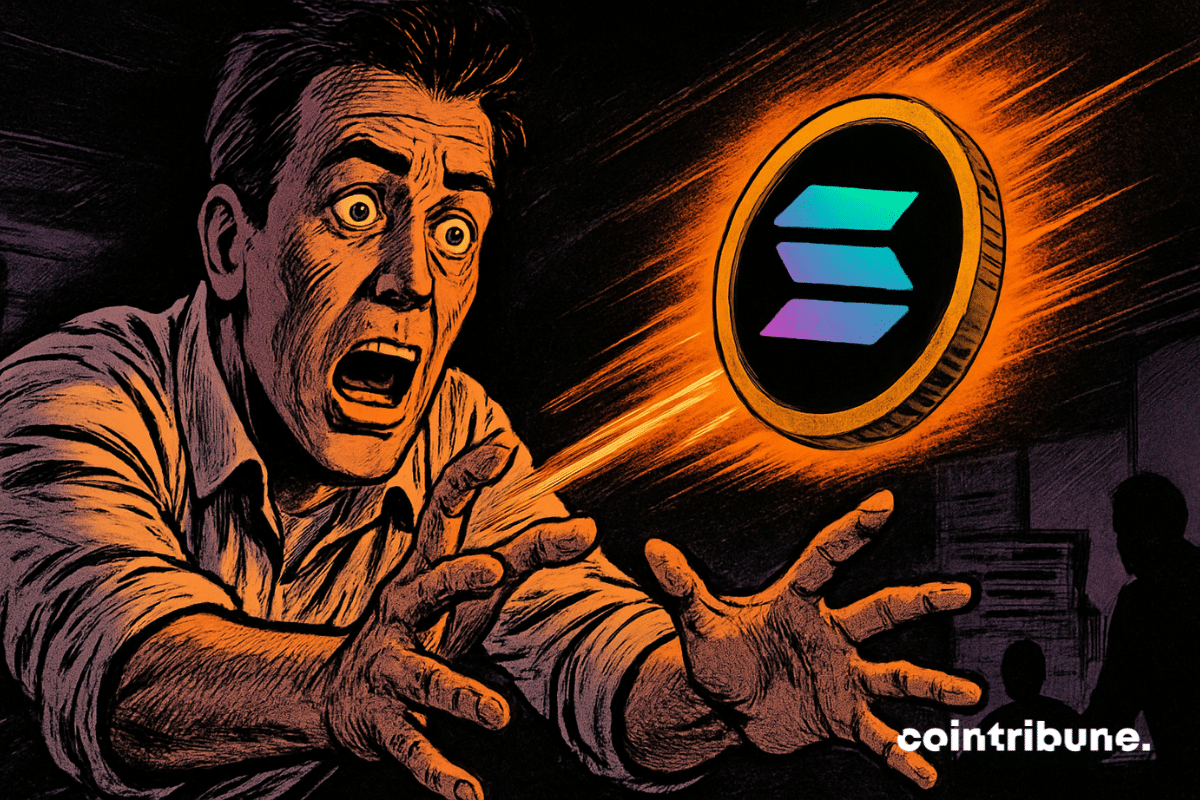
Solana speeds like lightning but stalls below 215 dollars: ETF lurking, record upgrade and flashy meme-coins. Crypto hesitates between a surge and a scheduled slip.
Software supply-chain attacks are evolving in a disturbing way as cybercriminals use Ethereum smart contracts to hide malicious code within open-source libraries. Research presented by a security firm ReversingLabs shows that hackers now insert command-and-control instructions within blockchain contracts, complicating detection and closure by defenders. This approach signifies the increased complexity of malware distribution and blockchain becoming a tool of cybercrime.
In the great Trump crypto fair, Justin Sun goes from ally to suspect. His tokens frozen, his political friendship gone.
The ghost of 2017 is haunting speculators again. While some are betting on a comeback of XRP, comparisons with the last bull run are multiplying. However, the current market has little to do with that of yesterday. New dynamics, increased competition, divergent technical signals: does the analogy still hold? Behind the hope of a bullish rebound, a colder reading of the data tells a different story.
Cardano fans are sulking, whales are stirring, and ADA is bouncing back. Yet another crypto farce where the impatience of small holders fattens the big holders.
The United States has leaped to the second spot on the Chainalysis 2025 Global Adoption Index due to regulatory clarity and increased ETF adoption. India retained its leading position as the third consecutive global leader, and Pakistan, Vietnam, and Brazil were the top five. This ranking reflects a broader trend, crypto adoption is expanding rapidly in both mature markets with clearer rules and emerging economies where digital assets address real financial needs.
Bitcoin sulks, altcoins stir: 55% dominance and tokens lying in wait... But who will really take the pot by December?
Despite a major update to version 23 of its protocol, Pi Network struggles to spark market enthusiasm. In a sector where every innovation is scrutinized to revive bullish momentum, the announcement of technical advances inspired by Stellar Protocol 23 and the integration of new functionalities were not enough to boost its token price. This dissonance between technological progress and stock market inertia raises questions about the project's ability to convert its evolutions into real value.
Solana is about to change dimension. On September 2, the network massively validated Alpenglow, an ambitious overhaul of its consensus protocol. Much more than a technical optimization, this update marks a strategic break: offering performance worthy of traditional finance while maintaining the foundations of Web3. In an ecosystem where every millisecond counts, Solana wants to take a lead over the competition and establish itself as the reference infrastructure for decentralized markets.
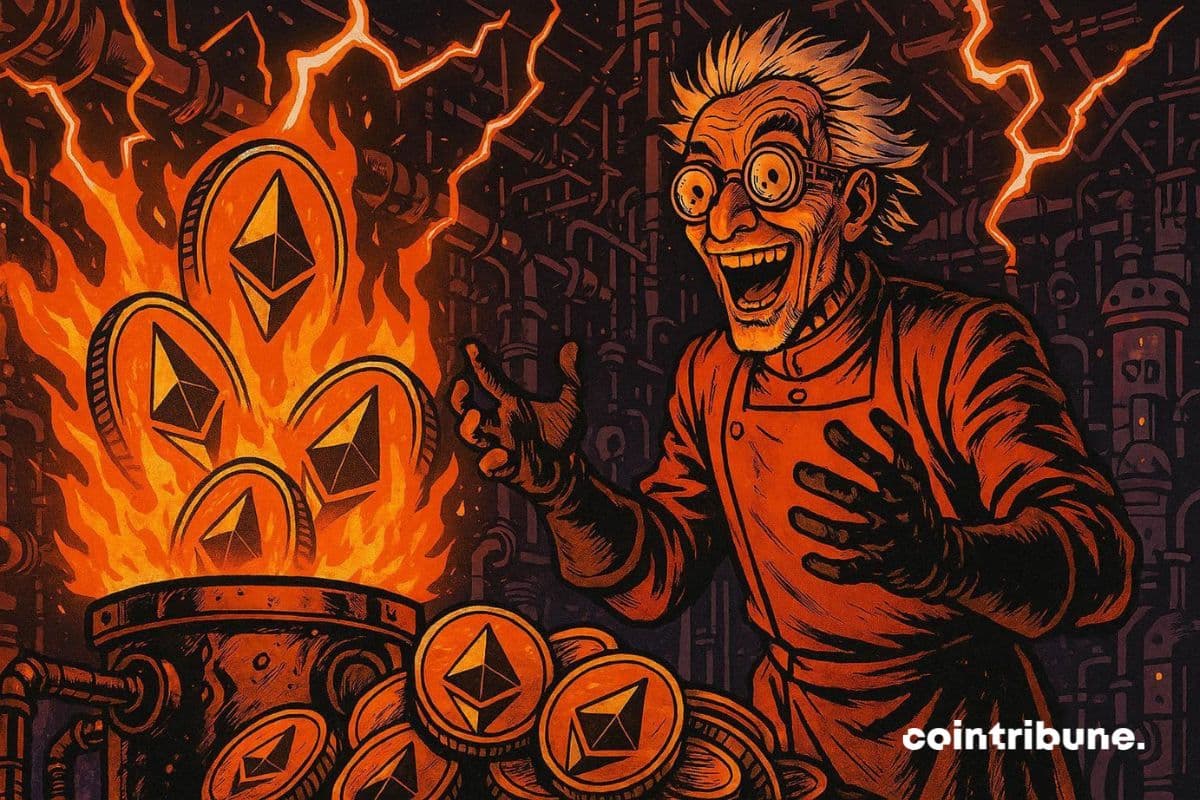
Ethereum plays the tightrope walker: programmed drop, then theatrical rise. September trembles, October rejoices. Crypto traders? They might applaud... after getting trapped.
The market for tokenized gold has reached new all-time highs, crossing $2.57 billion in market cap, as spot gold itself approaches its April peak. The rally shows renewed demand for gold-backed crypto tokens as investors seek safe haven assets amid global uncertainty.
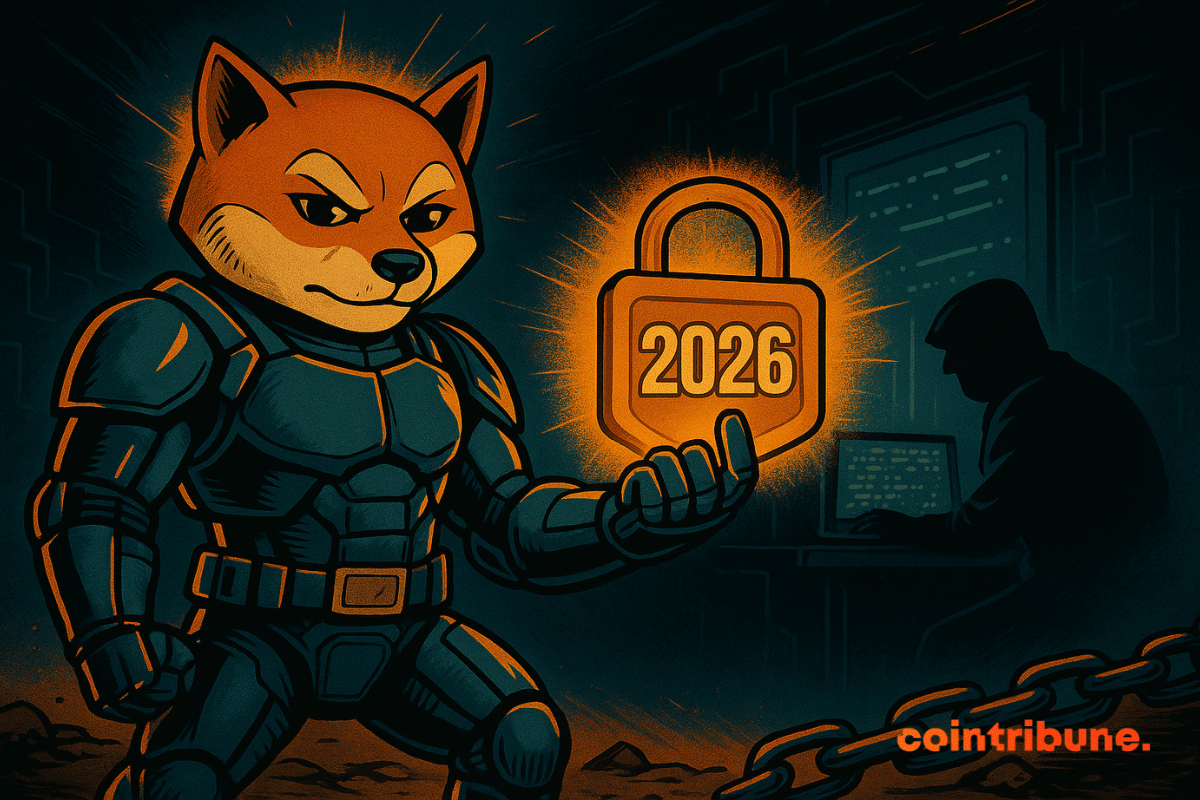
This Monday, the World Liberty Financial (WLFI) project, supported by the president and his close associates, proceeded with the unlocking of 24.6 billion tokens. An operation that values their stake at nearly 5 billion dollars. Presented as a technical launch, this initiative fuels suspicions about Trump’s growing influence in a sector he now helps shape.
Ethereum takes the prize for the big players, Bitcoin clings to its throne. A duel of numbers, egos and billions: who will emerge victorious from this digital waltz?
Solana has reached a decisive milestone with the massive approval of Alpenglow, an upgrade set to disrupt its operation. This decision paves the way for unprecedented acceleration of transactions, bringing the blockchain closer to the speeds of modern Internet infrastructure. Ecosystem players see this change as an opportunity to strengthen competitiveness against Ethereum and Bitcoin. Alpenglow thus marks the beginning of a new technological era for a network seeking to combine speed and reliability
August was marked by two opposing signals in the crypto market. Ethereum reached an unprecedented peak of activity, confirming the growing interest of investors in its ecosystem. Conversely, Bitcoin suffered a brutal shock after the massive liquidation of 24,000 BTC by a single actor. This contrast is not just a technical divergence. It illustrates an ongoing rearrangement, between regulatory innovations, strategic repositioning of players, and the evolution of the balance of power between major assets.
Trump, crypto and millions at stake: WLFI unlocks its tokens, promises of a jackpot or a new speculative prank? Investors oscillate between euphoria and suspicion.
Crypto ETF issuers are just waiting for the SEC to release its stamp. They move forward, file, correct, refine. Like a conductor confident in his score, Grayscale continues to play its own regulatory symphony. And this time, it is Cardano taking the stage, ready to secure its ticket to Wall Street. The countdown is on, the lines are moving, and investors are already sharpening their order books.
Tron has just announced a landmark measure: a 60% reduction in its network fees. This decision was validated by a community vote and confirmed by Justin Sun. It aims to make transactions on its network more accessible after a period when costs had significantly increased.
XRPL saw strong Q2 growth with real-world assets at $131.6M and XRP up 8.5%, while RLUSD stablecoins surged.
Shibarium collapses. In ten days, the daily transactions of the Shiba Inu layer 2 blockchain dropped from 4.8 million to less than 10,000, a fall of 99.8%. This is not a slowdown, but a brutal stop. Launched a year ago as the engine of the SHIB ecosystem, the network is facing a spectacular loss of momentum. In a lethargic crypto market at this end of August, this plunge raises questions about the real adoption of this project, which is nevertheless highly exposed in the media.
A $200M Dogecoin treasury is being planned, backed by House of Doge and chaired by Elon Musk’s lawyer, Alex Spiro.
The signals align on the altcoin market. While bitcoin and Ethereum take a pause, XRP and Dogecoin position themselves at the forefront of speculative bets. Raoul Pal, former Goldman Sachs and founder of Real Vision, mentions an imminent transition of the current cycle. In an analysis shared on X, he revives his concept of "Crypto Waiting Room" and points to a possible breakout from consolidation for these two assets. Investors, for their part, watch for the trigger signal.
Hyperliquid (HYPE) holds around $50 after a peak at $51.50, supported by speculative and institutional interest. BitGo's integration of HyperEVM strengthens its credibility, positioning the token among the most followed crypto projects.